Evidence
-
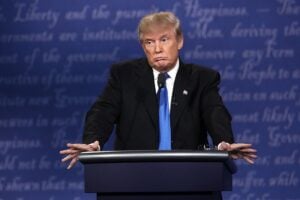 Government
Donald Trump Keeps Losing Files To 'Flooding' Whenever Investigators Start Looking
Floods? Near key evidence? Right when investigators show up? What are the odds? -
 Courts
Deepfakes Are About To Make Evidence A Hell Of A Lot More Suspect
Caught red-handed or caught red herring?  Sponsored
Navigating Financial Success by Avoiding Common Pitfalls and Maximizing Firm Performance
In this CLE-eligible webinar, we’ll explore the most common accounting pitfalls and how to avoid them for your firm.-
-
 Government
Judge Offers Trump Lawyers Free Lesson On How Privilege Works
The tricky thing about attorney-client privilege is... well, nothing really. -
 Government
Trump Lawyers Botch Hearsay Rule... AGAIN!
Rather than filing an appeal, perhaps this should have been a teachable moment. -
 Government
Can A President Be Impeached On 'Hearsay' Evidence?
Please enjoy this lesson on Hearsay 101. -
 Crime
CrimeSmile, You’re On Candid Camera
These days, virtually everything anyone does on a street in New York (and probably all big cities) is captured on video. -
 Courts
How Your Cell Phone Can Be Used Against You
The Carpenter decision is being viewed as landmark since it's one of the first cases to deal with privacy rights and cell phone information.  Sponsored
Is The Future Of Law Distributed? Lessons From The Tech Adoption Curve
The rise of remote work has dramatically reshaped the relationship between Lawyers and Law Firms, see how Scale LLP has taken the steps to get…-
 Trials
Trying A Case In The Dark
There's no good reason not to have universal open-file discovery. Defense attorney Toni Messina explains why. -
 Crime
CrimeFitbit Evidence: The Latest Dystopian Law School Hypothetical Come To Life
All of this self-tracking will lead to a treasure trove of questionable evidence for prosecutors to pick and choose at. -
 eDiscovery, Politics, Social Media, Social Networking Websites, Technology
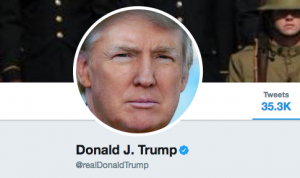
Are Donald Trump's Tweets Self-Authenticating?
A big issue for litigators today: how to preserve, produce, and introduce social media evidence at trial. -
 Morning Docket
Morning Docket: 06.12.17
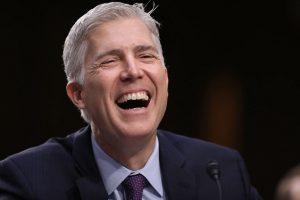
* President Donald Trump will reportedly visit the Supreme Court later this week for Justice Neil Gorsuch’s official investiture ceremony. Based on the president’s prior behavior, it may only be a matter of time before he refers to his appointee as an “absolute disaster” whose “mind is shot.” [USA Today]
* Former U.S. attorney Preet Bharara, who was fired by President Trump after he was asked to remain in his post, says phone calls he received from Trump made in an effort to “cultivate some kind of relationship” made him uncomfortable. In response, a spokesman for Marc Kasowitz called Bharara a “resistance Democrat,” and said “he deserved to be fired.” [Washington Post]
* In other news, Marc Kasowitz, who will likely be setting up an office on White House grounds where he can run President Trump’s defense, has reportedly told White House aides to hold off on hiring their own lawyers — a move that would only be in his client’s interest, and against their own. [New York Times]
* In defense to a lawsuit, the Justice Department has likened President Trump to George Washington (yup!), alleging that Trump isn’t violating the Emoluments Clause of the Constitution by accepting payments for goods and services like hotel bills and golf club fees from foreign governments. [Bloomberg]
* In the wake of former FBI director James Comey’s tell-all appearance before the Senate Intelligence Committee, Attorney General Jeff Sessions will now have to testify himself on the ongoing probe into Russian’s election interference. Hmm, what will the recused AG have to say for himself? [New York Times]
* “It was really disgusting and really scary.” Joseph Amico of Las Vegas was arrested after he allegedly called New York lawyer Douglas Wigdor a “n**ger lover” and threatened to blow up his firm. Wigdor is representing plaintiffs in a racial discrimination lawsuit against Fox News Channel. [New York Daily News]
* Miguel A. Méndez, Stanford Law’s first Latino professor, RIP. [Stanford News]
-
 Justice, Politics
The Death Of Evidence
The left has been proffering a series of baseless accusations against the Trump White House since day one.
Sponsored
Navigating Financial Success by Avoiding Common Pitfalls and Maximizing Firm Performance

Legal AI: 3 Steps Law Firms Should Take Now

Generative AI In Legal Work — What’s Fact And What’s Fiction?

Sponsored
Is The Future Of Law Distributed? Lessons From The Tech Adoption Curve

The Business Case For AI At Your Law Firm
-
 Morning Docket
Morning Docket: 05.17.17
* “I hope you can let this go.” Former FBI director James Comey was writing memos detailing his conversations with Donald Trump to document what he believed were the president’s improper attempts to influence the Michael Flynn investigation. Comey, a damn good lawyer, likely knew that an FBI agent’s notes are admissible in court as credible evidence. [New York Times]
* The Securities and Exchange Commission just got a Biglaw-style facelift: SEC Chairman Jay Clayton, formerly of Sullivan & Cromwell, has asked Willkie Farr partner Robert Stebbins to serve as his general counsel and SullCrom associate Sean Memon to serve as his deputy chief of staff. [Big Law Business]
* Rolling your eyes and calling a federal judge’s ruling on an objection “f*cking bullsh*t” will certainly do you absolutely no favors in Judge Amy St. Eve’s courtroom. In fact, it just might get you suspended from practice for three months and barred from being a lead trial attorney for a year. [Chicago Tribune]
* “I’m an attorney in a capital case!” In videos introduced into evidence during Dylann Roof’s mental competency hearings, the convicted killer said his attorneys were “evil,” “the spawn of hell,” and “liars,” and only wanted to keep them while representing himself “so I can abuse them.” [Post and Courier]
* Drake Law School has entered into an agreement with three historically black colleges and universities to increase its diversity. Entering students will be guaranteed a scholarship to cover at least half of their tuition. Drake’s first-time bar pass rate in Iowa was 82 percent in July 2016. [Iowa Public Radio]
-
 Crime
CrimeWhen So-Called Real Science Becomes Junk
Say no to science, but yes to punishment? Criminal justice has just taken a step backward. -
 Divorce Train Wrecks
In Fairness, Chili Is An Affirmative Defense To Child Neglect In Texas
Sure it's hot, but will I remember my kids after this chili? -
Divorce Train Wrecks
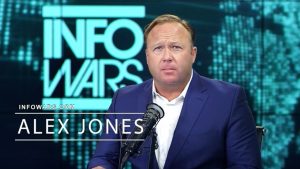
When Is An Insane Conspiracy Theorist A Bad Parent?
Bizarre strategy in Alex Jones case. -
 Non-Sequiturs
Non-Sequiturs: 02.09.17
* This is what happens when your primary qualification for a job is being on The Real World. [Vox] * Oh, Kellyanne. Now you’ve gone and done it. [Citizens For Ethics] * The ACLU is set to get another big donation, this time courtesy of a talent agency’s Oscars party. [Huffington Post] * A look […]
-
 Crime
CrimeWhat Do You Do When You Get A Terrible Case? You Make Lemonade
Harping on the burden of proof and not actual innocence is always the way to go. -

