Fourth Amendment
-
 Police
Cops Stopping Kids In Prom Date Pranks... Yeah, That’s Not Legal
What's a little "violating the constitution" matter if it makes for a good prom story? -
 Constitutional Law, Politics
Liberal Silence Tramples The Fourth Amendment
The Fourth Amendment is not a partisan issue, but a cherished constitutional right that both parties must protect.  Sponsored
Navigating Financial Success by Avoiding Common Pitfalls and Maximizing Firm Performance
In this CLE-eligible webinar, we’ll explore the most common accounting pitfalls and how to avoid them for your firm.-
 Non-Sequiturs
Non-Sequiturs: 03.10.17
* Let the heads roll: 46 US Attorneys reportedly asked for their resignation by Jeff Sessions. [The Hill] * Woman lawyer gives important speech, people care only about her body. [Washington Post] * This is why education about your legal rights is essential. [New York Post] * Eight interesting and largely horrifying facts about the Texas prison system. [Versus Texas] * Travis LeBlanc, formerly of the FCC, is heading to Boies Schiller. [Law and More] * This Fourth Circuit case is being described as "one of the most gruesome and inhumane decisions in recent memory." [Slate] * Being a public figure has to change your Twitter habits. [Huffington Post] * What's the future for organized labor? [Lawyers, Guns and Money] * How does appropriate dress vary from city to city? [Corporette]
-
 Morning Docket
Morning Docket: 03.01.17
* Amazon is struggling to protect law enforcement from turning the Echo into a permanent wiretap. Maybe they should ask Alexa if she can find some caselaw. [Law.com]
* Is this the next Solicitor General? [National Law Journal]
* In case you missed it, a bunch of whiny snowflakes are complaining that law schools don’t respect their opinions. [Volokh Conspiracy / Washington Post]
* If you’re wondering what life might be like in a totalitarian version of America, consider this profile of Jones Day. [American Lawyer]
* Kellogg Huber is now Kellogg Hansen for those keeping score at home. [Kellogg Hansen]
* Summer Associate hiring hit a wall last year. Not a good sign for the fragile 3-hour lunch industry going forward. [Am Law Daily]
* Dewey & LeBoeuf’s Stephen DiCarmine has gotten the government’s documents surrounding the Frank Canellas plea deal. [Law360]
-
 Technology
Court Documents Appear To Confirm The FBI Is Using Best Buy Techs To Perform Warrantless Searches For It
The Geek Squad is on the case! But maybe they shouldn't be. -
 Morning Docket
Morning Docket: 12.01.16
* GCs just keep getting raises. Some reports suggest compensation is up almost 7 percent this year. But don’t worry — they’ll still bitch and moan about Biglaw associates getting a small cost of living bump. [Corporate Counsel]
* If you haven’t been paying attention, William & Mary Law School has been on FIRE lately. No, literally, the school is on fire. Call 911. [WAVY 10]
* Seventh Circuit may soon rule en banc to ban sexual orientation bias. You know, until Congress and the President impeach the entire Seventh Circuit to bring it back. Wow that was an absurd sentence and yet it’s entirely plausible right now. [Law360]
* Kelley Drye enters the Texas market. [The Am Law Daily]
* Heroic big banks are demolishing patent trolls while everyone else continues to suffer, which sounds about right. [Law.com]
* China’s got a new cybersecurity law and it’s not good news for foreign businesses. [Fortune]
* But don’t worry, the U.S. is now just as intrusive with new rules taking effect today that allow judges to order broader government hacking for investigative fishing expeditions. So… yay! [Ars Technica]
-
 Constitutional Law, Law Professors, Law Schools
Get Off My Lawn -- By The Power Of The Fourth Amendment
Two law school professors and their clever constitutional-law project. -
 Technology
Court Says 'Plain Hearing' Applies To Wiretaps, But Eavesdropping Must Stop If Target Isn't Actually Using The Targeted Phone
Another expansion of the police surveillance powers.  Sponsored
How Generative AI Will Improve Legal Service Delivery
Learn how emerging tools will likely change and enhance the work of lawyers for years to come in this new report.-
 White-Collar Crime
Drunk Driving, Texting, and the Fourth Amendment
With a looming Supreme Court case and NY contemplating a shady phone search law, exactly how much consent do you really grant by virtue of having a driver's license? -
 Technology
Encryption, Backdoors, And The All Writs Act Explained By John Oliver
The Last Week Tonight host tackles Apple's clash with the government over iPhone security with trademark wit. -
 Privacy, Technology
We Read Apple's 65-Page Filing Calling B.S. On The D.O.J., So You Don't Have To
Apple lays out the battle lines in its bout with the federal government over privacy, law enforcement, national security, and hacking. -
 Non-Sequiturs
Non-Sequiturs: 02.24.16
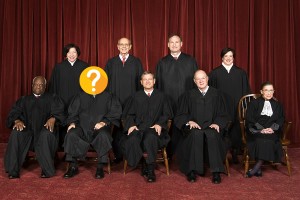
* The only way for Republicans to save face is by… confirming Obama’s Supreme Court choice (even if it isn’t a fellow Republican). [Gawker]
* The complicated relationship between Asian-Americans and justice is highlighted by the Peter Liang protests. [New York Times]
* The greatest impact of Justice Scalia’s passing may be on the Fourth Amendment. [LinkedIn]
* One of Justice Scalia’s long line of clerks who paid tribute to the legal legend after his passing, Professor Brian Fitzpatrick, speaks out on the jurist’s impact. [The Conversation]
* Who has the most to lose in the fight over the Supreme Court? The Chief Justice. [MSNBC]
* Here’s a fun thought experiment: What would Donald Trump have been like as an attorney? [Law and More]
* Apparently this is how you should teach in open-carry on campus locations. Horrifying. [Chronicle on Higher Education]
* Yes, you must attend mediation, even if you are Shaq. [Daily Business Review]
* The long arm of the law takes on Salvadorian death squads. [Guile is Good]
-
 Supreme Court, Television
The Supreme Court According To The Simpsons
Over the years, The Simpsons have touched on the Supreme Court more than a few times.
Sponsored
Navigating Financial Success by Avoiding Common Pitfalls and Maximizing Firm Performance
How Generative AI Will Improve Legal Service Delivery


Legal AI: 3 Steps Law Firms Should Take Now
Sponsored

Early Adopters Of Legal AI Gaining Competitive Edge In Marketplace

Is The Future Of Law Distributed? Lessons From The Tech Adoption Curve
-
 White-Collar Crime
Scalia Will Be Missed By People Being Prosecuted
When eulogizing Justice Scalia, don't forget his significant contributions to criminal law. -
 Non-Sequiturs
Non-Sequiturs: 02.09.16
* That hashtag you’re using might just be a registered trademark, but that doesn’t mean it should be. [Buzzfeed]
* Yale Law students filed a class action representing people held in quarantine for 21 days amid fear of the Ebola virus. [Hartford Courant]
* The Sixth Circuit holds 10 weeks of constant video surveillance from a public road does not constitute a search under the Fourth Amendment. You know if you just assume you are always being watched, none of this really bothers you. [Volokh Conspiracy]
* Understanding the rapid fire world of SnapChat is essential if you don’t want to get left behind in the dustbin of history. [Associate’s Mind]
* Tackling the thorny issue of access to justice, in law school and after. [Reboot Your Law Practice]
* The ABA House of Delegates joins the call for cameras in the Supreme Court. What do they have against puppies? [Fix the Court]
* When we say, “life without parole,” what do we really mean? [The New Yorker]
-
 Police, Politics
Sandra Bland And What No One Seems To Know About Their Rights
Traffic stops are among the most common encounters with law enforcement that most Americans will have; if the average citizen has no clue what her rights or duties are during these encounters, then we’re doing it wrong. -
Technology
Law Enforcement And The Ongoing Inconvenience Of The Fourth Amendment
They'll do everything they can to avoid getting one, even though the process appears to be little more than [INSERT PROBABLE CAUSE] [OBTAIN WARRANT]. -
Technology
Cop To Vet On Receiving End Of Bogus Raid: Investigating Things Beforehand Just Slows Us Down
This is why you can't have nice things. If you define "nice things" as "cops staying out of innocent peoples' homes." -
Constitutional Law, Crime
The Exception Is The Rule: How The Government's 'Good Faith' Efforts Are Destroying The Fourth Amendment
While there has been some progress towards a restoration of the nation’s Fourth Amendment rights, there have also been several steps back. -
Privacy
Does The Mass Collection Of Phone Records Violate The Fourth Amendment?
It may be too clever by half, but maybe the collection of phone data wasn't really a search or seizure? Maybe it's a "reasonable" search?
