-
 Morning Docket
Morning Docket: 05.02.19
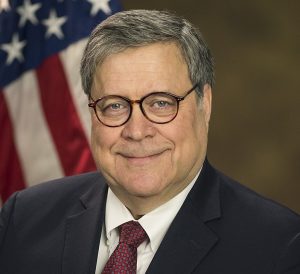
* After what could only be described as a rough day, Attorney General Bill Barr has opted to skip the House Judiciary Committee hearing he’s supposed to attend and force us to remember that Congressional subpoenas are basically worthless. [National Law Journal]
* Speaking of Barr, yesterday spawned a bunch of somber takes like this article with lines like “A few months ago, William Barr was a well-respected former top federal law enforcement official.” No he wasn’t. He was the cover-up artist who helped the first Bush administration stifle Iran-Contra. [The Bulwark]
* Walmart has hired a new general counsel for health and wellness. One might have thought “paying your workers enough money to eat” would be a better way of promoting wellness, but Walmart decided to go with a lawyer. [Corporate Counsel]
* Julian Assange doesn’t want to be extradited to the United States which is an absolute shocker. [ABC News]
* The administration argued that it should be able to keep the emails from private accounts sent as part of its joke voter fraud commission under wraps because irony is dead. Judge Hellerstein disagreed. [Courthouse News Service]
* Google’s CLO made over $47 million last year even though almost every decision he made last year was questionable. [Law360]
-
 Morning Docket
Morning Docket: 04.16.19
* Varsity Blues students receive target letters, which are basically acceptance letters to the criminal justice system. [NY Times]
* Greg Craig looking at an August trial date. That may sound soon, but this matter is all about the rushin’. [National Law Journal]
* The Department of the Interior has opened an ethics investigation into its new head. He was confirmed a mere four days ago. [Courthouse News Service]
* Circuit splits are on the rise and many are blaming the Supreme Court for not taking up the important cases for judicial efficiency. Who’d have thought morphing the body into an ideology factory would have a downside? [Law360]
* Google has a database of every physical location you’ve visited that they willingly share with law enforcement. Enjoy! [How To Geek]
* Legal operations are entering the law school curriculum in the event your legal dream is to be an efficiency expert for Biglaw. [American Lawyer]
* The sitting president compared interest in his finances as an elected official to FBI harassment of civil rights leaders. This is a thing that really happened. [Daily Beast]
 Sponsored
Early Adopters Of Legal AI Gaining Competitive Edge In Marketplace
How to best leverage generative AI as an early adopter with ethical use.-
 Police
NYPD Wishes Google, Waze Had Never Heard Of This First Amendment Thing
I like it when police try their cease-and-desist intimidation tactics on somebody who understands their rights.
-
 Intellectual Property
Oracle v. Google: Will SCOTUS Take Up Case With Significant Software Implications?
Does copyright cover application programming interfaces? This will have significant impacts on computers, software, and technology. -
 Technology
No Expectation Of Privacy In Own Facial Biometrics
Google wins lawsuits over facial recognition. -
 Morning Docket
Morning Docket: 11.09.18
* Matt Whitaker thinks Marbury v. Madison should be overturned. We truly live in the dumbest timeline. [National Law Journal]
* Heightened security as Kavanaugh formally joins the Court. That’s a good idea, he seems like a dangerous man. [NPR]
* Amazon really excited about its new role as a leader in wrongly convicting people. [The Verge]
* Baker Donelson is just a big Skinner Box for tech adoption now. More firms should follow suit. [American Lawyer]
* Google is ending its practice of forcing sexual harassment claims into arbitration in another advancement spurred by the #MeToo movement. [Law360]
* Bryan Cave unveils new tech service to help clients evaluate the value of pursuing litigation. [Corporate Counsel]
* The Justice Department put out a new rule limiting asylum claims in violation of international law because that’s how this country rolls now. [Reuters]
* Voter suppression tactics don’t work as well after the votes are cast. [The Hill]
-
 Technology
Feds Also Using 'Reverse Warrants' To Gather Location/Identifying Info On Thousands Of Non-Suspects
Just like the Bill of Rights intended... -
 Morning Docket
Morning Docket: 10.25.18
* Justice Department launches its bid to reverse LGBTQ rights. I’ll bet several liked beers that the timing isn’t a coincidence. [National Law Journal]
* Speaking of the Supreme Court, anthropomorphic hemorrhoid Charles Harder is asking the Court to get rid of Section 230 so every website can be sued into oblivion for defamation they don’t even commit. [The Verge]
* With Baker McKenzie chair Paul Rawlinson stepping down from exhaustion, other Biglaw managing partners line up to describe how hard they have it. [American Lawyer]
* Latham & Watkins partner takes Lording his position over everybody literally. [Legal Cheek]
* “Hey Google, what are sanctions?” [Law360]
* The DOJ may have won the stay it wanted, but it’s still staring down a trial over the census. [New York Law Journal]
* Judge set to resolve one of the many shady election law problems plaguing Georgia. [Courthouse News Service]
 Sponsored
The Business Case For AI At Your Law Firm
ChatGPT ushers in the age of generative AI – even for law firms.-
Technology
Just As Expected: GDPR Has Made Google Even More Dominant In Europe
Working out exactly as planned... -
 Non-Sequiturs
Non-Sequiturs: 09.16.18
* Will Senator Susan Collins be persuaded by the campaign to get her to vote against Judge Brett Kavanaugh? Ed Whelan has his doubts. [Bench Memos / National Review]
* Speaking of the Supreme Court, Adam Feldman identifies his “Supreme Court All-Stars” (2013-2017): the lawyers and law firms with the most arguments — and wins — before the high court. [Empirical SCOTUS]
* Greg Lukianoff and Adam Goldstein offer tips for protecting freedom of speech on college campuses, inspired by a new book, The Coddling of the American Mind (affiliate link) by Greg Lukianoff and Jonathan Haidt. [Volokh Conspiracy / Reason]
* Charles Glasser to news organizations, on the subject of self-policing: do better. [Daily Caller]
* How should we evaluate the success of law firm mergers? Madhav Srinivasan of Hunton Andrews Kurth has some thoughts on methodology. [Law.com]
* And Orin Kerr offers a proposal for applying the Fifth Amendment privilege against self-incrimination to compelled “decryption” of a locked phone, computer, or file. [SSRN]
* Speaking of privacy, Google is taking some heat in Arizona over its alleged practice of recording location data of Android device owners even if they opted out of such tracking. [Washington Post]
* When it comes to learning how to integrate technology into the delivery of legal services, American law firms can learn a thing or two from the Brits — as the latest move by CMS suggests. [Artificial Lawyer]
-
 Morning Docket
Morning Docket: 07.24.18
* It’s the first day of the bar exam in a number of jurisdictions. These young lawyers have suggestions for your last month of freedom. [Young Lawyers Advisory Board]
* Jeff Sessions is withholding funding from local law enforcement. Just the latest example of Dummy the House Elf’s curious interpretation of being “tough on crime.” [NJ.com]
* Now Trump will meet with Mueller? Oh, he’ll talk to Mueller about anything but obstruction. So I guess they could discuss the weather. [Time]
* Stormy Daniels is getting a divorce. [NY Times]
* After a dicey back and forth with the ABA, NCCU has retained its accreditation. [News & Observer]
* The EU keeps fining American companies. American companies keep right on monopolizin’. [The Economist]
* Jonathan Turley goes all “get off my lawn” about Millennials and free speech. Magistrate Judge James Donohue points out that Millennials might appreciate free speech more if they had any reason to believe people like Turley weren’t trying to turn it into a pay-to-play right. [Courthouse News Service]
-
 Technology
The European Union Is A Foe... To Google, It Seems
EU hits Google with a $5 billion antitrust fine. -
 Intellectual Property
Unfair Use? Why Google's Ongoing Battle With Oracle Matters To Your Business
It's worth it to carefully review all underlying licenses to APIs before engaging in any development for commercial use.
Sponsored

Is The Future Of Law Distributed? Lessons From The Tech Adoption Curve

Navigating Financial Success by Avoiding Common Pitfalls and Maximizing Firm Performance

Legal AI: 3 Steps Law Firms Should Take Now
Sponsored
Early Adopters Of Legal AI Gaining Competitive Edge In Marketplace
The Business Case For AI At Your Law Firm

-
Labor / Employment, On The Job
White Conservative Dudes Sue Google For Gender And Race Discrimination
Can conservative white guys really sue for discrimination and harassment? Yup! -
 Morning Docket
Morning Docket: 01.09.18
* While the #metoo phenomenon receives deserved attention for uncovering decades of vile behavior, it also presents business opportunities. Stroock & Stroock has put together a group headed by ormer U.S. District Judge Shira Scheindlin and former New York State Attorney General Robert Abrams to conduct internal investigations for companies concerned about harassment on their watch. [New York Law Journal]
* Idiot techie fired after saying women weren’t smart enough to work in Silicon Valley files class action suit against Google with help of idiot lawyer who thinks this is a “shot across the bow” of tech companies that they need to be more serious about creating hostile work environments… or something. [The Recorder]
* The SDNY takes judicial notice that Louis Vuitton needs a sense of humor. [Law360]
* An Italian judge is accused of turning his law school into a misogynistic “cult.” Oh Italy… just like us. [Washington Post]
* Kirkland has done a little more poaching. [American Lawyer]
* Tips for aspiring GCs. [Corporate Counsel]
* The last substantive line of Macmillan’s response to Trump’s cease and desist highlights the lockdown argument against Trump’s litigious posturing — “yo, you realize discovery goes both ways, right?” [Slate]
-
 In-House Counsel
From Cal, To Counsel, To Changing The World: Lessons From Former Pinterest GC Mike Yang
Yang reveals several insights for navigating an impactful legal career in a chat with Berkeley Law students. -
 Sponsored Content, Technology
InfoTrack: Revolutionizing The World Of Company Research With Integrated Searching Designed To Make Your Life Easier
By introducing a whole new world of integrated search capabilities, InfoTrack has changed the company research game. -
 Artificial Intelligence, Promoted, Technology
Push Research: How AI Is Fundamentally Changing The Way We Research The Law
'Push Research' is one of the most consequential applications of artificial intelligence technology, especially to lawyers. -
 Labor / Employment, Minority Issues, On The Job
The Curious Case Of The Employee Manifesto: Diversity Initiatives Are Hard Work
Three tips for enhancing diversity, from employment lawyer Beth Robinson. -
 Morning Docket
Morning Docket: 07.18.17
* R. Kelly’s lawyer responds to allegations that a bunch of women are trapped in the proverbial closet. [Entertainment Tonight]
* The big news of the night was the slow, painful, uncovered death of the GOP tax cut. McConnell now says he’ll push for a clean repeal of Obamacare and leave the “replace” part for later, which would theoretically take it out of the reconciliation process. And that means 60 votes or some drastic changes. This is either a bluff or a lot of people are about to learn more than they ever wanted to know about parliamentary rules. [ABC News]
* Need judicial approval to tour the country? Sing it with me now… “Jed Gon’ Give It To Ya.”[Law360]
* Justice Kagan with an amusing anecdote about being vetted by the Obama administration. [National Law Journal]
* Plaintiffs’ attorneys in the Trump University case say efforts to undo the settlement over notice concerns, “effectively ask this court to declare Rule 23 unconstitutional.” Dude, I hate to break this to you, but that’s what the Supreme Court’s been saying for at least 10 years.
* Disney is locked in an IP litigation over the technology they use to map actors’ expressions onto CGI characters in movies like in Avengers: Age of Ultron, where they made a merciless robot fixated on world domination appear to have a soul. Sorry, did I say Avengers? I meant “a Bob Iger presentation at a Disney shareholder meeting.” [Law.com]
* Because all other problems in the country are settled, Congress is looking into overturning Washington D.C.’s assisted suicide law. [USA Today]
* Charlie Hustle is suing Trump lawyer John Dowd formerly of Akin Gump for defamation. [Philadelphia Inquirer]
* Google successfully staves off Labor Department request for compensation information in ongoing discrimination probe. God, Assistant can’t give you any useful information. [Corporate Counsel]
