Litigators
-
 Department of Justice, Solicitor General's Office, Supreme Court
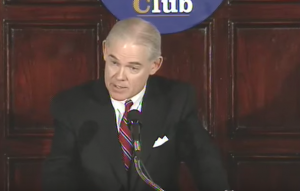
The Case For Chuck Cooper As Solicitor General
A former colleague offers warm words of support for one of the two SG finalists. -
 Boutique Law Firms, Litigators, Small Law Firms
Work With Other Professionals You Trust To Better Serve Your Clients
Sometimes, to best advise clients, litigators must go beyond the world of litigation.  Sponsored
The Business Case For AI At Your Law Firm
ChatGPT ushers in the age of generative AI – even for law firms.-
 Litigation Finance, Litigators, Money
Litigation Finance: Interview With A Funder
How does a litigation financier value a legal claim? And other mysteries revealed.
-
 Technology
This Week In Legal Tech: The Keyboard That Consumed The Legal Profession
Never in my two decades of covering legal technology have I seen the legal world react to a new product like this. -
 Document Review, Litigators
Firm In Hot Water Over Its Use Of Temp Attorneys
Temporary attorneys are still real lawyers. -
 Boutique Law Firms, Litigators, Small Law Firms
Don't Be A 'Designer'; Own The Nuts And Bolts
Lawyers like to think we are de Tocqueville’s priesthood of America -- and we are, but we still need to know and address the nitty-gritty. -
 Associate Salaries, Money
Nationwide Pay Raise Watch: Which Firm Pays A Starting Salary Of $200,000?
This firm has bumped up its first-year salaries not once, but twice in the past nine months. -
 Technology
Debuting Today: A Keyboard Designed Just for Lawyers
"Brian Potts had me at the section symbol," says technology columnist Bob Ambrogi.  Sponsored
Navigating Financial Success by Avoiding Common Pitfalls and Maximizing Firm Performance
In this CLE-eligible webinar, we’ll explore the most common accounting pitfalls and how to avoid them for your firm.-
 Litigation Finance, Litigators, Money
The 2017 Outlook For Litigation Finance
Why is the litigation finance field so small? -
 Boutique Law Firms, Litigators, Small Law Firms
For Court, Always Dress The Part
Or risk being judged on your appearance, rather than the merits of your case. -
 Litigation Finance, Technology
David v. Goliath: Legalist Levels The Lit Playing Field
An innovative startup harnesses technology and big data to solve the access-to-justice problem. -
 Litigation Finance, Litigators, Money
Lessons From The Burford-Gerchen Keller Deal
What might have motivated this major deal in the litigation financing space? -
 Labor / Employment, On The Job
On Making Decisions
How can we confidently own our decisions, even if they turn out to be unpopular?
Sponsored
Sponsored
The Business Case For AI At Your Law Firm
The Business Case For AI At Your Law Firm

ChatGPT ushers in the age of generative AI – even for law firms.
Sponsored
Navigating Financial Success by Avoiding Common Pitfalls and Maximizing Firm Performance
In this CLE-eligible webinar, we’ll explore the most common accounting pitfalls and how to avoid them for your firm.

Sponsored
Legal AI: 3 Steps Law Firms Should Take Now
If 2023 introduced legal professionals to generative AI, then 2024 will be when law firms start adapting to utilize it. Things are moving fast, so…
Sponsored

Sponsored
Is The Future Of Law Distributed? Lessons From The Tech Adoption Curve
The rise of remote work has dramatically reshaped the relationship between Lawyers and Law Firms, see how Scale LLP has taken the steps to get…

Sponsored
Early Adopters Of Legal AI Gaining Competitive Edge In Marketplace
How to best leverage generative AI as an early adopter with ethical use.
-
 Boutique Law Firms, Litigators, Small Law Firms
You Don’t Own Your Timetable As A Trial Lawyer
We cannot delude ourselves into thinking we control the timetable, since we do not. Our clients do, and the judges and arbitrators before whom we practice do. -
 Books, Litigators
Standard Of Review: 'Law And Disorder' Is Strong On Legal Process, But Struggles With Story And Characters
An entertaining read, but undermined by its lack of character development and clumsy integration of the author's views. -
 Litigation Finance, Litigators, Money
A Major Merger In Litigation Finance Means A Giant Payday For Three Young Lawyers
They're all in their thirties, and they'll split an eight-figure payout. -
 Litigation Finance, Litigators, Money
Variety Fuels Billion-Dollar Litigation Finance Funds Of Tomorrow
Litigation funding is an unsettled environment, and there's plenty of room for innovation and new ideas. -
 Bonuses, Boutique Law Firms, Money
Associate Bonus Watch: Still More Boutique Bonus Bounty
This firm's approach to calculating bonuses is a bit different, but the end result is still bonuses well above market. -
 Bonuses, Boutique Law Firms, Money
Associate Bonus Watch: More Big Boutique Bonuses
Here's another boutique offering above-market compensation. -
 Boutique Law Firms, Litigators, Small Law Firms
Know How Your Team Works
The best trial lawyers not only build their teams with the best people, but people who work well together.
