
University of California, Irvine
Recent Headlines from Above the Law
-
 Law Schools
Law School Overenrollment Is An Even Bigger Problem Than We Feared
This is unlikely to be the end of this story. -
 Law Schools
Top Law School Will Make Race-Related Coursework Mandatory For Graduation
The school is the second in the country -- and the first in the UC system -- to require such a class. -
 Law Schools
Professor At Top Law School Uses N-Word And Won't Apologize For It
Updated with a response from the professor. -
 Law Schools
Student From Top Law School Posts Threatening Video With Gun On Social Media
The school has issued a 'stay away' order against the student in question. -
 Law Schools
Pregnant Law Student Attends Class Via Robot Thanks To This Law School's Unique Tech Intervention
Robots may be coming for lawyers' jobs in the future, but for now, they're incredibly helpful. -
 Law Schools
Public Interest IP Law School Clinics
Participating in clinics can be an amazing opportunity to gain valuable practical experience. -
 Courts
Is It Time To Stop Worshipping Justice Ruth Bader Ginsburg As A Legal Celebrity?
Some would agree to disagree with this law professor. -
 Law Schools
New Dean Will Be Only Woman Of Color To Lead Top 30 Law School
We can only hope that the school will continue its meteoric rise in the rankings under her guidance. -
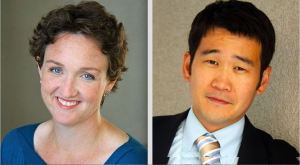 Law Schools, Politics
2 Law Profs From Same School Pitted Against Each Other In Congressional Race
The professors smell opportunity in the historically Republican district. -
Affirmative Action, Education / Schools, SCOTUS, Supreme Court
Does The Equal Protection Clause Forbid Racial Preferences In State University Admissions?
Consider this your preview of the Fisher redux. -
Antonin Scalia, Erwin Chemerinsky
With All Due Respect, Dean, Justice Scalia Probably Doesn't Give A Damn About What You Think
This law school dean thinks Justice Scalia is a bad influence on young attorneys. -
Morning Docket
Morning Docket: 05.12.15
* Dean Erwin Chemerinsky of the UC Irvine School of Law thinks it’s time for California to follow New York’s lead and adopt the Uniform Bar Exam. After all, if doctors don’t have to take separate exams each time they move to a new state, lawyers shouldn’t have to do it either. [Los Angeles Times]
* A jury just returned a verdict of $0 for a police officer who was severely burned after spilling a cup of free Starbucks coffee in his lap. The pictures of the burns that were used as evidence are pretty nasty, so you’ll obviously want to check them out. [NPR; WTVD]
* According to a survey conducted by Kaplan Test Prep, 56 percent of recent law grads would have preferred to condense their schooling to two years, while just 34 percent of prospective law students felt similarly. Oh, to be that naive again. [National Law Journal]
* Violent besties? As it turns out, the gun altercation George Zimmerman was involved in yesterday was apparently part of some sort of ongoing feud with Matthew Apperson, the same man he threatened to kill in a road rage incident last year. [Crimesider / CBS News]
* If you’re wondering what you should do during the summer before going to law school, then you can take the advice of this future gunner and possibly enroll in a pre-law prep course and work yourself to death, or you can relax. It’s up to you. [The Diamondback]
-
Morning Docket
Morning Docket: 03.11.15
* As we mentioned, U.S. News is giving law schools less credit for hiring their own grads. Rumor has it that a few schools would’ve done better in the rankings but for their high percentage of school-funded jobs. Which ones? [WSJ Law Blog]
* Two students in the Sigma Alpha Epsilon fraternity from Oklahoma University were expelled after a video of their racist chanting was leaked online. Lawyers want to know: was their expulsion a First Amendment violation? [Volokh Conspiracy / Washington Post]
* UC Irvine Law debuted on the 2016 U.S. News law school rankings at No. 30, missing Dean Erwin Chemerinsky’s goal of starting out as a Top 20 school. Not to worry, Dean, there are still ways to game the rankings. Keep your head up! [National Law Journal]
* Don’t bother delaying your law school education just because the economy’s bad. The professors who told us that a law degree is worth $1 million think that its value will only drop by about $30K in times when unemployment is high. Yeah, okay. [ABA Journal]
* The grisly murder of DLA Piper associate David Messerschmitt, who was found stabbed to death in a Washington, D.C., hotel, remains unsolved. Police are still searching for the “person of interest” who was seen on video from the hotel’s security camera. [Legal Times]
-
Quote of the Day
Law School Slashes Students To Game U.S. News Rankings
Everything wrong with the U.S. News ranking methodology in one post. -
American Bar Association / ABA, Federal Judges, Gay Marriage, Job Searches, Law Schools, Morning Docket, SCOTUS, Sports, Stephen Breyer, Supreme Court
Morning Docket: 06.09.14
* If you’ve ever wondered what’s being said about Supreme Court justices during the vetting process, we’ve got a great one-liner about Justice Breyer, who’s apparently a “rather cold fish.” Oooh, sick burn. [Wall Street Journal (sub. req.)]
* The NLJ 350 rankings are here, and this is where we get to see the big picture about the big boys of Biglaw. In 2013, it looks like headcount grew by 3.9 percent, which is good, but not great, all things considered. Meh. [National Law Journal]
* A Wisconsin judge is the latest to give her state’s ban on same-sex marriage the finger, and she did it with flair, noting in her opinion that “traditional” marriages throughout history were polygamous. [Bloomberg]
* The Ed O’Bannon antitrust case against the NCAA is going to trial today before Judge Claudia Wilken. Since it could change college sports forever, here’s everything you need to know about it. [USA Today]
* According to the Bureau of Labor Statistics, the number of those employed in the legal sector is at its lowest level since the beginning of 2014, with jobs still being shed. Welcome, graduates! [Am Law Daily]
* UC Irvine Law has finally earned full accreditation from the American Bar Association. We’d like to say nice work and congrats, but we’re pretty sure the ABA would fully accredit a toaster. [Los Angeles Times]
-
Law Professors, Law School Deans, Law Schools, New York Times
Yet Another Defense Of Law Schools (Yawn)
Who's coming to the defense of legal academia in the New York Times now? -
Law School Deans, Law Schools, Rudeness
Would-Be Law Student Responds To Rejection Letter As Only A Future Lawyer Can -- By Being An Epic Tool
How badly do you want to go to law school? Badly enough to ruin your future admission prospects? -
Boalt Hall, Law Professors, Law Schools, Rankings, Vanderbilt
Law School Rankings: Who Has The Most Important Professors?
A new ranking of the scholarly impact of legal academics. -
Law Schools, Money, Reader Polls, Student Loans
The Decision: Tempted By The 'T14'
Please advise three more prospective law students on where they should go. They've gotten into some great schools, but greatness isn't cheap. -
Job Searches, Law Schools, Rankings, Student Loans, U.S. News
Open Thread: 2014 U.S. News Law School Rankings (The Second Tier)
Do you have something to say about your law school's U.S. News ranking? This is the place to do it!
Promoted

Is The Future Of Law Distributed? Lessons From The Tech Adoption Curve
Is The Future Of Law Distributed? Lessons From The Tech Adoption Curve
The rise of remote work has dramatically reshaped the relationship between Lawyers and Law Firms, see how Scale LLP has taken the steps to get ahead in the technology adoption race.
The rise of remote work has dramatically reshaped the relationship between Lawyers and Law Firms, see how Scale LLP has taken the steps to get ahead in the technology adoption race.
Promoted

Early Adopters Of Legal AI Gaining Competitive Edge In Marketplace
Early Adopters Of Legal AI Gaining Competitive Edge In Marketplace
How to best leverage generative AI as an early adopter with ethical use.
How to best leverage generative AI as an early adopter with ethical use.
Promoted

The Business Case For AI At Your Law Firm
The Business Case For AI At Your Law Firm
ChatGPT ushers in the age of generative AI – even for law firms.
ChatGPT ushers in the age of generative AI – even for law firms.
Promoted

Navigating Financial Success by Avoiding Common Pitfalls and Maximizing Firm Performance
Navigating Financial Success by Avoiding Common Pitfalls and Maximizing Firm Performance
In this CLE-eligible webinar, we’ll explore the most common accounting pitfalls and how to avoid them for your firm.
In this CLE-eligible webinar, we’ll explore the most common accounting pitfalls and how to avoid them for your firm.
