

Charles Glasser
-
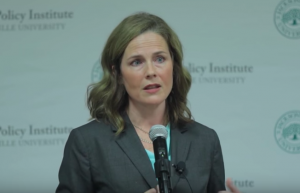
* Adam Feldman explores the possible effect on the Supreme Court of replacing Justice Ruth Bader Ginsburg with a staunch conservative — e.g., Judge Amy Coney Barrett. [Empirical SCOTUS]
* Speaking of SCOTUS, here’s Ilya Somin’s read of the tea leaves in Knick v. Township of Scott, an important Takings Clause case. [Volokh Conspiracy / Reason]
* Stephen Embry disagrees with Joe Patrice’s suggestion that junior lawyers are going extinct, but Embry acknowledges the major effect that technology is having, and will continue to have, on legal practice and employment. [TechLaw Crossroads]
* Charles Glasser looks at what might have caused the political polarization of the modern media and its consumers. [Daily Caller]
* The prospect of Michael Cohen testifying publicly before Congress is making some people giddy — but it’s not without its downsides, as Joel Cohen explains. [The Hill]
* What can we learn from official Washington utterances about the shutdown? Here’s some intel from VoxGov, via Jean O’Grady. [Dewey B Strategic]
* Not all provisions of the Bill of Rights are created equal, according to Gerard Magliocca. [PrawfsBlawg]
* David Berg draws lessons for trial lawyers from the genius of Joe Jamail’s use of hypothetical questions. [YouTube]
-
* Many believe that today’s Supreme Court is one of the hottest benches in history; Adam Feldman uses data to assess the claim. [Empirical SCOTUS]
* As for who takes the SCOTUS bench, contingency plays a major role — along with credentials and conservatism, as Ian Millhiser explains. [ThinkProgress]
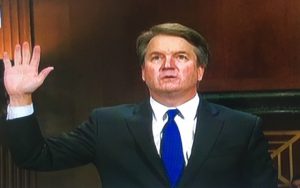
* Most people have their minds made up about Thursday’s Supreme Court confirmation hearings featuring Dr. Christine Blasey Ford and Judge Brett Kavanaugh — but if you’re still trying to process the proceedings, David Oscar Markus offers five simple rules for evaluating the witnesses. [The Hill]
* Ann Althouse has some reflections on Judge Kavanaugh’s emotional testimony and “present-day conservative masculinity.” [Althouse]
* David Bernstein proffers this interesting solution to the Kavanaugh nomination situation — but don’t hold your breath for its implementation. [Volokh Conspiracy / Reason]
* If the road to hell is paved with good intentions, “the EU is busy building a three-lane highway that leads to a particularly dark place,” according to Charles Glasser. [Daily Caller]
* Lawyer Luddites: “AI in the legal space is not scary,” as explained by David Kleiman of Bloomberg Law. [Artificial Lawyer]
* Indeed, as Greg Lambert argues, lawyers — especially “working partners” — need to join the innovation conversation. [3 Geeks and a Law Blog]
-
-
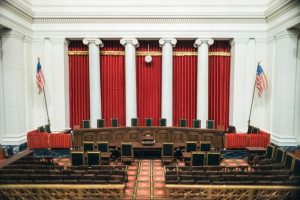
* It’s checkout time at the Supreme Court, and courtroom correspondent Mark Walsh is ready to reveal what’s in his shopping cart. [SCOTUSblog]
* Being cited by the Supreme Court is usually something to boast about — but not always, as Adam Feldman notes in this thoughtful analysis of how much oral arguments matter. [Empirical SCOTUS]
* Will Baude breaks down the Court’s intriguing debate over stare decisis in South Dakota v. Wayfair. [PrawfsBlawg]
* Joel Cohen looks at why the federal judiciary gets better treatment from the press than the other two branches of government — and whether the differential is justified. [The Hill]
* Orin Kerr identifies an interesting issue: if a police officer uses Google Translate to try and request consent to search from a non-English speaker in that person’s own language, is the consent valid if Google Translate botched the translation? [Volokh Conspiracy / Reason]
* There’s a long and bipartisan tradition of… the federal government spying on reporters, as Charles Glasser explains. [Daily Caller]
* Speaking of the media, Jean O’Grady points out a helpful new resource from CQ for consumers of news, along with tips for how to tell whether or not a story is “fake news.” [Dewey B Strategic]
* If reforms come to university boardrooms, let’s hope they include law schools as well. [ProfessorBainbridge via Instapundit]
* An interesting new use of voice-activated technology, courtesy of Wolters Kluwer: getting insights into federal tax law. [Artificial Lawyer]
* If you’ll be in New York on Tuesday, July 17, raise your glass with fellow young lawyers, summer associates, and law students, at the UJA’s Summer Law Happy Hour. [UJA Federation of New York]
-

December On Legal Talk Network: The Future Of Technology And Other Legal Topics
This December, lawyers who work closely with technology are looking into the future and considering how legal tech is going to change the marketplace next year, in the next few years, and in the long term.