

Joel Cohen
-

* Where does Justice Brett Kavanaugh fit along the ideological spectrum at the Supreme Court? Adam Feldman evaluates the evidence thus far. [Empirical SCOTUS]
* Speaking of SCOTUS, Frank Pasquale takes Neal Devins and Lawrence Baum’s new book, The Company They Keep: How Partisan Divisions Came to the Supreme Court (affiliate link), as a jumping-off point for exploring the political polarization of SCOTUS. [Balkinization]
* Texas v. Azar, the Obamacare case now pending before the Fifth Circuit, makes for unusual alliances — how often do you see Jonathan Adler, Nick Bagley, Abbe Gluck, and Ilya Somin on the same amicus brief? [Take Care]
* David Bernstein offers some thoughtful reflections — with which I happen to agree — on how some conservatives responded to the nominations of Neomi Rao and Jessie Liu. [Volokh Conspiracy / Reason]
* Joel Cohen has a question about Robert Mueller: “What did he know, and when did he know it?” [The Hill]
* And Cohen also has this interesting interview with Justice David Wecht of the Pennsylvania Supreme Court, about an important (and disturbing) subject: the recent rise in anti-Semitism, in America and abroad. [Tablet]
* If you share my interest in litigation finance, then you might be interested in this great new resource: a comprehensive digital library of documents relating to the litigation-funding industry. [Litigation Finance Journal]
* What trends and technology will shape the future of the legal profession? Jean O’Grady discusses highlights from a new report by Wolters Kluwer. [Dewey B Strategic]
-

* How have personnel changes at the Supreme Court affected the dynamics at oral argument? Adam Feldman offers this analysis. [Empirical SCOTUS]
* Ed Whelan expresses relief over the White House’s new slate of Ninth Circuit nominations. [Bench Memos / National Review]
* Can President Trump declare a “national emergency” in order to build his beloved wall? The National Emergencies Act is not a blank check, according to Brianne Gorod. [Take Care]
* Should Congress pass a “deepfakes” law? Orin Kerr has some concerns. [Volokh Conspiracy / Reason]
* What’s going on with Rudy Giuliani? Joel Cohen has a theory. [The Hill]
* Jean O’Grady is pleased to see all the competition in the legal analytics space (with Precedent Analytics from Thomson Reuters as the newest entrant) — but she’d like to see more support for the competing claims of the different products. [Dewey B Strategic]
* News organizations need stricter and better guidelines when interviewing mentally ill defendants, according to former public defender Stephen Cooper. [The Tennessean]
* Have questions about the fast-approaching February bar exam? Ashley Heidemann has answers. [JD Advising]
-
-
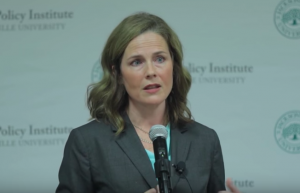
* Adam Feldman explores the possible effect on the Supreme Court of replacing Justice Ruth Bader Ginsburg with a staunch conservative — e.g., Judge Amy Coney Barrett. [Empirical SCOTUS]
* Speaking of SCOTUS, here’s Ilya Somin’s read of the tea leaves in Knick v. Township of Scott, an important Takings Clause case. [Volokh Conspiracy / Reason]
* Stephen Embry disagrees with Joe Patrice’s suggestion that junior lawyers are going extinct, but Embry acknowledges the major effect that technology is having, and will continue to have, on legal practice and employment. [TechLaw Crossroads]
* Charles Glasser looks at what might have caused the political polarization of the modern media and its consumers. [Daily Caller]
* The prospect of Michael Cohen testifying publicly before Congress is making some people giddy — but it’s not without its downsides, as Joel Cohen explains. [The Hill]
* What can we learn from official Washington utterances about the shutdown? Here’s some intel from VoxGov, via Jean O’Grady. [Dewey B Strategic]
* Not all provisions of the Bill of Rights are created equal, according to Gerard Magliocca. [PrawfsBlawg]
* David Berg draws lessons for trial lawyers from the genius of Joe Jamail’s use of hypothetical questions. [YouTube]
-
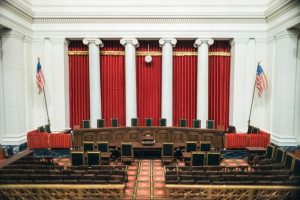
* It’s checkout time at the Supreme Court, and courtroom correspondent Mark Walsh is ready to reveal what’s in his shopping cart. [SCOTUSblog]
* Being cited by the Supreme Court is usually something to boast about — but not always, as Adam Feldman notes in this thoughtful analysis of how much oral arguments matter. [Empirical SCOTUS]
* Will Baude breaks down the Court’s intriguing debate over stare decisis in South Dakota v. Wayfair. [PrawfsBlawg]
* Joel Cohen looks at why the federal judiciary gets better treatment from the press than the other two branches of government — and whether the differential is justified. [The Hill]
* Orin Kerr identifies an interesting issue: if a police officer uses Google Translate to try and request consent to search from a non-English speaker in that person’s own language, is the consent valid if Google Translate botched the translation? [Volokh Conspiracy / Reason]
* There’s a long and bipartisan tradition of… the federal government spying on reporters, as Charles Glasser explains. [Daily Caller]
* Speaking of the media, Jean O’Grady points out a helpful new resource from CQ for consumers of news, along with tips for how to tell whether or not a story is “fake news.” [Dewey B Strategic]
* If reforms come to university boardrooms, let’s hope they include law schools as well. [ProfessorBainbridge via Instapundit]
* An interesting new use of voice-activated technology, courtesy of Wolters Kluwer: getting insights into federal tax law. [Artificial Lawyer]
* If you’ll be in New York on Tuesday, July 17, raise your glass with fellow young lawyers, summer associates, and law students, at the UJA’s Summer Law Happy Hour. [UJA Federation of New York]
-

* A question that has crossed the mind of every Biglaw corporate associate: “How much of lawyering is being a copy-and-paste monkey?” [3 Geeks and a Law Blog]
* Kenneth Jost notes out how Justices Ginsburg and Gorsuch like to butt heads — and scores the fight 2-0 in RBG’s favor. [Jost on Justice]
* And speaking of rumbles at One First Street, which pairs of justices have the most disagreements with each other, as reflected in majority and dissenting opinions? Adam Feldman has answers. [Empirical SCOTUS]
* Saira Rao, former Cleary Gottlieb associate and author of the clerkship novel Chambermaid (affiliate link), takes on a new challenge: running for Congress. [American Bazaar]
* Data privacy is the name of the game these days, and Thomson Reuters is ready; TR showed off its new, Watson-enabled Data Privacy Advisor at Legalweek here in New York. [Dewey B Strategic]
* Amidst all the hoopla and robot fights at Legalweek, it would be easy to overlook the latest news from Neota Logic — but you shouldn’t. [Artificial Lawyer]
* Should more states move away from requiring unanimous jury verdicts in criminal cases? Joel Cohen argues that 11 is not enough. [Law & Crime]
* Can a U.S. court punish someone for their speech, on the theory that he breached an agreement not to speak, while keeping the speech-restrictive agreement secret? Eugene Volokh thinks not (with good reason). [Volokh Conspiracy / Reason]
* Dewey see an end in sight for legal proceedings related to the collapse of the Biglaw giant? Former executive director Stephen DiCarmine was supposed to be in court today to face fraud claims from the Securities and Exchange Commission, but it looks like the parties might have a deal. [Law360]
* If you will be in New York City next weekend and are interested Asian-American leadership in the legal field, consider attending Columbia APALSA’s annual conference — where Kathy Hirata Chin will be honored for her efforts to promote diversity in the legal profession. [Columbia Law School APALSA]