

Judicial Nominations
-
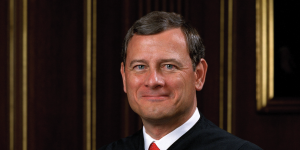
* In the wake of Justice Anthony M. Kennedy’s retirement, I predicted that Chief Justice John Roberts, a staunch institutionalist when it comes to the Supreme Court, would serve as a moderating influence at SCOTUS — and so far that seems to be the case, with Adam Feldman noting a “a mild liberalizing over time” in JGR’s jurisprudence. [Empirical SCOTUS]
* Speaking of SCOTUS, it’s high time for the Court to resolve the messy circuit split on email privacy under the Stored Communications Act, according to Orin Kerr. [Volokh Conspiracy / Reason]
* The Trump Administration’s new executive order about free speech on university campuses might harm rather than help the cause of academic freedom, as Paul Horwitz points out. [PrawfsBlawg]
* Republicans aren’t the only ones with purity tests for judicial nominations; Demand Justice, a left-wing group focused on the federal judiciary, has high standards for Democratic opposition to Trump nominees. [Bench Memos / National Review]
* While you wait for the 2019 edition of Above the Law’s law school rankings, check out the latest installment of the “revealed preferences” law school rankings, by C.J. Ryan and Brian L. Frye. [SSRN]
* What’s next for Kira Systems, a leader in the world of legal AI? Co-founder and CEO Noah Waisberg isn’t resting on his laurels — and he’s putting that $50 million investment from last September to work. [Artificial Lawyer]
* Fastcase continues to forge new partnerships — and in its latest alliance, it will give its subscribers access to select titles from the American Bar Association (which, full disclosure, published my book (affiliate link) in 2014). [Dewey B Strategic]
* If you’ll be in New York this coming Wednesday, consider attending the inaugural Kenneth P. Thompson ’92 Lecture on Race and Criminal Justice Reform at NYU Law School, focused on wrongful convictions and the roles of prosecutors and others in the criminal justice system. [NYU Law]
-

* Irina Manta, a recent addition to the roster of Volokh Conspirators, assesses some of the attacks leveled against D.C. Circuit nominee Neomi Rao. [Volokh Conspiracy / Reason]
* In other nomination news, Thomas Jipping explains why conservatives should temper their excitement over those 44 judicial nominees who just got reported out of the Senate Judiciary Committee. [Bench Memos / National Review]
* Michael Dorf’s take on Chief Justice John Roberts joining the four liberals on the Supreme Court to put the Louisiana abortion law on hold: the right to an abortion is “not in quite as much immediate danger as one might have thought. And that’s not nothing.” [Take Care]
* Lawyer to the stars Alex Spiro, partner at Quinn Emanuel, talks about how he’s approaching the representation of his latest celebrity client, rapper 21 Savage. [Complex]
* On the occasion of his 15th blogiversary (congratulations!), Rick Garnett reflects on the past and future of blogging. [Mirror of Justice via PrawfsBlawg]
* Jean O’Grady chats with Pablo Arredondo of Casetext about the platform’s newest features. [Dewey B Strategic]
* And in other legal technology news, congrats to legal AI innovator Luminance on securing another $10 million in funding (reflecting a total valuation for the company of $100 million). [Artificial Lawyer]
* Last Thursday, Alabama executed Domineque Hakim Marcelle Ray and did not allow his imam to be present (even though Christian inmates can have the prison chaplain present) — a manifest injustice, according to Stephen Cooper. [Alabama Political Reporter]
* In the latest installment of his ongoing series offering advice to trial lawyers, David Berg sets forth an essential rule of cross-examination. [YouTube]
-
-

* How have personnel changes at the Supreme Court affected the dynamics at oral argument? Adam Feldman offers this analysis. [Empirical SCOTUS]
* Ed Whelan expresses relief over the White House’s new slate of Ninth Circuit nominations. [Bench Memos / National Review]
* Can President Trump declare a “national emergency” in order to build his beloved wall? The National Emergencies Act is not a blank check, according to Brianne Gorod. [Take Care]
* Should Congress pass a “deepfakes” law? Orin Kerr has some concerns. [Volokh Conspiracy / Reason]
* What’s going on with Rudy Giuliani? Joel Cohen has a theory. [The Hill]
* Jean O’Grady is pleased to see all the competition in the legal analytics space (with Precedent Analytics from Thomson Reuters as the newest entrant) — but she’d like to see more support for the competing claims of the different products. [Dewey B Strategic]
* News organizations need stricter and better guidelines when interviewing mentally ill defendants, according to former public defender Stephen Cooper. [The Tennessean]
* Have questions about the fast-approaching February bar exam? Ashley Heidemann has answers. [JD Advising]
-

* President Donald Trump rejects reports that he’s considered firing special counsel Robert Mueller, while offering a less-than-ringing endorsement of his relationship with Attorney General Jeff Sessions: “It is what it is.” [New York Times]
* Former Trump campaign manager Paul Manafort, whose house was the subject of a predawn raid by the FBI, parts ways with WilmerHale and goes back to his former lawyers at Miller & Chevalier. [National Law Journal]
* Meanwhile, the Trump administration files its opening brief in the Supreme Court in the travel ban litigation. [How Appealing]
* Georgetown Law launches a new con-law center, the Institute for Constitutional Advocacy and Protection, led by star SCOTUS litigator Neal Katyal, former National Security Council official Joshua Geltzer, and former Justice Department official Mary McCord. [ABA Journal]
* Some Democratic senators claim that the White House isn’t consulting them enough about judicial nominations. [Politico]
* The hype may exceed the reality on alternative-fee arrangements — but not at pharma giant GlaxoSmithKline, which takes an aggressive and innovative approach to AFAs. [Am Law Daily]
* Settling the “pink slime” litigation cost Disney/ABC how much? [How Appealing]
* Also not cheap: the costs of bad-faith discovery spoliation. [Big Law Business]
-
* The Second Circuit vacates the corruption convictions of former New York Assembly Speaker Sheldon Silver. Congratulations to his counsel, the high-powered litigation boutique of MoloLamken (which handled the appeal as well as the trial). [How Appealing]
* And congrats to federal judicial nominees John K. Bush (Sixth Circuit) and Kevin Newsom (Eleventh Circuit), who just got voted out of the Senate Judiciary Committee. [Washington Examiner]
* In other nomination news, the White House seems to be taking its time in announcing a Ninth Circuit nominee from Oregon. Delay may strengthen the case for frontrunner Ryan Bounds; his main competition, Chief Judge Michael Mosman, gets older by the day (turning 61 later this year). [Portland Tribune]
* Meet Michael Murray, an ex-SCOTUS clerk and Jones Day alum, who is the Justice Department’s new point person on pot. (Fun fact: Kevin Newsom, Ryan Bounds, and Michael Murray all clerked for my former boss, Judge Diarmuid F. O’Scannlain of the Ninth Circuit.) [U.S. News]
* Former Ropes & Gray COO Hugh A. Simons wonders: “Are Law Firms Too Sophisticated for Their Own Good?” [Am Law Daily]
* Will law school applications see a “Trump Bump,” as idealistic aspiring attorneys seek law degrees to join the resistance? We might have more on this later. [Law.com]
* Yes, lawyers should stand up for their beliefs — but they also can (and must) understand the arguments on the other side, as new Yale Law dean Heather Gerken explains. [Time]
* The Ninth Circuit has ruled in the Case of the Tweeting Judge. We might have more on this later as well. [How Appealing]
* Congratulations to Stephen Kane, an alum of O’Melveny & Myers and Lex Machina, on securing $1.8 million in funding for his FairClaims startup — which he describes as “a virtual Judge Judy.” [TechCrunch]