

Orin Kerr
-
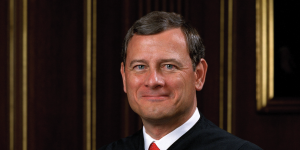
* In the wake of Justice Anthony M. Kennedy’s retirement, I predicted that Chief Justice John Roberts, a staunch institutionalist when it comes to the Supreme Court, would serve as a moderating influence at SCOTUS — and so far that seems to be the case, with Adam Feldman noting a “a mild liberalizing over time” in JGR’s jurisprudence. [Empirical SCOTUS]
* Speaking of SCOTUS, it’s high time for the Court to resolve the messy circuit split on email privacy under the Stored Communications Act, according to Orin Kerr. [Volokh Conspiracy / Reason]
* The Trump Administration’s new executive order about free speech on university campuses might harm rather than help the cause of academic freedom, as Paul Horwitz points out. [PrawfsBlawg]
* Republicans aren’t the only ones with purity tests for judicial nominations; Demand Justice, a left-wing group focused on the federal judiciary, has high standards for Democratic opposition to Trump nominees. [Bench Memos / National Review]
* While you wait for the 2019 edition of Above the Law’s law school rankings, check out the latest installment of the “revealed preferences” law school rankings, by C.J. Ryan and Brian L. Frye. [SSRN]
* What’s next for Kira Systems, a leader in the world of legal AI? Co-founder and CEO Noah Waisberg isn’t resting on his laurels — and he’s putting that $50 million investment from last September to work. [Artificial Lawyer]
* Fastcase continues to forge new partnerships — and in its latest alliance, it will give its subscribers access to select titles from the American Bar Association (which, full disclosure, published my book (affiliate link) in 2014). [Dewey B Strategic]
* If you’ll be in New York this coming Wednesday, consider attending the inaugural Kenneth P. Thompson ’92 Lecture on Race and Criminal Justice Reform at NYU Law School, focused on wrongful convictions and the roles of prosecutors and others in the criminal justice system. [NYU Law]
-
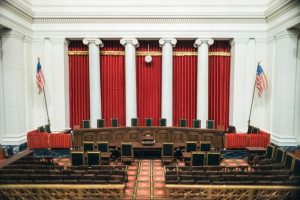
* It’s checkout time at the Supreme Court, and courtroom correspondent Mark Walsh is ready to reveal what’s in his shopping cart. [SCOTUSblog]
* Being cited by the Supreme Court is usually something to boast about — but not always, as Adam Feldman notes in this thoughtful analysis of how much oral arguments matter. [Empirical SCOTUS]
* Will Baude breaks down the Court’s intriguing debate over stare decisis in South Dakota v. Wayfair. [PrawfsBlawg]
* Joel Cohen looks at why the federal judiciary gets better treatment from the press than the other two branches of government — and whether the differential is justified. [The Hill]
* Orin Kerr identifies an interesting issue: if a police officer uses Google Translate to try and request consent to search from a non-English speaker in that person’s own language, is the consent valid if Google Translate botched the translation? [Volokh Conspiracy / Reason]
* There’s a long and bipartisan tradition of… the federal government spying on reporters, as Charles Glasser explains. [Daily Caller]
* Speaking of the media, Jean O’Grady points out a helpful new resource from CQ for consumers of news, along with tips for how to tell whether or not a story is “fake news.” [Dewey B Strategic]
* If reforms come to university boardrooms, let’s hope they include law schools as well. [ProfessorBainbridge via Instapundit]
* An interesting new use of voice-activated technology, courtesy of Wolters Kluwer: getting insights into federal tax law. [Artificial Lawyer]
* If you’ll be in New York on Tuesday, July 17, raise your glass with fellow young lawyers, summer associates, and law students, at the UJA’s Summer Law Happy Hour. [UJA Federation of New York]
-