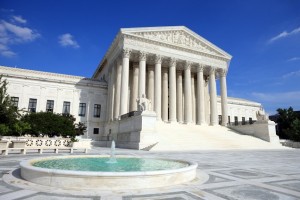
 Supreme Court history was made this week when the justices heard arguments in Venezuela v. Helmerich and, for the first time ever, more women participated than men.
Catherine Stetson of Hogan Lovells and Catherine Carroll of WilmerHale represented the parties in the dispute, while Elaine Goldberg argued for the United States as amicus curiae. Counting Justices Ginsburg, Sotomayor, and Kagan, that meant the argument featured six women to only five men.
Despite the historical achievement, Empirical SCOTUS reminds us that this argument remains an outlier.

Labor and Employment Federal Litigation Trends 2026
Drawing on more than a decade of data, the report equips law firms and corporate legal teams with actionable insights to better assess risk, refine strategy, and anticipate outcomes in today’s evolving workplace disputes.
Outside of this case, however, the gender balance was more standard for the Supreme Court where ten of the other eleven attorneys that argued this week were men (the other woman to argue this week was Kathleen Sullivan in State Farm Fire & Casualty Co. v. United States, ex rel. Rigsby).
Still, it’s a sign of things to come.
The Supreme Court’s Gender Balance [Empirical SCOTUS]

Product Spotlight: Lexis® Verdict & Settlement Analyzer
Put away the guesswork—Lexis® Verdict & Settlement Analyzer helps legal professionals assess case potential with confidence by using data-driven insights from the industry’s largest collection of verdicts and settlements.
Joe Patrice is an editor at Above the Law and co-host of Thinking Like A Lawyer. Feel free to email any tips, questions, or comments. Follow him on Twitter if you’re interested in law, politics, and a healthy dose of college sports news.