Federal Judges

Chief Judge Frank Easterbrook: do not mess with this man.

Aficionados of appellate law are familiar with the Seventh Circuit’s reputation for procedural punctiliousness. The court has a track record of benchslapping lawyers who fail to follow rules, lawyers who seek to deviate from rules without justification, lawyers who engage in substandard advocacy, and lawyers who are “menace[s]” to their clients.

Lately the Seventh Circuit has been laying down its pimp hand. Last Friday, for example, Chief Judge Frank Easterbrook declared one Bridget Boyle-Saxton, who allegedly blew deadlines and ignored multiple orders to show cause, “unfit to practice law in this court.” Ouch.

Now, snobs might think, “Sure, Boyle-Saxton might be a well-known Milwaukee lawyer — but she works at a small law firm, apparently with two relatives of hers. What can you expect from such an outfit? This is why people hire the large white-shoe law firms. You pay through the nose, but you expect (and receive) perfection.”

If that’s your attitude, think again. Biglaw just got a big benchslap — from none other than Chief Judge Easterbrook.

Which firm incurred His Honor’s wrath, and for what alleged infraction?

double red triangle arrows Continue reading “Benchslap of the Day: Judge Easterbrook Benchslaps Biglaw”

Here’s my thesis: We create rules to hedge against ineptitude, and we thus institutionalize mediocrity.

Here are the examples. First, someone — the Administrative Office of the Courts? God? — creates rules to hedge against incomprehensible judicial opinions, and we thus discourage judges from writing exceptional opinions.

When new federal appellate judges attend what is affectionately called “baby judges’ school,” the judges are told how to write opinions. An opinion should have five parts, the judges are told: An introduction (which does not have to be preceded by a separate heading); a statement of facts; the standard of review; the legal discussion; and a conclusion.

Do we impose these rules because every judicial idea is best expressed in this format? Of course not. These rules impose a basic organizational structure on decisions, so that even the worst appellate decisions will be marginally comprehensible. The rules hedge against ineptitude.

Most judges follow the rules, and society generally benefits; we understand most of what’s written. I suspect that many judges who would be capable of writing better opinions if they were not bound by the rules nonetheless choose to constrain themselves, opting to do as instructed. Society may suffer in those situations, because the opinions are not as well-crafted as they might otherwise be.

A few judges ignore the rules. Whatever your politics, for example, you probably agree that Judge Frank Easterbrook often writes great opinions; he regularly ignores the mandatory structure. (This isn’t a high crime or misdemeanor, so he’s safe.) We don’t complain when Judge Easterbrook strikes out on his own, because readers understand what he’s saying and often delight in how he expresses himself.

On the other hand, if Judge Nobody were to strike out on his own, the law might become a muddle. We try to control that judge by imposing a structure. Bureaucratic rules discourage greatness, but they hedge against ineptitude.

Here’s a second example:

double red triangle arrows Continue reading “Inside Straight: Institutionalizing Mediocrity”


LegalTech New York finished up earlier this week. I survived with only a minor case of technology loop, although my iPhone was begging for mercy by the end.

The conference was frenetic, to say the least. There was a lot going on, regarding a cornucopia of technological topics and tools to help lawyers. As expected, the biggest hype revolved around predictive coding and computer-assisted review.

The legal technology world has been buzzing about this stuff for a while now, and we have covered it on these pages several times before. (Here and here, for starters). At the conference, attendees got to hear from the naysayers, the enthusiasts, and everyone in between. Several panels helped explain exactly what the technology means on a practical level. And no, cyborgs will not be stealing all the contract attorney jobs any time soon.

One of this week’s highlights was a lunchtime panel featuring two prominent attorneys and a New York magistrate judge. The discussion helped clarify, demystify, and define the terms that have been making headlines (even in the New York Times) for a good part of the past year. Is computer-assisted review as scary as it seems? Of course not.

Let’s see what the panelists — and at least one irate audience member — had to say….

double red triangle arrows Continue reading “Live at LegalTech: That’s a Wrap, But the Predictive Coding Debate Is Only Heating up”

Judge Andrew Peck

Keyword searching is absolutely terrible, in terms of statistical responsiveness.

– Magistrate Judge Andrew Peck (S.D.N.Y.), in a panel today at the LegalTech conference. He spoke alongside Wachtell Lipton counsel Maura Grossman and Jackson Lewis partner Ralph Losey, on a panel that aimed to demystify cutting-edge, computer-assisted e-discovery technology. Peck is a vocal proponent of computer-assisted discovery and predictive coding. He is not a fan of the slightly older keyword-searching technology.

(A few minutes later, Losey had another strong opinion to add. See what was said, after the jump.)

double red triangle arrows Continue reading “Quote of the Day: Keyword Searching? You’re Doing It Wrong”

Being a justice of the United States Supreme Court is a pretty great gig. You get to attend glamorous events like Tuesday night’s State of the Union address. You get to wear a snazzy black robe on said occasions.

Sure, there’s some work involved. SCOTUS opinions can be loooong! But at least the justices have their trusty Supreme Court clerks, three dozen or so of the nation’s brightest young legal minds, to help get everything done.

Thanks to everyone who responded to our recent request for tips about law clerk hiring activity at SCOTUS. Let’s take a look at what we’ve learned, shall we?

double red triangle arrows Continue reading “Supreme Court Clerk Hiring Watch: OT 2012 and OT 2013″

Non-Sequiturs: 01.24.12

* Everybody is having a pants party today over these five careers U.S. News thinks you can do with a law degree. But here’s the thing, for every one J.D. holder who fills one of these positions despite their law degree, I can name ten people who have the same job and DIDN’T have to waste three years of their lives and more than $100,000 to get the opportunity. Christ on an opportunity Cross, if I had gone to journalism school instead of law school maybe I’d still have this job and be able to use a comma. [WSJ Law Blog]

* If you don’t have a gavel, you can’t be a judge. No really. Not in Utah. I guess they need visual cues out there. [Salt Lake Tribune]

* Underwear gnomes, funny. Underwear Asians, significantly more disturbing. [Montgomery Media]

* I can’t even keep American kids from pursuing law degrees, there is no way I’m stopping foreign students. [Bar and Bench]

* If you are following us on Twitter during tonight’s stump speech State of the Union, here’s a fun drinking game. [Constitutional Daily]

* Judge Wesley Brown (D. Kansas), the longest-serving federal judge in history, just passed away (at the age of 104) — R.I.P. [Wichita Eagle]

Apparently you guys really like seeing “funny” videos about law students even after I’ve subtlety warned you to manage your expectations. Here’s what I was email bombed with today. Can tomorrow please be the day where we get flooded with naked women or something?

double red triangle arrows Continue reading “Non-Sequiturs: 01.24.12″

Wielding power and oozing prestige, judges can be thought of as “rock stars of the law.” But some judges are, in a more literal sense, rock stars.

Several judges around the country possess impressive musical talents. For example, as we mentioned earlier this month, Judge Randall R. Rader recently rocked out at San Diego’s House of Blues with his band, DeNovo.

Judge Rader is not alone is making music as well as rulings. A Georgia jurist recently released a critically acclaimed album, in which his gavel-wielding fingers strum the guitar alongside some musical greats.

Keep reading for the Above the Law interview with this colorful and creative judge….

double red triangle arrows Continue reading “Behind the Music, Behind the Bench: Meet Judge Jay Stewart”

Many months have passed since our last report on the hiring of Supreme Court law clerks. We are getting ready to do a new report. If you have SCOTUS clerk hiring news for October Term 2012 or October Term 2013 that we have not yet reported, please email us (subject line: “SCOTUS Clerk Hiring”). In order to check whether or not we’ve already reported a particular clerk hire for OT 2012 or OT 2013, please go back and review our last hiring report before contacting us.

In the meantime, we have a special gift for you. Last July, we shared with you the Supreme Court’s official list of law clerks for the October Term 2011 (i.e., the clerks currently toiling at One First Street). We noted at the time that “this list does not include law school and prior clerkship information, which the [Public Information Office] will release later this year.”

We now have that updated list of OT 2011 Supreme Court law clerks, featuring law school and prior clerkship data, courtesy of the Public Information Office. Let’s look at the list, and count up which law schools and feeder judges sent the most folks over to One First Street….

double red triangle arrows Continue reading “Supreme Court Clerk Hiring Watch: The Updated Official List for October Term 2011, and a Request for Tips”

He grows strong off the tears of fired workers.

* There’s a new chief legal officer at Morgan Stanley: Eric Grossman, a former Davis Polk partner, replaces Frank Barron, a former Cravath partner (who joined Morgan Stanley not that long ago; if you know more about this odd situation, email us). [Bloomberg Businessweek]

* Will anybody be surprised if it turns out that Ron Paul likes to fire people too? [Politico]

* Et tu, Bill Kristol? [Weekly Standard]

* How will Citizens United affect the political process? We’re starting to find out. [WSJ Law Blog]

Chief Judge Alex Kozinski

* How often does a federal judge get a shout-out in the announcement of a pop music group’s tour? [The Music Network]

* Or how often does a federal judge go on tour with his own band? [Patently-O]

* Maybe the NLRB should stay the course on protecting employees’ rights to organize themselves using social media. [LexisNexis / Labor & Employment Law]

* Most people will just ignore the balanced budget amendment as proposed by Chuck Woolery (yes, that Chuck Woolery), but on the off chance that somebody actually says to you, “You know, Chuck Woolery has some really good ideas,” here’s somebody who took the time to smack the Chuckster down. [Recess Appointment]

Outgoing NYLS Dean Rick Matasar

Even at the annual meeting of the Association of American Law Schools (AALS), the criticism of the legal education business just flowed. Everybody, it seems, has an opinion on what is wrong with law schools these days.

While many of the law school deans and other administrators at the conference acknowledged problems with the system, most of the actual critiquing came from people with no power to change it. Media members (ahem) criticized law schools, judges criticized law schools, outgoing deans of law schools that shamelessly profiteered off of unwitting law students criticized — and the people who could actually change their systems dutifully listened.

But despite all of the critiques, there weren’t a lot of schools that seemed ready to institute sweeping change to the business of educating lawyers. And why should they? Change won’t come from above, and right now prospective law students are not demanding change from below…

double red triangle arrows Continue reading “Outsiders Criticize Law Schools, But Will Change Ever Come?”

Well, this is a fun day. Rick Santorum is taking his turn as the non-Romney Republican choice. Rick Santorum. Yeah, that Rick Santorum — the self-same Rick Santorum who thinks Griswold was wrongly decided and wants to ban birth control — is now the “real conservative” alternate to Mitt Romney.

Ladies and gentlemen, I present your 2012 Republican Party.

This morning, the Wall Street Journal took a closer look at Rick Santorum’s thoughts on the Constitution and the judiciary. For those who haven’t been following the stellar career of Santorum (last seen getting absolutely waxed out of his Pennsylvanian Senate seat), let’s give him a look-see…

double red triangle arrows Continue reading “Rick Santorum: Google Him, Please”

Non-Sequiturs: 12.22.11

Justice Kavanaugh has a nice ring to it.

* Searching for the perfect holiday present? Via Professor Glenn Reynolds: “As A Christmas Gift, Tell Your Friends and Relatives They’re Fat.” [Instapundit]

* If a Republican wins the White House in 2012, who might get nominated to the U.S. Supreme Court? Mike Sacks offers up a star-studded SCOTUS short list: the brilliant and genial Brett Kavanaugh, the fabulous Diane Sykes, certified superhottie Jeffrey Sutton, emerging feeder judge Neil Gorsuch, and star litigator Paul Clement. [Huffington Post]

* Another proposal on law school transparency. What is this “gainful employment” of which you speak? [Law School Transparency]

* If you can’t find gainful employment, well, maybe you can score a $500 reward from a concerned parent. [The Legal Satyricon]

* Speaking of Marc Randazza, here’s an interview in which he discusses “putting the nail in copyright holding company Righthaven’s coffin.” [WebmasterRadio.FM]

* A riddle from Eric Turkewitz: How is Indiana just like the old Soviet Union? [New York Personal Injury Law Blog]

* An interesting profile (by Peter Lattman) of Albert Foer — father of the three famous Foer brothers, and a celebrated and successful antitrust law crusader. [DealBook / New York Times]

There is a lot of talk these days about the impossibly high costs and absurd amounts of time attorneys spend on e-discovery. Everyone is looking for the best way to make the process more efficient and less time-consuming.

So it is reassuring when a federal judge recognizes that need, and does his part to eliminate careless document review agreements.

Earlier this month, a New Jersey District Judge wrote just that sort of opinion. The savvy judge seems to have his priorities straight….

double red triangle arrows Continue reading “Judge Agrees That Reviewing 65 Million Documents Is Ridiculous”

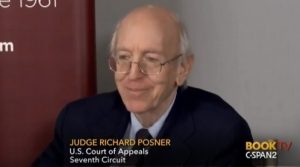
Of course not! But the headline got your attention, didn’t it? The notion of Judge Richard Posner as being anything other than a genius will certainly make people sit up and take notice. There’s a reason why there’s a Facebook group called Richard Posner for Philosopher King (of which I am a proud member).

It should be noted, however, that Judge Posner’s opinion in Gonzalez-Servin v. Ford Motor Co. was not 100 percent perfect. It initially contained some infelicitous wording — which has since been fixed.

Let’s look at the language that was perhaps imprecise….

UPDATE (4 PM): Additional comment from Judge Posner, added after the jump.

double red triangle arrows Continue reading “Was Judge Posner a Dodo in His Ostrich Opinion?”

Judge Matz

[T]his Court is compelled to find that the Government team allowed a key FBI agent to testify untruthfully before the grand jury, inserted material falsehoods into affidavits submitted to magistrate judges in support of applications for search warrants and seizure warrants, improperly reviewed e-mail communications between one Defendant and her lawyer, recklessly failed to comply with its discovery obligations, posed questions to certain witnesses in violation of the Court’s rulings, engaged in questionable behavior during closing argument and even made misrepresentations to the Court.

– Judge A. Howard Matz of the Central District of California, benchslapping federal prosecutors — and vacating the convictions, and dismissing the indictment — in a high-profile Foreign Corrupt Practices Act prosecution. (Gavel bang: Daniel Fisher.)

(Additional links and information about this case — if you do FCPA or white-collar criminal work, this may be of interest to you — after the jump.)

double red triangle arrows Continue reading “Benchslap of the Day: What Not To Do If You’re A Prosecutor”

Here at Above the Law, we regularly cover benchslaps: judges laying the smackdown on poorly performing attorneys. But what about when it’s the judge who says, “I’ve made a tiny huge mistake”?

On Friday, U.S. District Judge Lucy Koh made a significant technological blunder in a patent case between two of Silicon Valley’s heaviest hitters. Yet her mistake is almost quaint. It harkens back to an earlier, simpler time –– like, pre-2006. When legal technology was a bit more primitive, and, more specifically, when the legal profession was still learning to master PDF files.

So, what did she do? Let’s just say she couldn’t keep a secret….

double red triangle arrows Continue reading “I Don’t Think ‘Redaction’ Means What You Think It Means”

Justice Clarence Thomas

Elie here. Imagine Santa Claus stopping by your house — except this time Saint Nick is a mute, who stuffs your stocking with personal responsibility and brings you wooden toys, because those were the only ones available when his legend was born.

Well, joking aside, Justice Clarence Thomas will be stopping by Yale Law School on December 14th. And since there won’t be a case in front of him, he’ll actually be talking.

But not to everybody. Sources tell us — and Yale Dean Robert Post confirmed, in a school-wide email — that Justice Thomas will be speaking to the Yale Federalist Society and to the Black Law Students Association, as well as attending a class and a private reception. He won’t be making any general public appearance.

Setting aside commencement, it’s fairly typical for guest speakers (including Supreme Court justices) to speak to specific student groups and not the law school at large. If Justice Elena Kagan went to Yale, she’d likely speak to the American Constitution Society and the Socratic Hard-Ass Faculty Coven.

Some students claim, however, that the Yale administration has contacted several student organizations and asked them not to protest during Thomas’s visit. We don’t know if that’s true, and a message from Dean Post (reprinted below) does not directly mention anything about student protests. But the mere rumor of Yale trying to quash protests, circulated on “The Wall” (the YLS list-serv), has made some students angry.

Should they be? Strap yourselves in for an ATL Debate….

double red triangle arrows Continue reading “Clarence Thomas Is Coming To Town”

Let’s play a quick game (which we might return to later if there’s interest). If we were to give out awards to the different federal judicial circuits, in the manner of a high school yearbook, which awards would go to the different circuits? Here are some of my nominations:

(Article III groupies: Feel free to suggest others, in the comments.)

As for the other awards, well, they’d all go to the Ninth Circuit. It’s the nation’s most famous (or infamous) federal appeals court, so it would win “Most Likely To Become A Celebrity.” It’s the biggest, so it would win “Most Popular” (especially among the ACS and ACLU crowd). It would win “Most Athletic,” since it includes California. And it would win “Biggest Flirt,” thanks to its numerous superhottie judges. (Don’t you wish they all could be California jurists?)

The Ninth Circuit would also run away with “Most Likely To Be Made Fun of on YouTube” — since it already has been. How many circuit courts can claim that distinction?

double red triangle arrows Continue reading “How the Ninth Circuit Stole Christmas”

Justice Elena Kagan

The latest issue of New York magazine contains a very interesting profile of the U.S. Supreme Court’s newest member, Justice Elena Kagan, penned by Dahlia Lithwick. Here’s the bottom-line summary of the piece (via Ezra Klein):

“While Kagan is assuredly a liberal, and likely also a fan of the health-reform law, a close read of her tenure at the Supreme Court suggests that she is in fact the opposite of a progressive zealot. By the end of Kagan’s first term, conservatives like former Bush solicitor general Paul Clement (who will likely argue against the health-care law this coming spring) and Chief Justice John Roberts were giving Kagan high marks as a new justice precisely because she wasn’t a frothing ideologue. The pre-confirmation caricatures of her as a self-serving careerist and party hack are not borne out by her conduct at oral argument, her writing, and her interactions with her colleagues. In fact, if her first term and a half is any indication, she may well madden as many staunch liberals as conservatives in the coming years.”

That’s just the overview. Let’s delve into the details a bit more….

double red triangle arrows Continue reading “A Portrait of Elena Kagan as a Young Justice”

On Thanksgiving Day, while you were enjoying your turkey (or tofurkey), we wrote about a different bird: namely, the ostrich. In a somewhat snarky opinion, Judge Richard Posner of the Seventh Circuit compared a lawyer appearing before him to an ostrich: “The ostrich is a noble animal, but not a proper model for an appellate advocate. The ‘ostrich-like tactic of pretending that potentially dispositive authority against a litigant’s contention does not exist is as unprofessional as it is pointless.’”

Ouch. Judge Posner even included a photo (above right) of a man in a suit burying his head in the sand.

What did the lawyer in question, David “Mac” McKeand of Houston, have to say for himself? And what did McKeand have to say about Judge Posner?

double red triangle arrows Continue reading “A Reverse Benchslap? Chastised Lawyer Lashes Out at Judge Posner”