Federal Judges

Non-Sequiturs

Non-Sequiturs: 07.08.18

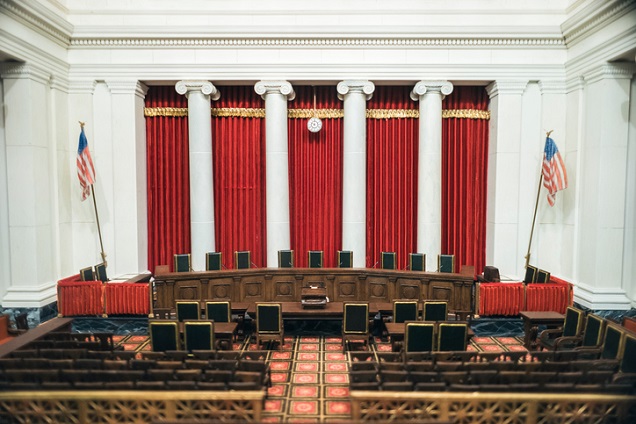
* After the D.C. Circuit, which circuit has produced the most justices who have joined the Supreme Court after 1900? The answer might surprise you. [Empirical SCOTUS] * Here are thoughts on the SCOTUS shortlisters from my colleague Joe Patrice -- who explains why it's unlikely we'll get another Souter. [The Takeaway / WNYC] * Here are where the leading Court candidates stand on issues of admin law, courtesy of Chris Walker and company. [Notice & Comment / Yale Journal on Regulation] * And here's a response to my argument that liberals shouldn't panic about SCOTUS, from San Francisco litigator Gordon Renneisen. [Law360] * Leah Litman believes that the new justice spells trouble for Roe -- but the specific reasoning for undermining Roe could take different forms. [Take Care] * Josh Blackman explains why court packing would be neither feasible nor wise. [National Review] * Veronica Root uses law clerk hiring as a jumping-off point to explain why diversity and compliance are deeply intertwined. [PrawfsBlawg] * "Mysterious men and women in wizard-like robes make decisions in private that profoundly shape our lives." Are we talking about SCOTUS, or... The Incredibles? [Gizmodo]


Non-Sequiturs

Non-Sequiturs: 07.01.18

* Having placed Justice Anthony Kennedy's Supreme Court retirement in political context, let's now put it into historical context. [Retropolis / Washington Post] * This makes some folks quite upset, but there's no denying it: the Roberts Court is now truly the Roberts Court (and he probably isn't thrilled about it either). [Empirical SCOTUS] * Kathryn Haun -- a former Kennedy clerk, by the way -- has parlayed her expertise in Bitcoin, developed during her years as a federal prosecutor, into a new position leading Andreessen Horowitz's $300 million fund focusing on cryptocurrency-related startups. Congrats, Katie! [Axios] * Let's not forget about President Trump's transformation of the lower federal courts -- because it's not just about SCOTUS. [The Takeaway / WNYC] * Check out Susman Godfrey's new mandatory retirement policy -- could this become the industry standard? [Texas Lawyer] * Yes, the First Amendment is awesome and all -- but is it also encouraging errors in news reporting, as Charles Glasser suggests? [Daily Caller] * Speaking of mistakes, Ed Whelan sets Ben Shapiro straight on Judge Brett Kavanaugh, a leading contender to replace Justice Kennedy. [Bench Memos / National Review] * President Trump says he wants to pick a SCOTUS nominee who could serve on the Court for 40 years or more -- and if you take the five youngest names on his list of 25, it's entirely possible. [Althouse] * This should come as no surprise, but now law firms are joining the chase after data scientists. [Artificial Lawyer] * Congratulations to the Practising Law Institute (PLI) and Fastcase, innovators in their respective spaces, on their new alliance. [Dewey B Strategic]

Non-Sequiturs

Non-Sequiturs: 06.24.18

* It's checkout time at the Supreme Court, and courtroom correspondent Mark Walsh is ready to reveal what's in his shopping cart. [SCOTUSblog] * Being cited by the Supreme Court is usually something to boast about -- but not always, as Adam Feldman notes in this thoughtful analysis of how much oral arguments matter. [Empirical SCOTUS] * Will Baude breaks down the Court's intriguing debate over stare decisis in South Dakota v. Wayfair. [PrawfsBlawg] * Joel Cohen looks at why the federal judiciary gets better treatment from the press than the other two branches of government -- and whether the differential is justified. [The Hill] * Orin Kerr identifies an interesting issue: if a police officer uses Google Translate to try and request consent to search from a non-English speaker in that person's own language, is the consent valid if Google Translate botched the translation? [Volokh Conspiracy / Reason] * There's a long and bipartisan tradition of... the federal government spying on reporters, as Charles Glasser explains. [Daily Caller] * Speaking of the media, Jean O'Grady points out a helpful new resource from CQ for consumers of news, along with tips for how to tell whether or not a story is "fake news." [Dewey B Strategic] * If reforms come to university boardrooms, let's hope they include law schools as well. [ProfessorBainbridge via Instapundit] * An interesting new use of voice-activated technology, courtesy of Wolters Kluwer: getting insights into federal tax law. [Artificial Lawyer] * If you'll be in New York on Tuesday, July 17, raise your glass with fellow young lawyers, summer associates, and law students, at the UJA's Summer Law Happy Hour. [UJA Federation of New York]

Morning Docket

Morning Docket: 05.29.18

* In a perfect example of everything wrong with GDPR there are now concerns that, under its terms, blockchain is prohibited. So a law designed to protect privacy might derail the most secure privacy protection technology on the market. Good job! [Legaltech News] * For months, I've used the phrase "GDPR-Y2K-2018." Looks like someone agrees with me. [Corporate Counsel] * The lesson we've learned over the past week is that being pro-segregation really boosts your chances for the federal bench these days. [Courthouse News Service] * The air is no so sweet down on Sesame Street, where they're suing Brian Henson over his new movie, "Happytime Murders." [Law360] * A deep dive into that dispute that's put Michael Avenatti's firm on the hook for millions. [New York Law Journal] * Trump's trade policy may result in economic ruin, but it'll make a lot of money for lawyers. [American Lawyer] * Payday lender who tried to skirt the law by claiming to be on Indian reservations slapped with 8-year sentence. [WTOP]