International Law

There are some great perks to working for Google, a company pushing the boundaries of technology. But there’s also a downside to being at the bleeding edge of innovation: some countries might try to hold you back… with handcuffs. This week, police in Sao Paolo detained Brazilian Google chief Fabio Jose Silva Coelho, releasing him only after he promised to appear in court over YouTube videos that violate Brazilian election laws. A judge ordered that the videos in question, which say nasty things about a mayoral candidate, be taken down; Google ignored the order, likely hoping to export American free speech values abroad. Coelho is now in the Brazilian doghouse for the crime of “disobedience.”

The ploy worked. Google caved shortly after Coelho was released.

Google likes to argue that it’s not responsible for the content that its users post, but that argument doesn’t always fly abroad. This is not the first time a Google exec has wound up in trouble over a YouTube posting disliked by local authorities. Three execs became convicts in Italy thanks to a 2006 incident.

double red triangle arrows Continue reading “Here’s How A Google Executive Gets Arrested Abroad”

We don’t hear often enough about attorneys trying to do good for the world. Sex scandals, violence, and dirty politics are much more common to hear about than attorneys working to advance the public interest.

So it’s particularly unfortunate that we have to write about an Australian defense lawyer at the International Criminal cCourt in the context of her involuntary detainment in Libya, that fun little African country known for its leader’s kooky costumes.

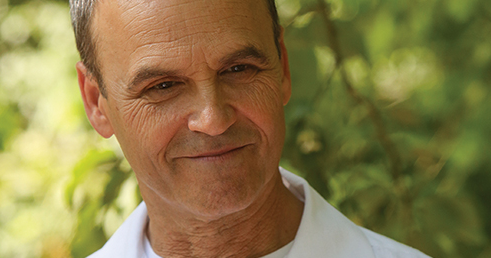
Without further ado, let’s learn more about the detained Australian, Melinda Taylor (and see a photo of the beautiful young attorney)…

double red triangle arrows Continue reading “Why Is This Australian ICC Defense Attorney Being Detained in Libya?”

The supremely successful Quinn Emanuel, one of the nation’s leading litigation firms, is known for many things within Biglaw. It secures amazing results for its clients, which help generate sky-high profits per partner. It pays its associates well; it’s one of the few firms providing spring bonuses this year (along with Sullivan & Cromwell). And it enjoys a reputation for innovation, a willingness to experiment with new things (e.g., a revamped recruiting model, a founding partner on Twitter).

Interestingly enough, despite the firm’s flashiness, Quinn also has an academic bent. The QE partnership includes such scholars as Kathleen Sullivan, former dean of Stanford Law School (and the first female name partner in the Am Law 100), and Susan Estrich, who still teaches at USC Law.

Joining these leading litigatrices is another prominent professor, with an international orientation….

double red triangle arrows Continue reading “Musical Chairs: Quinn Emanuel Picks Up Another Law Professor”

In last week’s installment of Moonlighting, we looked into the challenges of just planning a global meeting. This post will continue the theme by examining particular practical issues that arise during global meetings.

The first few minutes of most meetings are passed waiting for people to join, whether in person or on a call. Those who’ve joined early on typically engage in casual social banter to avoid the awkward silence. But on a global call, you need to be careful as nothing says “you’re not an American company” like banter that leads with, “Say, how ‘bout those Knicks?”

Then what should you talk about — world events? Perhaps, assuming you can talk about them without offending anyone (avoid discussing the madness in Western Europe). Safer, but admittedly boring, topics are weather and vacations. And of course, be wary throughout the call of using American business jargon like “get our ducks in a row,” “circle back,” etc. These are best accompanied by a clear explanation of what the idioms mean: “As we say in America, let’s circle back when we have all our ducks in a row. This just means that we’ll give each other a heads up when we’ve got our house in order.” Wait… not that….

double red triangle arrows Continue reading “Moonlighting: If You Think Domestic Pow-Wows Are Challenging (Part II)”

Companies are doing more business internationally and dragging their lawyers along with them. As you can imagine, doing international work has obvious challenges — foreign law, culture and language, time zone issues, cardboard that airlines call “food,” etc. These next couple of Moonlighting posts are going to delve into some of the nitty gritty of practicing in a global arena by examining one very basic, but essential, part of the in-house practice that I’ve discussed before — a meeting.

But first, a clarification of terms. People often use the terms “international” and “global” interchangeably. However, in-house lawyers who practice in these areas may disagree. Assuming the terms are used by Americans, an “international” U.S. business refers to a business that is headquartered in the United States and operates individual businesses in other countries that focus on the market in each of those countries. In this structure, each business in each country focuses on its own business and does not often coordinate with the others — communicating primarily with the U.S. headquarters in a hub and spoke kind of structure.

On the other hand, a “global” U.S. business is one that’s headquartered in the United States and builds businesses in other countries that focus on how the market in those countries could support cross-border business growth. In the global model, businesses in the other countries often work directly with each other. For the sake of simplicity though, I’ll use the term “global” for the rest of this post to refer to both international and global work. Now that you’re sufficiently confused, we can move on….

double red triangle arrows Continue reading “Moonlighting: If You Think Domestic Pow-Wows Are Challenging…”

What business does a case like that have in the courts of the United States?

– Justice Samuel Alito, during today’s oral arguments in Kiobel v. Royal Dutch Petroleum. The case will determine whether the 223-year-old Alien Tort Statute allows corporations to be sued in U.S. courts for violations of international law. You can view the entire argument transcript on the SCOTUS website.

[A]mong the world’s democracies … constitutional similarity to the United States has clearly gone into free fall. Over the 1960s and 1970s, democratic constitutions as a whole became more similar to the U.S. constitution, only to reverse course in the 1980s and 1990s. The turn of the twenty-first century, however, saw the beginning of a steep plunge that continues through the most recent years for which we have data, to the point that the constitutions of the world’s democracies are, on average, less similar to the U.S. Constitution now than they were at the end of World War II.

– Professors David S. Law of Washington University in St. Louis and Mila Versteeg of the University of Virginia, in a forthcoming article that will be published in the New York University Law Review. They conducted a study that was discussed in a very interesting article by Adam Liptak, ‘We the People’ Loses Appeal With People Around the World.

And perhaps with Justice Ruth Bader Ginsburg? Which constitutions does she prefer over our own founding document?

double red triangle arrows Continue reading “Quote of the Day: Why Do You Hate America, Justice Ginsburg?”

Is peeing on somebody’s dead body a war crime? What about peeing on their grave? What about an important monument? As I’ve spoken about before, one of my life’s goals is to pee in every river that was important to the Confederacy. If I relieve myself in the Chickamauga, can a true son of the Cumberland bring me up in front of a war crimes tribunal?

The video of those American Marines urinating on dead Afghan bodies is so disturbing that it somehow demands a legal response. Mitt Romney might never want to “apologize” for America, but maybe that’s just because he’s used to being able to metaphorically urinate on those hoping some of his wealth trickles down.

And yet — 1Ls, say it with me — “most of international law does not exist.” Aside from whatever punishment the United States Marine Corps wants to impose on these guys, there isn’t a whole lot the international community can do to punish them.

Unless we want to call urinating on somebody a “war crime.” But is punishing some jackasses worth diluting the term?

double red triangle arrows Continue reading “Is Peeing On Somebody A War Crime?”

Say hello to the Global 100 for 2011. This is the American Lawyer’s list of the world’s 100 largest law firms, ranked by total revenue.

There’s a lot of economic anxiety these days, with fears of a double-dip recession running rampant. But looking back — the list is compiled based on 2010 revenue numbers — the legal business seems to be hanging in there. As noted by Am Law, total revenue for the Global 100 increased by 3 percent last year.

Lawyers are a competitive lot. So you’re probably less interested in the overall figures than in how different firms fared in the rankings….

double red triangle arrows Continue reading “The Biggest Law Firms in the World: Meet the Global 100″

Want to work for a top law firm with legitimate global presence? Check out the following profiles of law firms that are (1) most admired by Career Center readers and Lateral Link members and (2) known for their strong international practice. Don’t forget to check out the profiles for other firms, both international and domestic, and see what each firm’s associates really think about their employers.

  • With lackluster bonus announcements from most lockstep law firms, associates at this firm should be happy with their performance-based bonuses – even if they aren’t transparent.  Most Career Center readers agree and rate this firm #10 among the most admired law firms.  There are several opportunities for the firm’s 2,400 associates to work on international “newsworthy” matters, out of any of its 31 offices worldwide.
  • Associates at the #2 most admired law firm appreciate the level of freedom when it comes to getting international caliber work via this firm’s free-market system.  While there is no official billable hour requirement, most associates agree that 1,950 is the magic number to qualify for bonuses.  Even if international work is not your thing, this firm is also known for its involvement in notable Supreme Court cases.

Let’s look at a few other firms with robust international practices….

double red triangle arrows Continue reading “Career Center: Top International Law Firms”

Page 2 of 3123