 If you’re a lawyer, odds are that you spend a significant amount of your time gathering and working with facts. It’s hard to advise your client or advocate on your client’s behalf if you don’t know the operative facts. The importance of knowing the facts is why litigators engage in document review and transactional lawyers conduct due diligence.
But doc review and due diligence aren’t the only ways for lawyers to find out facts. Attorneys can and often do work with outside investigators to get to the bottom of complex situations.
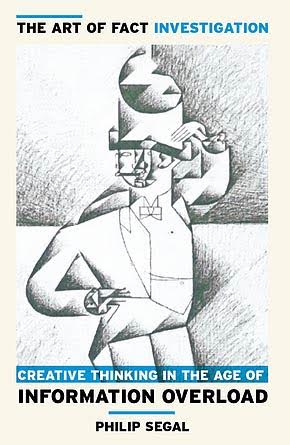
I recently had the chance to connect with lawyer and investigator Philip Segal, managing member of Charles Griffin Intelligence and the author of a new book, The Art of Fact Investigation (affiliate link). According to Kirkus Reviews, the book is “a valuable resource for investigators of all sorts, from students to professionals.”

Product Spotlight: Lexis® Verdict & Settlement Analyzer
Put away the guesswork—Lexis® Verdict & Settlement Analyzer helps legal professionals assess case potential with confidence by using data-driven insights from the industry’s largest collection of verdicts and settlements.
Here’s a (lightly edited and condensed) transcript of what Segal and I discussed.
DL: Congratulations on the publication of The Art of Fact Investigation! It’s a book that many of our readers, especially lawyers and journalists, will find quite useful. But before we delve into the substance of the book, can you tell us a bit about your own path through the legal profession, and how you developed your interest (and expertise) in the art of investigation?
PS: I never wanted to practice law because I knew so many unhappy lawyers. I was a financial journalist for many years, most recently with The Wall Street Journal, and I had the chance in 2003 to do a one-year degree at Yale Law School. I went thinking I would hate it but that it would be useful. I expected that the way knowing dry accounting rules helped reporters figure out Enron, I could cover companies better (especially bankruptcy issues) knowing some law.
Then it turned out I loved law school and was persuaded that regardless of what I may have wanted to do later on, a law degree was a good thing to have. So, I plunged in and got a J.D. But then I discovered that nobody wanted a first-year associate who was 43. I wanted to be around law and so stumbled into an investigative job. It turned out to have the fun of working with litigators without the Biglaw headaches Above The Law so entertainingly writes about, plus the fact investigation that journalists need to do their jobs. Our clients are almost all other lawyers, so having the legal training to read cases and understand what our clients need is very helpful.

Context Windows In Legal AI And Why Content Still Determines Quality
Legal teams ask a practical question. If large language models are so capable, why does legal AI still depend on curated content, and why does surfacing that content matter so much?
DL: You talk quite a bit in the book about the problem of “information overload.” To avoid that problem that here, can you give us a “big picture” synopsis of the argument or focus of the book?
PS: In the days before computers and great mobility, most people remained close to where they grew up. Everything you may have needed to know about them was probably close to where they were as adults. Today, people move around more easily, but more importantly, information about them is in lots more places. A New Yorker at birth may have lived in five cities by the time he’s 30. He may have a bunch of companies to his name incorporated in states he’s never lived in. Those companies could have assets in still other places. Even though computers help us to find information more quickly than before, the information is elusive because it could be anywhere. The book is mostly about facing 10,000 Google results and 3,000 counties in the U.S. when you want to check someone’s background or asset profile, and you ask yourself, “Where in the World do I start?” [Hint: if some magical database could take in a Social Security Number and print out the full picture, our clients would use it and we would be out of business.] Fact investigation is as much art as science because you can’t look everywhere and are always making trade-offs about what to drill down on and what to leave behind.

Philip Segal
DL: So where does one start, and how does someone navigate those trade-offs? There’s a wealth of advice in the book, but if you could give our lawyer readers some advice on how to begin, what would you say?
PS: Beyond the obligatory Google search, you have to start with the public record on any person. We start with the places that person has lived and worked, as far back as budget and time will allow us to look. People get sued and arrested all over the place (where long-arm statutes apply or where they’ve been on vacation), but mostly it happens where they live and work.
By “public record,” I mean every piece of publicly available paper you can grab: litigation, liens, securities records, corporate registrations — the works. That will give you names of companies you may not have associated with the person, and people they have opposed in litigation. Not only do you want to read about their disputes, but you want to gather names of people you can interview about the person later on if the client agrees it’s a good idea. This doesn’t mean you’ll find everything on the first pass – or indeed ever — but it’s where you have your best chance of getting the information you need.
DL: Being an investigator sounds like fun and fascinating work. Many of our readers are law students or young lawyers who are looking for career opportunities. What advice would you offer to people who want to follow in your footsteps by taking their legal training and using it to pursue careers in investigation?
PS: I would tell them if they are still in law school to do some clinical work to see how much fact investigation is required in ordinary legal practice (versus the negligible attention paid to fact gathering in academic law). Debtor-creditor rights are important to study. Then, I would suggest a good working knowledge of business and accounting. Most fights are about money, and if you can’t put yourself in the shoes of the people you are looking at, then you won’t be able to guess which of the many investigative paths you should pursue. The best investigators aren’t the rote plodders but the ones with imagination and creativity who can say to themselves, “That’s funny. In this kind of business, you would think you would see X or Y, but I’m not seeing it.” Computers are terrible at identifying what should be there but isn’t, and people who can do that are hard to find!
DL: I’m glad to hear that the computers have not (yet) taken all our jobs. Congrats again on the book, and thanks for taking the time to chat!
Earlier: Career Alternatives for Attorneys: Private Investigation / Business Intelligence
David Lat is the founder and managing editor of Above the Law and the author of Supreme Ambitions: A Novel. You can connect with David on Twitter (@DavidLat), LinkedIn, and Facebook, and you can reach him by email at [email protected].