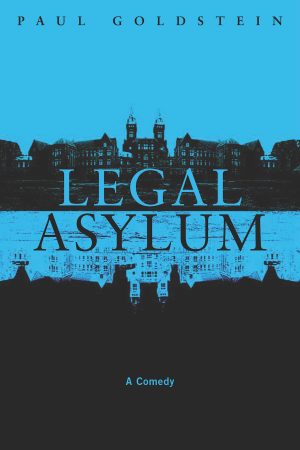
 The annual release of the U.S. News & World Report law school rankings is a holiday for those who believe that they are a barometer of a school’s prestige. The rankings are also extremely important to the schools themslves, who have been accused of massaging numbers in order to artificially move up. Author, attorney, and Stanford professor Paul Goldstein lampoons this obsession in his latest novel Legal Asylum, which effectively satirizes the rankings but is otherwise uneven.
Legal Asylum tells the story of Elspeth Flowers, the dean of the law school at fictional “State” University. Despite the law school’s less than sterling reputation, Elspeth is driven to do whatever it takes for the law school to make a meteoric rise into the top-five of the U.S. News & World Report rankings. Elspeth is motivated by potentially being named to the United States Supreme Court, as an influential Senator has promised her an appointment if she can attain the top-five ranking. At the same time, an ABA visiting committee has arrived at the law school to determine whether it deserves to be re-accredited. Initially, Elspeth is not concerned about the possibility of losing accreditation because she is sleeping with the committee chair. But when the chair drops out and is replaced by the skeptical Howard Littlefield, Elspeth and her assistant dean Jimmy Fleenor must work to keep State from being the first top-five law school to be unaccredited.
Legal Asylum is a satire, which obviously requires stretching reality. But the novel’s satire does not work when the fundamental premise of the novel is too far-fetched. As readers of Above the Law are undoubtedly aware, the U.S. News law school rankings are extremely consistent at the top, where Yale, Harvard, and Stanford reign. Indeed, the top 14 law schools are the same year after year. It would be one thing if Elspeth wants State to leapfrog into the top 20, and I could even suspend disbelief if her goal was making the top 14, but to basically guarantee that a low-ranked school would in one year jump into the top five strains credulity to the breaking point. Furthermore, the other characters act like this goal is merely unrealistic when in actuality it is downright impossible. I also found it difficult to believe that one senator could guarantee that Elspeth would be nominated to the Supreme Court, despite his influence.

Labor and Employment Federal Litigation Trends 2026
Drawing on more than a decade of data, the report equips law firms and corporate legal teams with actionable insights to better assess risk, refine strategy, and anticipate outcomes in today’s evolving workplace disputes.
The novel also takes the satire too far in its description of the school. Students self-grade their own exams, professors are encouraged not to publish, and library books are covered with animal feces. A civil procedure professor is an anthropologist, not an attorney, and shows the class long videos of bees. Again, I get that Goldstein is trying to be funny, but these details are way too far-fetched for a school with its sights on a high ranking.
That being said, the book does contain plenty of satire that actually lands. Jimmy is a foremost legal scholar on The Bluebook, having published on the subject. Certain professors teach such non-traditional classes as “The Good Life and Living Well” and “Law and Culture in American Film” (hey, I should teach that class!).
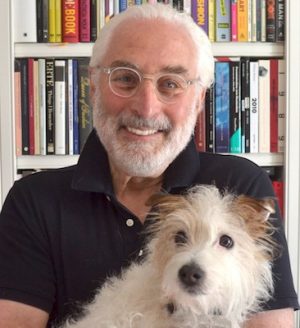
Paul Goldstein (photo by Lizzy Goldstein)
Legal Asylum’s most effective humor is reserved for State’s efforts to game the U.S. News rankings. For example, in one scene, Elspeth, Jimmy, and State’s admissions officers discuss how State needs to admit more students with higher GPAs and LSAT scores in order to boost the average scores of its students, which is one of the components of the rankings. But at the same time, those GPAs and LSAT scores cannot be too high because State’s yield ratio, another aspect of the rankings, will be poor when those extremely smart applicants reject the school. As Elspeth explains, “[i]t’s like dating in high school. We have to reject them before they reject us.” Elspeth also plans to charge each student full tuition but also to award each student a full scholarship, which artificially increases the amount of money the school pays per student. These scenes about the U.S. News rankings are strong because, while they may seem absurd to a lay reader, there is a sufficient amount of truth in them. One can readily imagine real law schools engaging in this sort of chicanery in order to boost their rankings, no matter whether or not it is ethically sound.

Legal Is Changing. And NeoSummit Is Where The Future Is Being Built.
Legal and operational leaders are gathering May 6–7 in Fort Lauderdale to confront the questions the industry hasn't answered—with a keynote from Amanda Knox setting the tone.
Accordingly, I wish that Goldstein had focused more on satirizing the law school rankings process and less on how poor State is. Nevertheless, Legal Asylum contains plenty of effective satire, particularly for U.S. News aficionados.
(Disclosure: I received a review copy of this book.)
Legal Asylum [Amazon (affiliate link)]
Harry Graff is a litigation associate at a firm, but he spends days wishing that he was writing about film, television, literature, and pop culture instead of writing briefs. If there is a law-related movie, television show, book, or any other form of media that you would like Harry Graff to discuss, he can be reached at [email protected]. Be sure to follow Harry Graff on Twitter at @harrygraff19.