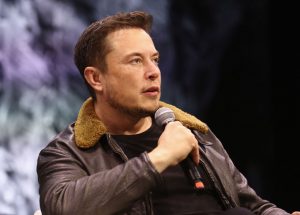
Elon Musk (Photo by Diego Donamaria/Getty Images for SXSW)
CEOs are the worst. Except for Elon Musk. Oh, Elon. This won’t be the last time I write about Elon Musk, and as you can see from the title to this piece, I’m not above using dated cultural references to do it. If you don’t know who Elon Musk is, go find out. I’ll wait.
Now, as you all know, Elon Musk is the CEO of Tesla, among many other things. I own a very modest amount of Tesla stock. Not because I necessarily expect to make a ton of money on it, but because Tesla is a good idea and I support what the company is doing and it’s one of the few stocks you can own without feeling like you have to scrub away your daily shame with a steel brush. That’s a good thing.
Context Windows In Legal AI And Why Content Still Determines Quality
Legal teams ask a practical question. If large language models are so capable, why does legal AI still depend on curated content, and why does surfacing that content matter so much?
But you wouldn’t know it from the almost hourly smear articles and interviews Wall Street types pump out about Elon Musk. Many of these are driven by bloodsucking short sellers who are invested, literally, in Tesla’s failure; some are just from sensationalists looking for clicks. Earlier this month, Elon smoked one puff of weed on a podcast, in California, where it’s legal under state law, and analysts freaked out about it for a week. Nobody in the real world gives a shit, but that didn’t stop a lot of sanctimonious pearl clutching.
The fact that people were squawking about Elon taking a hit from Joe Rogan’s tobacco/marijuana combo stogie belies the whole point of the podcast. Unlike many of the hacks writing about Elon’s THC consumption, I actually listened to the podcast, all two hours, 44 minutes, and 47 seconds of it, and THE MAN IS BRILLIANT. Listen to the whole podcast and try to tell me he is anything but lucid, competent, and yes, measured. He even has some nuanced comments about prosecutorial discretion and the justice system on that podcast.
The dictionary definition of a Chief Executive Officer is that he or she is the highest ranking person in the company ultimately responsible for making managerial decisions. For most CEOs, and for many people writing about CEOs, the ultimate goal of those decisions is that the financials in the next quarterly report look better than those in the last one so the stock price goes up temporarily.
The job of most CEOs, in other words, is to just not crash the ship (also, an oft-overlooked but very important nuance to the job is to refrain from sexually harassing anyone). Keep things going, anticipate or at least ride along with macroeconomic trends, and avoid scandal. Quick, name the CEO of Target. Or Ford. Or Hershey. Yeah, that’s what I thought.

Opus 2 Steps Up Its AI Game With Acquisition Of A Legal Tech Startup
With the addition of Uncover’s technology, the litigation software is delivering rapid innovation.
But you’ve heard of Elon Musk. Just not crashing the ship isn’t his focus, because he already packed the ship with solid-state rocket fuel and is blasting it to Mars, where a solar panel will probably fold out and heat your latte or something. He has multiple companies that have done and are doing things that no other company has been able to do, ever. He’s doing his job, which is making decisions that tend to pan out, and which is definitely not being a boring, flavorless person. There’s a time and a place for simply keeping a successful business doing what it’s good at, but I don’t expect and I don’t want Elon Musk to act like the CEOs of Target, Ford, or Hershey. As an investor, I don’t even care if the stock goes up or down for any given quarter. It’s a long term investment.
Here’s a helpful example. Remember 2007? We were still a year away from the whole damn economy melting down with the collapse of Lehman Brothers, and we were all excited because we had just received the ability to post attachments to our Facebook walls. We were using this new functionality to share videos of a guy passionately telling us to leave Brittany alone. It was great. At the time, everyone was giving Mark Zuckerberg shit for wearing a hoodie as a CEO. A decade later, Zuckerberg started wearing a suit instead of a hoodie, and we all found out that his company was only good for datamining us for profit and ruining democracy. Don’t try to tell me that suited Zuckerberg is better than hoodie Zuckerberg. Some people want to make Elon Musk into suited Zuckerberg. They need to stop.
Elon Musk is making products that are cool. He is solving real world problems, not to mention real Mars problems. He seems to genuinely care about his customers and his investors, and frankly, humanity. He is making money. It’s irrelevant if he wants to try out a legal drug (yes it’s still illegal under federal law, you don’t have to email me) or date Grimes or be a little mean to financial analysts who are hoping for his failure on an earnings call. Smoking what Joe Rogan offers when you’re on his podcast is just being a good guest, in my opinion. I wouldn’t make too much of the “funding secured” tweet inquiry either. If the Justice Department is going to police tweets, I can think of a much better place to start….The name calling with the British diver is a little much, but still, don’t really care. That guy started it anyway. Elon was just trying to help and you shouldn’t attack people who are trying to do the right thing and aren’t actually hurting anyone, even if their little submarine isn’t super useful.
As a Tesla shareholder, I say to you, Elon, be yourself. You’re not perfect, but you’re doing amazing things, and the small investors are with you. It frankly doesn’t surprise me that the guy behind successful implementation of vertical takeoff, vertical landing rockets lives life a little differently than a generic business manager stuffed into a suit. Dr. Neil deGrasse Tyson agrees that we should leave Elon alone, as long as he complies with SEC regulations, which is good enough for me.
It’s even OK if Tesla’s stock doesn’t make me and all the other shareholders a ton of money. It’s satisfying just to be a tiny part of something really ambitious and worthwhile. That chance doesn’t come up often enough in life.
Jonathan Wolf is a litigation associate at a midsize, full-service Minnesota firm. He also teaches as an adjunct writing professor at Mitchell Hamline School of Law, has written for a wide variety of publications, and makes it both his business and his pleasure to be financially and scientifically literate. Any views he expresses are probably pure gold, but are nonetheless solely his own and should not be attributed to any organization with which he is affiliated. He wouldn’t want to share the credit anyway. He can be reached at [email protected].