 The California judiciary is so fed up with incivility that the State Bar Board of Trustees has submitted to the California Supreme Court proposed new rules and amendments for its consideration and approval, based on a lengthy (more than 200 pages) report by the California Civility Task Force. I wonder just how much of that incivility is at least somewhat a result of trial judges refusing to hammer misbehaving lawyers. Aren’t they in the best position to do that?
Attorneys admitted since 2014 must take the following oath: “As an officer of the court, I will strive to conduct myself at all times with dignity, courtesy and integrity.” If the State Supreme Court approves, then all lawyers of whatever admission date will need to pledge that annually, and the failure to do so will result in inactive status for the noncompliant. Is that pledge worth the paper it’s written on?
The California Rules of Professional Conduct would be amended. If attorneys are not jerks and work professionally with opposing counsel and others, then clients could not make the “you are taking their side” claim. (How many times have we heard that, especially when trying to resolve a case that needs to be resolved?) So, lawyers who avoid “offensive tactics” with opposing counsel, stay on top of their cases, and treat “with courtesy and consideration all persons involved in the legal profession” would not violate any obligations to their clients.
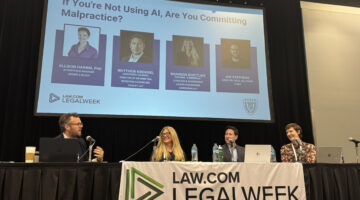
What Even Is AI ‘Competence’? It Depends.
Takeaways from a Legalweek panel on evolving malpractice risks.
However, lawyers could be disciplined for “abusive or harassing” behavior. A new rule would define incivility as “significantly unprofessional conduct that is abusive or harassing and shall be determined on the basis of all the facts and circumstances surrounding the conduct.” Would that include social media posts?
And are judges doing their part to curtail incivility in the trial courts? Some judges are loathe to impose sanctions for attorney antics. Perhaps more enforcement at the trial court level would help, like parents scolding their children with a “don’t make me stop this car” warning. If peeps think that they can get away with it, and there are no sanctions, then why not be a jerk? Nobody’s stopping you, at least not now.
Still in California, those who are waiting for the outcome of the California Bar’s disciplinary hearing against John Eastman, he of the theory that Mike Pence could invalidate the 2020 election, must be patient. Just a scroll through the docket shows how contested the hearing is. No surprise, given the circumstances and how unusual this case is from the run-of-the-mill disciplinary matters. The hearing will resume on August 22.
This will not be a matter that ends soon, given the review process, and then it will be up to the California Supremes to decide what, if any, discipline should be imposed. The outcome will not be certain until next year at the earliest. Which will happen first: the 2024 election or the disciplinary decision? Any bets?

Labor and Employment Federal Litigation Trends 2026
Drawing on more than a decade of data, the report equips law firms and corporate legal teams with actionable insights to better assess risk, refine strategy, and anticipate outcomes in today’s evolving workplace disputes.
I sound like a broken record (dinosaurs will remember what a record is, and vinyl is making a comeback), but what are lawyers thinking when they post on social media, especially when chatting about their trial victories? In one snafu, the plaintiff won, but then lost, when co-counsel couldn’t help himself and chatted about the victory online, including the incendiary “three lies we tell jurors.”
This is a classic example of the First and Sixth Amendments butting heads. Who wins? Free speech or fair trial? Fair trial won this round. This is not the first time a trial counsel has been benchslapped for social media comments. Last year, a defense verdict here in SoCal was tossed out because of comments that the winning attorney made on social media. What are these lawyers thinking? Clearly a rhetorical question. I don’t see anything wrong in sharing accomplishments, victories, and so on but there should be a common sense “rule of reason” about what you say and in what forum. Cases of snatching defeat from the jaws of victory?
And it’s not just lawyers. Judges also are fascinated by the internet at the most inappropriate times, such as when presiding over a trial. She may not have been “doomscrolling,” but what kind of professional doom will she face?
Workplaces may well be the next battleground, given the Supreme Court’s recent decisions striking down affirmative action in college admissions at UNC and Harvard. One lawsuit just filed in the Southern District of California alleges that a former employee who objected to the employer’s diversity initiatives found herself out of a job. She had complained about them, was assured that there would be no retaliation and was subsequently terminated. Employment lawyers, both plaintiff and defense, start your engines.
And last, but certainly not least, for those of you who endured the bar exam this week, remember my admonition. Do not discuss your answers with anyone, and I mean anyone. You are crazed and exhausted enough right now. You don’t need any more reasons to freak out. Get some sleep, chill. Control freaks that we are, there’s nothing more to be done. Perseverating does no good.
 Jill Switzer has been an active member of the State Bar of California for over 40 years. She remembers practicing law in a kinder, gentler time. She’s had a diverse legal career, including stints as a deputy district attorney, a solo practice, and several senior in-house gigs. She now mediates full-time, which gives her the opportunity to see dinosaurs, millennials, and those in-between interact — it’s not always civil. You can reach her by email at [email protected].