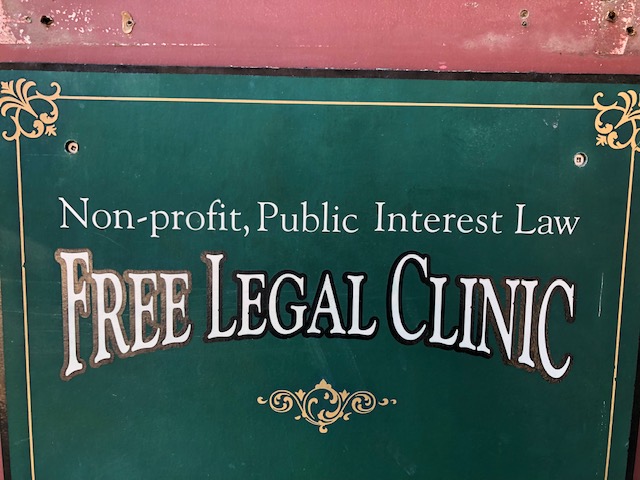
Pro bono matters can be an invaluable experience for rookie lawyers. Depending on the law firm, many new attorneys might not have the chance to work on substantive tasks related to the regular matters a law firm handles, since partners may not want novice lawyers messing things up for law firm clients. However, pro bono matters often give rookie lawyers the chance to handle types of tasks they might not be able to handle for a firm’s regular clients. If the opportunity arises, novice lawyers should seek out the chance to work at legal aid clinics, since this experience provides even more critical experience that can be helpful to the development of a lawyer.
Right at the beginning of my career, I worked at a law firm that encouraged pro bono work, and even counted hundreds of hours billed to pro bono matters toward a lawyer’s annual billable hour requirement. During my first month on the job, Superstorm Sandy hit our area, which decimated our office and the areas where many of the lawyers at the firm resided. Numerous people in our area had legal issues related to the storm, such as insurance cases, foreclosure matters, and the like. In order to deal with all of the people seeking advice related to the storm, a local pro bono organization decided to set up legal aid clinics for victims of the storm that were staffed by attorneys at that organization’s partner law firms.

How LexisNexis State Net Uses Gen AI To Tame Gov’t Data
Its new features transform how you can track and analyze the more than 200,000 bills, regulations, and other measures set to be introduced this year.
I attended multiple sessions of the legal aid clinics, and the experience was enriching. Most critically, such clinics gave me firsthand experience interacting with clients. When I worked on regular matters at the law firm, partners usually facilitated all of the communications with clients. While working on pro bono matters at the firm, I was also often associated with a partner who would handle most communications. However, at such legal aid clinics, I had firsthand and significant communications with clients, which was different than other work opportunities.
While working at legal aid clinics, I also had to think on my feet and handle a multitude of matters I had not encountered before. Often, I would set myself up at the legal aid clinics with my laptop and listen to clients speak about all kinds of issues. I frequently had to conduct research in real time and provide advice on a wide spectrum of matters. This type of quick thinking is an important skill that is not usually developed while working on regular matters at many law firms.
Legal aid clinics can also be a much more fun and enriching experience than ordinary pro bono work. The legal aid clinics were usually held in the evenings, so people who worked could attend the clinics after business hours. This was not always fun to attend as a lawyer, but this permitted me to bond with other attorneys at our office in different setting than we were used to. It is much easier to form bonds and memories with co-workers when you break the routine of seeing each other in an office, and this is another benefit of staffing legal aid clinics.
Of course, legal aid clinics are typically a less frequent pro bono opportunity, but they can provide a variety of benefits. In order to learn valuable skills and enrich their experience as a lawyer, novice attorneys should seek out opportunities to staff legal aid clinics.

7 Key Trends In Law Firm Rate Negotiations
And how to navigate them in 2026.
Jordan Rothman is a partner of The Rothman Law Firm, a full-service New York and New Jersey law firm. He is also the founder of Student Debt Diaries, a website discussing how he paid off his student loans. You can reach Jordan through email at jordan@rothman.law.