Ed. note: Please welcome Renee Knake Jefferson back to the pages of Above the Law. Subscribe to her Substack, Legal Ethics Roundup, here.
Welcome to what captivates, haunts, inspires, and surprises me every week in the world of legal ethics.
Happy First Monday! On the first Monday of each month, you get a longer version of the Roundup with the headlines plus reading recommendations, job postings, events, and many other features.

Heading To Legalweek? Come Join Above The Law!
Meet the team in NYC at our Monday night happy hour — 3/9 at 7pm. RSVP required.
After a month away, we have much to catch up on. Yes, it has been over a month since my last post in November! I wrapped up many writing deadlines during my December break and spoke with a few reporters on different matters including Karen Zraick at the New York Times about the ethics of amicus briefs. You can read more about that below at headline #1.
I also spent some quality time with family, including a holiday on Anna Maria Island. Off the coast near Tampa, it is a charming beach town with no stoplights, high rises, or chain stores. I discovered it 20 years ago thanks to this New York Times article “Perfecting the Fine Art of Doing Nothing,” and fortunately AMI remains delightfully untouched by modern tourism. But I missed our weekly LER connections. I’m so happy to be back in your inbox!

If you’re attending the Association of American Law Schools Annual Meeting this week in New Orleans, I’d love to say hello. You can find me at the Professional Responsibility Main Program and Awards Ceremony on Thursday from 2:35-3:50PM where I’ll be moderating a panel discussion on “The Law Professor’s Role in Protecting our Legal System” with Scott Cummings (UCLA), Matthew Diller (Fordham), Rachel Lopez (Temple) & Milan Markovic (Texas A&M). For more details about that, plus other legal ethics related programming and NOLA recommendations, visit LER Bonus Content Post No. 21.

Now, let’s get started with the headlines. You get twenty-five(!) this week to make up for the December pause. (Believe it or not, that’s narrowed down from more than forty I collected.) Don’t forget to keep scrolling down to the very end for all the “First Monday” extra features, including job postings, recommended reading, legal ethics in pop culture, trivia, and more. Enjoy!
Highlights from the Past Month – Top Ten Twenty-Five Headlines
#1 “Greenpeace’s Fight With Pipeline Giant Exposes a Legal Loophole.” From The New York Times: “Friend-of-the-court briefs, or amicus briefs, are increasingly being used as a litigation tactic rather than for their intended purpose, said Renee Knake Jefferson, a law professor at the University of Houston. The filings are supposed to offer ‘additional concerns the court should consider,’ but often one party is ‘going behind the cloak of the amicus brief to continue its own advocacy,’ Ms. Jefferson said.” Read more here (gift link).
#2 “‘Indeed Frivolous’: Appeals Court Upholds $1 Million Penalty Against Trump and His Lawyer.” From Raw Story: “A federal appeals court upheld a $1 million penalty against President Donald Trump and his former lawyer Alina Habba for filing a ‘frivolous’ lawsuit against Hillary Clinton, James Comey and others.” Read more here.
#3 “Ex-DLA Piper Partner Accused in Lawsuit of Raping Associate.” From Bloomberg Law: “A former DLA Piper partner is accused of raping an associate he mentored after a work dinner at the firm’s Delaware office, according to a lawsuit filed Monday.” Read more here.
#4 “NYT Video Essay: U.S. District Judge Esther Salas on the Consequences of Partisan Rhetoric.” From Duke’s Bolch Judicial Institute: “In a powerful New York Times video essay, U.S. District Judge Esther Salas explains how escalating political attacks are undermining public confidence in the federal judiciary and fueling threats against judges.” Read more here.
#5 “US Judge Found Guilty of Helping Migrant Evade Immigration Agents.” From the BBC: “A judge in the US state of Wisconsin has been found guilty of obstruction for trying to help a Mexican man evade immigration officials during an arrest attempt. Milwaukee County Circuit Judge Hannah Dugan was arrested in April after ushering Eduardo Flores-Ruiz, a Mexican national facing battery charges, out of her courtroom through a side door.” Read more here.
#6 “Say Goodbye to the Billable Hour, Thanks to AI.” From The Wall Street Journal: “With AI taking over their grunt work, lawyers and other professionals may have to charge for outcomes rather than time spent.” Read more here (gift link).
#7 “Ex-Prosecutor Sues Over Arrest While Protesting Law Firm Skadden’s Deal with Trump.” From Reuters: “A retired prosecutor has sued New York City and Brookfield Properties in federal court, alleging he was wrongfully arrested while protesting in a public space against law firm Skadden Arps over its deal with President Donald Trump to provide free legal work. David O’Keefe said in his lawsuit filed on Thursday, that he was arrested while staging a solo protest in April in a privately-owned but public space outside Skadden’s Manhattan office. He opposed Skadden’s agreement to provide $100 million in pro bono services for Trump-backed initiatives, calling it a threat to the rule of law.” Read more here.
#8 “How Charlie Javice’s Legal Fees Hit $74 Million: Gummy Bears and Star Lawyers.” From The Wall Street Journal: “A list of legal expenses from her lawyers included $530 in gummy bears, a seafood tower and thousands of dollars on hotel upgrades, new court documents reveal.” Read more here (gift link).
#9 “Judges Who Ruled Against Trump Say Harassment and Threats Have Changed Their Lives.” From NBC News: “More than 100 pizzas were delivered to the homes of judges and their families this year, some with signs of foreign involvement. Judges say the message is clear: We know where you live.” Read more here.
#10 “Trump Suffers Several Defeats in Effort to Punish Opposing Lawyers.” From The Washington Post: “Since taking office for the second time, President Donald Trump has suffered multiple losses in his efforts to strip security clearances from political opponents and prestigious Washington law firms. … The president’s latest loss came this week, when a federal judge in Washington temporarily blocked Trump’s efforts to strip a security clearance from national security attorney Mark Zaid.” Read more here (gift link).
#11 “He Was a Supreme Court Lawyer. Then His Double Life Caught Up With Him.” From The New York Times: “Thomas Goldstein was a superstar in the legal world. He was also a secret high-stakes gambler, whose wild 10-year run may now land him in prison.” Read more here (gift link).
#12 “Notorious Crypto Con Man Sam Bankman-Fried Has a Prison Passion Project: Giving Legal Advice to Other Inmates.” From Fortune: “The founder of FTX has brought his entrepreneurial spirit behind bars. He has advised several high-profile inmates, like former Honduran President Juan Orlando Hernandez and rapper Sean Combs, according to reporting by the New York Times.” Read more here.
#13 “FTC Says ABA is a ‘Law School Accreditation Monopoly’.” From Reuters: “The U.S. Federal Trade Commission … called the American Bar Association’s accreditation of law schools a ‘monopoly’ that increases the cost of a law degree and limits the supply of new lawyers. The agency made the assessment in a letter to the Texas Supreme Court, which invited public comment after saying in September that it plans to end the state’s reliance on the ABA for law school oversight.” Read more here.
#14 “Judges Who ‘Unretired’ After Trump Win Didn’t Breach Ethics Code.” From Bloomberg Law: “Three federal judges who decided to ‘unretire’ after President Donald Trump won the election didn’t violate judicial ethics rules, a chief judge held. Chief Judge Debra Ann Livingston of the US Court of Appeals for the Second Circuit threw out the conservative Article III Project’s misconduct complaints against Judges James Wynn Jr. of the US Court of Appeals for the Fourth Circuit, Max Cogburn of the US District Court for the Western District of North Carolina, and Algenon Marbley of the US District Court for Southern District of Ohio.” Read more here.
#15 “Grand Jury Declines to Re-Indict Letitia James in Virginia.” From Fox News: “The Department of Justice failed to bring an indictment against Letitia James on Thursday after a federal judge tossed the initial indictment last week, according to a DOJ source. The DOJ attempted to persuade a grand jury in the Eastern District of Virginia to indict James a second time, the source said, after Judge Cameron Currie found that the prosecutor who brought the first indictment, Lindsey Halligan, was serving unlawfully as interim U.S. attorney. The revelation that a grand jury did not indict James, one of President Donald Trump’s top political foes, is a blow to the DOJ as it is rare that grand juries do not find enough probable cause to bring charges.” Read more here.
#16 “Calif. Atty Slams ‘Protectionist’ ABS Fee-Sharing Ban.” From Law360: “A California attorney has pushed back on opposition from California’s attorney general and the state’s bar association amid his efforts to block enforcement of a ban on fee sharing with out-of-state law firms owned by nonattorneys arguing the new state law is a ‘protectionist act, in defiance of the constitution.’” Read more here.
#17 “Judge Emil Bove Faces Ethics Complaint for Attending Trump Rally.” From The New York Times: “Judge Emil Bove III, a federal appeals court judge who made his career as a stalwart supporter of President Trump, is now facing a complaint over his attendance at a campaign-style rally held by Mr. Trump at a Pennsylvania casino resort on Tuesday. The complaint, which was filed on Wednesday with the chief judge of the U.S. Court of Appeals for the Third Circuit and was written by Gabe Roth, who heads the advocacy group Fix the Court, said that Judge Bove’s attendance at the rally violated rules that prohibit judges from ‘the appearance of impropriety’ and engaging in ‘political activity.’” Read more here (gift link).
#18 “North Dakota Names First Female Supreme Court Chief Justice.” From the North Dakota Monitor: “Lisa Fair McEvers has been elected the first female chief justice of the North Dakota Supreme Court. She earned about 83% of the vote by sitting justices and district court judges. … North Dakota is the only state where the chief justice is elected by a vote of the sitting justices and district court judges, said State Court Administrator Sally Holewa, who led the ballot count.” Read more here.
#19 “Why Lawyers Buy So Many Billboards.” From The Hustle: “The American Tort Reform Association, a lobbying group that advocates for caps on award damages and changes to current civil liability laws, estimates that in 2024 attorneys spent $541m+ on out-of-home and outdoor ads, a category that includes billboards as well as space on buses, subways, and other public areas. This is an increase of $70m compared to 2023 and nearly $200m from 2022. Morgan & Morgan, the country’s largest personal injury firm, reportedly spends a staggering $350m annually on marketing alone. So why are so many law firms, from single-attorney practices to firms with thousands of employees, investing so heavily in billboards?” Read more here.
#20 “Over 200 Ex-Staffers Decry Destruction of DoJ Civil Rights Arm: ‘America Deserves Better’.” From The Guardian: “More than 200 former employees in the justice department’s civil rights division signed a letter released on Tuesday decrying the ‘near destruction’ of the agency that is supposed to enforce US civil rights laws and accused political leadership of waging a campaign to purge career experts from its ranks. There was a mass exodus of lawyers earlier this year after political appointees removed career managers, detailed employees to menial work, unilaterally dropped cases, and made it clear the division’s focus would be enforcing Donald Trump’s priorities. By 1 May of this year, the department had lost about 70% of its attorneys – a staggering number. ” Read more here.
#21 “Judicial Use of AI: Ethical Issues.” From Reuters: “An expert Q&A on the legal, ethical, and practical considerations and emerging issues regarding judicial use of AI, including judicial independence, appropriate use cases, oversight obligations, disclosure expectations, and data protection.” Read more here.
#22 “Inside the 17-year Lawsuit Between a Trump Official and His Interior Designers.” From The Washington Post: “Suing your opponent’s lawyer because you disagree with how they handled the case is ‘facially ludicrous,’ said Melissa Mortazavi, a law professor at the University of Oklahoma who focuses on legal ethics and reviewed the docket. ‘That person doesn’t owe you a duty of care. … It just, to me, is a sign that the person who made the motion has actually filed a frivolous motion.’” Read more here (gift link).
#23 “Supreme Costs: A Condensed Version of Our Series on the ‘Obscene’ Spending on Wisconsin Justices.” From Wisconsin Watch: “A quarter-century ago, the total cost of every state Supreme Court race in the country reached an unprecedented $45.6 million, prompting the Brennan Center for Justice at New York University to warn ‘a new and ominous politics of judicial elections’ posed a ‘threat to fair and impartial justice.’ Yet in 2025, spending on one Wisconsin Supreme Court seat reached $144.5 million, even more than the $100.8 million spent on 68 state high court contests in the nation in 2021 and 2022.” Read more here.
#24 “ABA AI Task Force Report Examines Opportunities, Challenges for Legal Profession.” From the ABA Journal: “The American Bar Association’s Task Force on Law and Artificial Intelligence released its final report recently. The AI Task Force ‘Year 2 Report on the Impact of AI on the Practice of Law’ focuses on the future of AI and the law. … Recognizing AI’s enormous potential for the legal profession and beyond, the task force addressed some of the most pressing and challenging legal issues facing society today, including the profound impact of AI on the legal profession and the rule of law, the courts, legal education, access to justice, governance and risk management, as well as challenges presented by generative AI and ethical dilemmas.” Read more here.
#25 “Legal Ethics: 2025 Year in Review.” From Slaw: “As 2025 draws to a close, this column looks back on three high-profile areas of development in Canadian legal ethics and lawyer regulation over the past year. It also flags several major court cases and disciplinary proceedings from 2025, as well as cases to watch for in the year ahead.” Read more here.
Ethics Reform Watch ⚖️
The ABA issued a new ethics opinion in December providing guidance for disclosure and confidentiality rules when a lawyer moves to withdraw from a representation under Rule 1.16. Here’s the summary of Formal Opinion 519 “Disclosure of Information Relating to the Representation in a Motion to Withdraw From a Representation:”
When moving to withdraw from a representation, a lawyer’s disclosure to the tribunal is limited by the duty of confidentiality established by Rule 1.6(a) of the ABA Model Rules of Professional Conduct. Unless an explicit exception to the duty of confidentiality applies or the client provides informed consent, the lawyer may not reveal “information relating to the representation” in support of a withdrawal motion. Disclosure of information relating to the representation is not “impliedly authorized in order to carry out the representation” under Rule 1.6(a) or otherwise impliedly authorized even when Rule 1.16(a) requires the lawyer to seek to withdraw. If disclosure is permitted by an exception to the duty of confidentiality, such as when disclosure is required by a court order, it must be strictly limited to the extent reasonably necessary and, whenever possible, made through measures that protect confidentiality such as by making submissions in camera or under seal.
The Model Rules require that any disclosure in support of withdrawal be narrowly tailored, protective of the client’s interests, and undertaken only within the scope of an applicable exception. When the client does not give informed consent to disclosing information relating to the representation in support of a motion to withdraw, and there is no applicable exception to the duty of confidentiality, lawyers should proceed in stages: begin with a motion citing only “professional considerations” or employing similar language to justify the motion; if the court seeks further information, assert all non-frivolous claims for maintaining confidentiality consistent with Rule 1.6(a); and, if ordered to disclose additional information relating to the representation, do so in the narrowest possible manner. Ultimately, the lawyer’s paramount duty is to preserve client confidentiality, even at the risk that the tribunal may deny the motion to withdraw.
Recommended Reading
So much great reading in legal ethics is out in the world right now. I have a stockpile of recommendations to share in the coming months. For now you get one book and three law review articles.
“The Pain Brokers: How Con Men, Call Centers, and Rogue Doctors Fuel America’s Law Suit Factory” (Simon & Schuster 2026) by Elizabeth Chamblee Burch (Georgia). I got to read this one hot off the press — so hot, in fact, that you can’t buy it in stores until January 13 but it is available for pre-order on Amazon. (Pre-orders help the author, so buy it now!) It’s the kind of book that will keep you up late reading, whether or not you’re a legal ethics buff, and I can already see it being made into a miniseries (think Johnathan Harr’s A Civil Action meets Apple TV’s Palm Royale set in 2015 instead of 1969). Here’s the back cover summary:
For decades, late-night television has blared a familiar refrain: If you or a loved one has been injured by X product… But behind those ads lies a lesser-known world where elaborate scams revictimize the injured. Why else would thousands of women with health insurance take out loans with astronomical interest rates and fly to south Florida to have their pelvic mesh surgically removed at a chiropractor’s clinic? The Pain Brokers, by law professor Elizabeth Burch, is a damning investigation of a scheme made possible by a medical and legal complex that too often views women’s bodies as cash machines and fails to take their pain seriously. As Burch unfurls each level to the scheme, we meet an enthralling cast of characters, from a world class scam artist who reaped tens of millions of dollars at a south Florida call center, to the ultimate white shoe power lawyer who defended Big Pharma but became an unlikely hero, to a newly minted small-town Arkansas attorney who advocated for the unseen and unheard. But at the center are three women, Jerri, Barb, and Sharon, whose lives were upended by the very procedure they were told would save them. A page-turning, urgently necessary work of public service journalism, The Pain Brokers is not only a chilling exposé of a legal system gone awry, but a wake-up call to the ways in which it harms those it is meant to help.
In short, The Pain Brokers is a must-read!

“An Unreliable Reporter” by Jon Lee (Oklahoma). From the abstract:
As part of the legal profession’s tradition of self-regulation, attorneys have an ethical obligation to ensure that those within it are fit to practice. Given the gravity associated with accusing another lawyer of misconduct, it is not surprising that many are reticent to speak up. But what would happen if attorneys were pressured to vigorously pursue sanctions against their opponents, even if those sanctions may be unwarranted? President Trump’s recently-issued memorandum arguably does just that, mandating the Attorney General to seek court and disciplinary sanctions for lawyers and law firms that appear to violate ethics rules. This Essay explains how this directive may put some federal government attorneys in a conundrum where they will have to choose between placating the Administration or standing firm, and it explores the
ethical and other professional consequences that may follow from their choice.
“Judicial Regrets” by Yuvraj Joshi (Brooklyn). From the abstract:
U.S. Supreme Court Justices have often expressed regret about their most consequential rulings and opinions. Chief Justice Earl Warren lamented his 1955 Brown v. Board of Education opinion ordering desegregation “with all deliberate speed”—ambiguous phrasing that enabled delays in integration. Justice Lewis Powell recanted his 1986 opinion in Bowers v. Hardwick, which upheld a Georgia law criminalizing same-sex intimacy. Justice Sandra Day O’Connor predicted in Grutter v. Bollinger that affirmative action policies would no longer be needed within twenty-five years—a prediction she later acknowledged was mistaken. These examples, among others discussed in this Article, illustrate that judicial regret is frequent and poignant, spanning several areas of law.
Judicial regret already influences legal development—shaping judicial behavior, informing legislative reform, and empowering social movements—whether acknowledged or not. Despite this significance, it remains largely unexplored in American legal scholarship. This Article provides the first systematic analysis of judicial regret by drawing on multidisciplinary research on regret, previously unpublished judicial survey data, and judicial case studies. It examines how the law might better account for judicial regret and underscores insights about law and judging that stem from deeper understandings of it. Because such regret can catalyze legal reforms, rectify past harms, and influence legal interpretations, this Article proposes ways to incorporate it into constitutional interpretation and the treatment of precedent. By contemplating the legal and normative significance of this neglected judicial emotion, this Article aims to help the legal community avoid collectively discounting regret.
“Equal Justice & Generative AI” by Milan Markovic (Texas A&M). From the abstract:
The United States has long suffered from unequal access to justice, with countless low-and middle-income Americans forced to navigate the legal system alone. Recently, prominent judges, lawyers, and scholars have seized on generative AI as a potential corrective. These techno-optimists maintain that ChatGPT and other large language models can demystify the law and address unmet legal needs. Chief Justice John Roberts has proclaimed that AI-based tools “have the welcome potential to smooth out any mismatch between available resources and urgent needs in our court system.” … This Article proposes two key reforms for integrating AI into the civil justice system. First, it calls for the training of justice tech workers to counsel unrepresented individuals in the responsible use of AI-based legal tools. Second, courts should bolster existing ethical requirements and mandate the reasonable verification of factual claims and legal authorities in proceedings that commonly involve unrepresented parties. Without these reforms, AI will only entrench and amplify longstanding inequalities in the justice system.
Legal Ethics in Pop Culture — Kim Kardashian’s Bar Failure Hasn’t Kept Her From Playing Lawyer
Kim Kardashian announced in December she failed the bar exam, again. Max Raskin (NYU Law, Uris Acquisitions) argued it’s not about her capabilities, but instead “it’s about quantity control.” From his op-ed in the Washington Post:
It’s easy to laugh at Kim Kardashian, who recently announced that she failed the California bar exam, joining the ranks of celebrities such as Kamala Harris and Jerry Brown. But Kardashian’s failure is not a knock on her — it’s an indictment of the bar, one of the most powerful guilds in America. And for the first time in a century, technological change may finally break that cartel’s grip.
Read the full op-ed here (gift link).
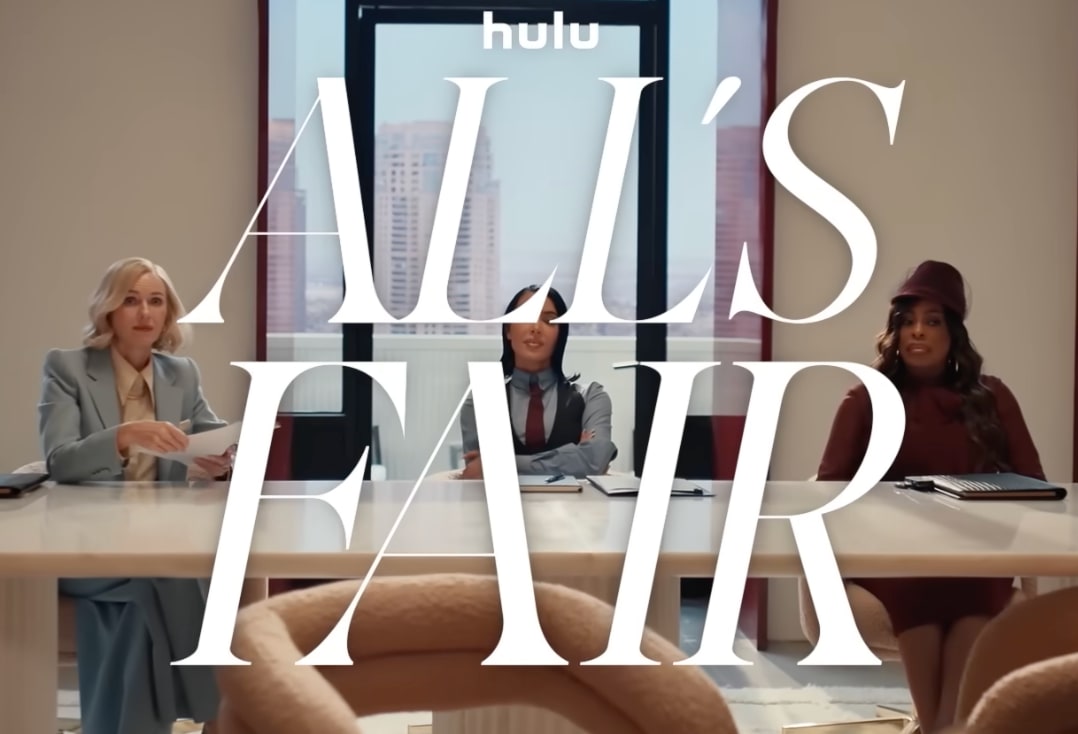
While she still is not yet a licensed lawyer, Kardashian is playing one on TV. Together with a star-studded cast including Naomi Watts, Glenn Close, Niecy Nash-Betts, and Sarah Paulson, she is a partner in an all-female law firm in the Hulu series All’s Fair, which has been called “one of the worst shows of all time” according to Slate:
And yet, for all the hatred from critics (whose scorn initially earned the show a rare zero percent rating on the aggregator site Rotten Tomatoes, before the series gasped its way to its current 4 percent), All’s Fair has actually been a ratings winner for Hulu. It enjoyed more than 3 million views in its first three days of streaming—perhaps thanks, in part, to its abysmal early reviews—making it the platform’s most-watched scripted series premiere in three years. This result was framed by some as “a clear division between viewers and critics,” another data point in the apparent declining cultural power that reviewers once enjoyed.
I will confess — I’m one of the 3 million viewers. And while I can’t say that I recommend the show, it certainly isn’t the worst thing I’ve ever seen. And it does offer up a few moments to teach legal ethics. Check out the trailer for All’s Fair here.
Legal Ethics Trivia 里
From the Texas Center for Legal Ethics, here’s the question of the month: “How much do you know about reporting attorney discipline?” Test yourself at this website where you can read a short hypothetical, select an answer, and see your results. So far, 55% have gotten it right. Will you?

Get Hired
Did you miss the 400+ job postings from previous weeks? Find them all here.
Assistant Ethics Counsel, North Carolina State Bar — Raleigh/Hybrid. From the posting: “This is a unique opportunity to work at the intersection of legal ethics, public service, and legal education. In this role, you’ll provide guidance to attorneys on ethics issues, support the Ethics Committee, and help shape the ethical landscape of the legal profession in North Carolina by contributing to the development of formal ethics opinions and amendments to the Rules of Professional Conduct. You’ll also deliver CLE presentations, conduct legal research, and support the State Bar’s efforts in protecting the public through the regulation of the legal profession. ” Salary range $85,000 to $110,000 annually. Learn more and apply here.
Conflicts Attorney, Holland & Knight — Multiple Locations/Remote. From the posting: ”With the appropriate oversight from the firm’s Professional Standards Partner, the Conflicts Attorney will assist with managing the conflict resolution process related to new business intake, while protecting the firm and its clients from adversity and risk. Periodic in-person presence is required for annual or bi-annual weekend team building events. ” Salary range $136,000 to $245,000 annually. Learn more and apply here.
Conflicts Attorney, Seyfarth Shaw — Multiple Locations/Remote. From the posting: ”As a Conflicts Attorney, you will manage ethical and business risks presented by potential new business opportunities for an Am Law 100 firm. Based on your training and experience, you will analyze conflicts search reports to identify potential conflicts of interest with potential new business and in some instances with prior and potential new business for lateral hires. You will work independently with attorneys across the Firm to detect conflicts and resolve them, where possible, within the guidelines of prevailing ethical rules and Firm policies and procedures.” Salary range $145,000 to $170,000 annually. Learn more and apply here.
Senior Attorney – Ethics & Advertising, The Florida Bar — Tallahassee. From the posting: “The Senior Attorney provides oral and written ethics opinions providing advice on ethics issues to Bar members, reviews attorney advertising for compliance with the Rules Regulating The Florida Bar, and assists in working with various bar committees.” Salary starts at $87,804.63 annually. Learn more and apply here.
Senior Attorney – Lawyer Regulation Headquarters, The Florida Bar — Tallahassee. From the posting: “The Florida Bar’s Lawyer Regulation Headquarters-Tallahassee is seeking an experienced Trial Attorney. The Senior Attorney acts as counsel at investigative and trial levels of processing grievances against attorneys.” Salary starts at $87,804.63 annually. Learn more and apply here.
Senior Attorney – Lawyer Regulation Tampa Branch, The Florida Bar — Tampa. From the posting: “The Florida Bar’s Lawyer Tampa Branch office is seeking an experienced Trial Attorney. The Senior Attorney acts as counsel at investigative and trial levels of processing grievances against attorneys.” Salary starts at $91,316.82 annually. Learn more and apply here.
Upcoming Ethics Events & Other Announcements ️
Did you miss an announcement from previous weeks? Find them all here.
- January 6-9. Association of American Law Schools Annual Meeting, Section on Professional Responsibility Events. I’ll be moderating the Section’s main program on “The Law Professor’s Role in Protecting Our Legal System” which will be held January 8 from 2:35-3:50 PM. Heading to AALS in New Orleans? Here’s the Guide You Need – LER Bonus Content No. 21 (01.01.26)
- February 7-9. Association of Professional Responsibility Lawyers, Midyear Meeting, San Antonio. Learn more and register here.
- October 15-16. Complex Litigation Ethics Conference, UC Law San Francisco. The conference is the fourth annual event addressing Complex Litigation Ethics. It will bring together luminaries in the field—judges, scholars, lawyers, and others—to discuss a cutting-edge topic that is of critical importance to our justice system. Learn more here.
Keep in Touch
- News tips? Announcements? Events? A job to post? Reading recommendations? Email [email protected] – but be sure to subscribe first, otherwise the email won’t be delivered.
Renee Knake Jefferson holds the endowed Doherty Chair in Legal Ethics and is a Professor of Law at the University of Houston. Check out more of her writing at the Legal Ethics Roundup. Find her on X (formerly Twitter) at @reneeknake or Bluesky at legalethics.bsky.social.