
For most lawyers, depositions follow a script that has barely changed in decades. Schedule a court reporter, show up, ask questions and wait for a transcript that isn’t even certified.
When someone needs a summary, you (or a very tired associate) spend up to two hours creating one for every hour of testimony. Multiply that across 20 depositions, and you are looking at dozens of hours of work.
Now, Filevine has reimagined depositions to save countless hours and thousands of dollars a year. Their case management software had long been like a junior associate who’s never off the clock, helping with every aspect of case management from organization to redlining and billing.
But the new Filevine Depositions and Depo CoPilot revolutionize the way depositions are taken. They help lawyers schedule depositions, set and track goals during them, draft summaries and timelines, and even prep for trial.
“It’s a deposition in a box,” said Giancarlo Cellini, Solutions Engineer at Filevine. “From the time that you agree on a date and time of the deposition to all the way past trial, these deposition tools take care of you.”
Cellini recently walked us through the new tools. Here are the highlights.
Getting Started
Filevine Depositions builds on the functionality of the Filevine platform, which means scheduling, transcripts, summaries and analysis happen in a space that’s integrated with where the rest of the case data already sits.
From the Depositions dashboard, users see all their cases and can easily schedule a proceeding in all 50 states and in federal jurisdictions. In states that require a certified court reporter, Filevine can help provide one. In other states, it schedules a person to digitally attend.
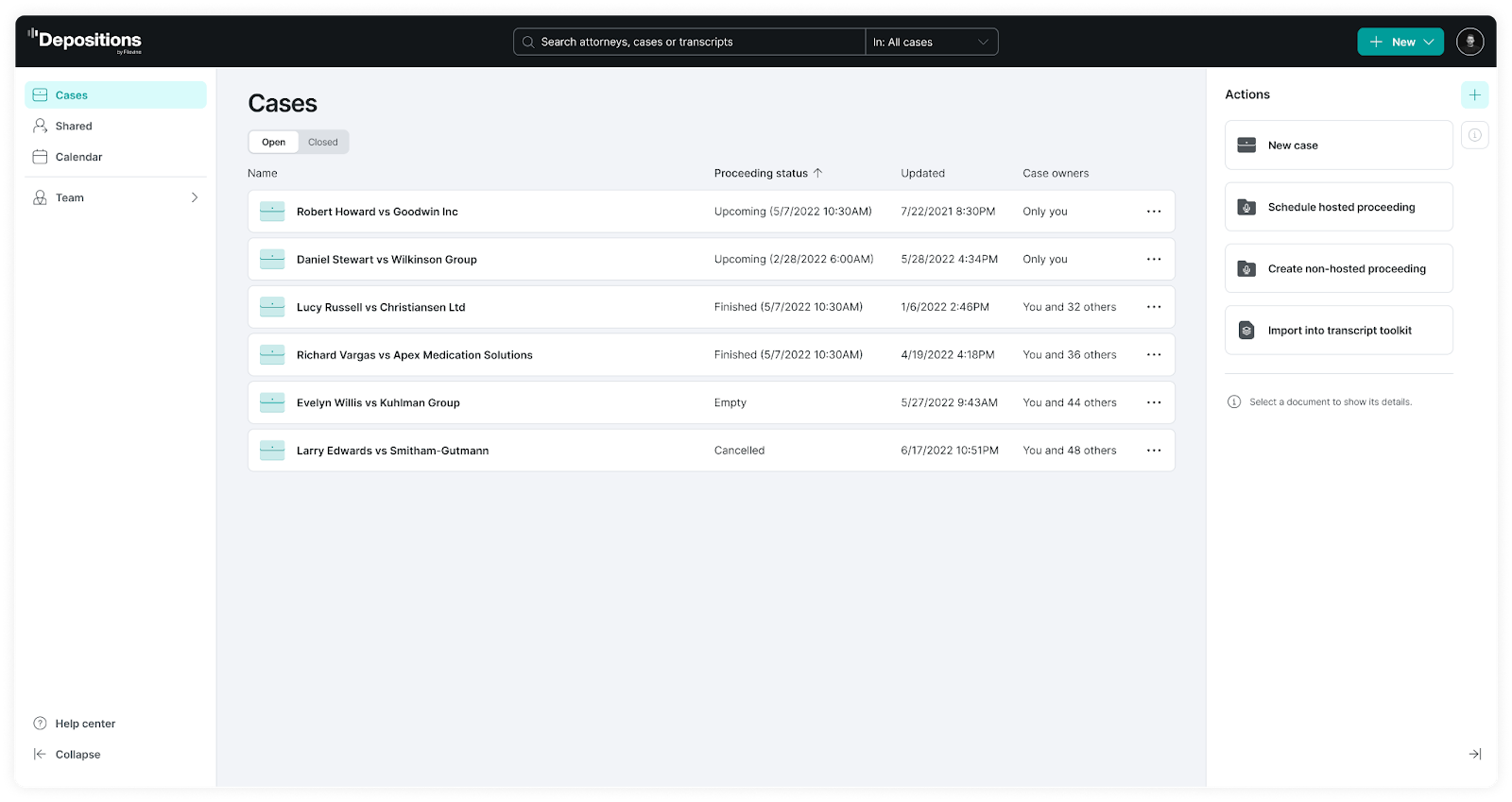
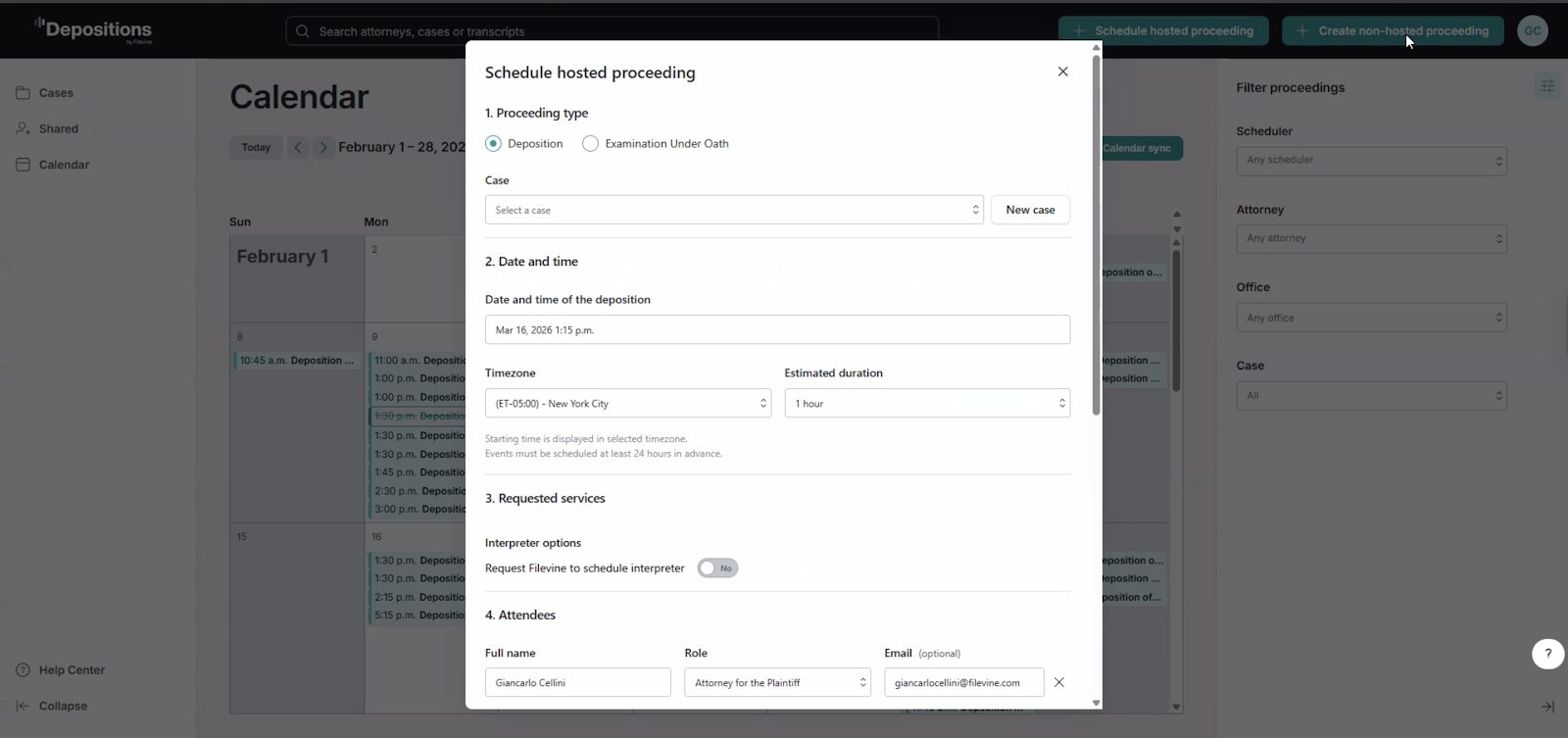
Users can toggle between a case and calendar view to see what’s coming up, and appointments can be integrated with lawyers’ Outlook, iCal or Google Calendar. People can be added to the event to send three automatic reminder emails: once at the time of scheduling, again the day before the deposition, and a final email goes an hour before the deposition.
An exhibits folder embedded in the case can be shared with the court reporter, and a video clips folder will help organize the most relevant portions of the proceedings.
Immediate Transcripts for a Usable Work Product
The real magic begins when the deposition starts.
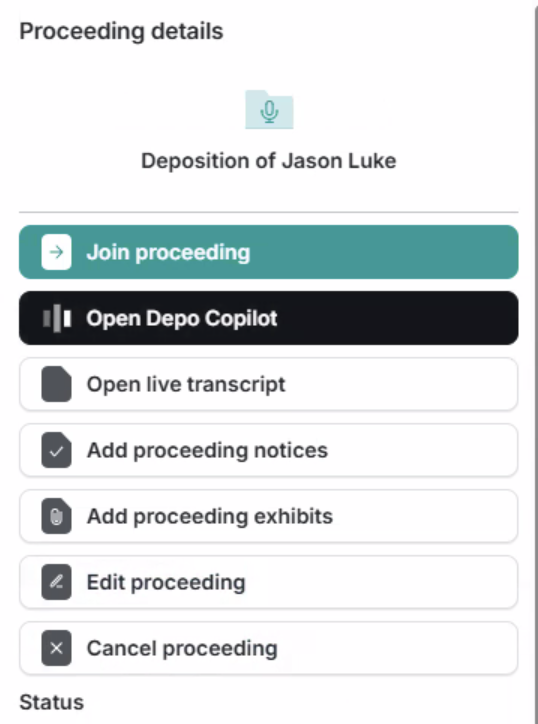
Under the traditional model, lawyers have to wait for at least a rough draft of the transcript before serious analysis begins. But when they click Depo CoPilot, the software follows along and transcribes the deposition in real time.
Cellini recommends letting it run in the background so that when you take a break, you or a paralegal can check on the tool.
“Now if I have a follow-up question based on a specific answer, I can find that very quickly by searching my real-time transcript,” Cellini said. “So I don’t have to rely on my notes or my memory.”
The Long Wait is Gone for Transcripts and Summaries
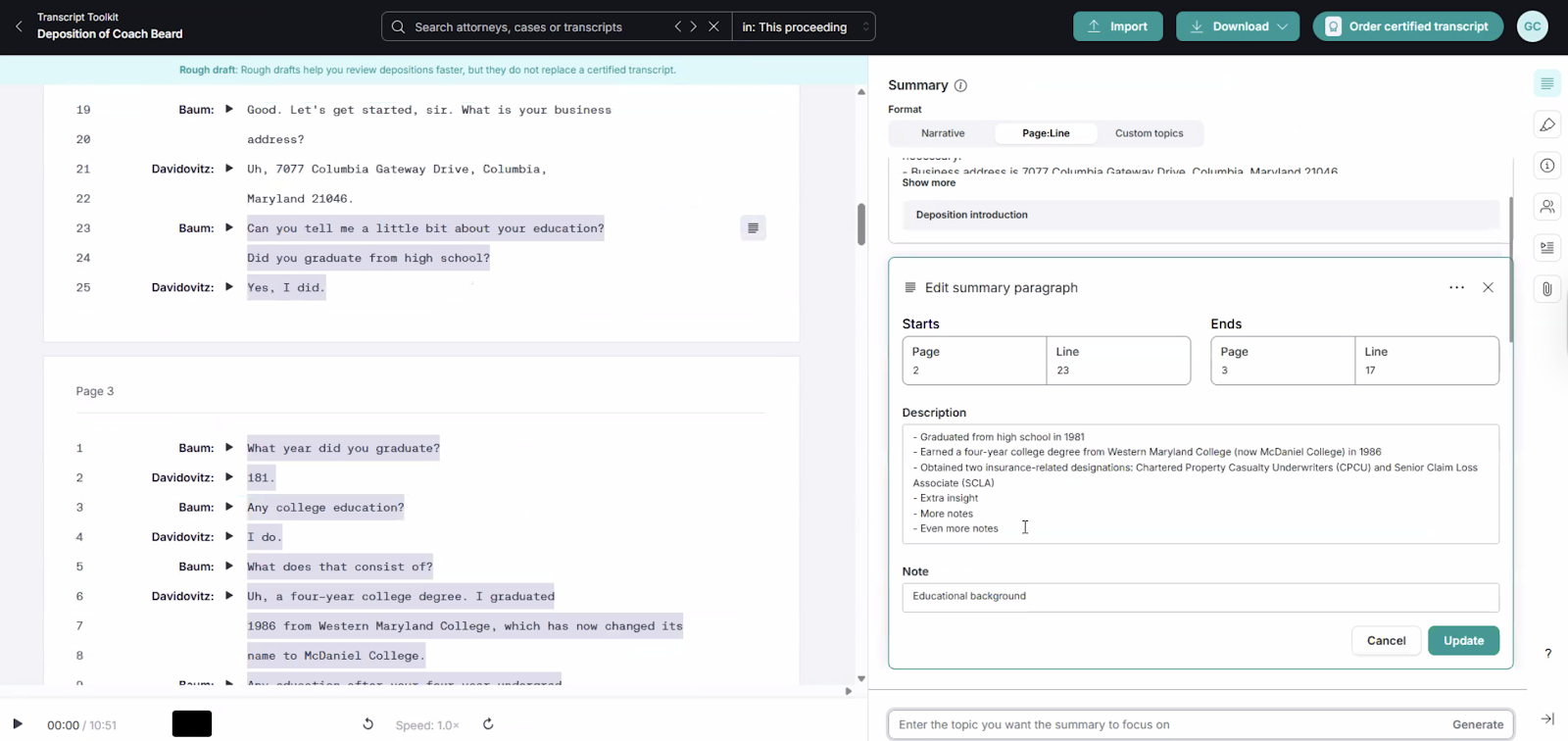
As soon as a deposition concludes, the AI gets to work. A video-synced rough draft transcript appears (generally) within one business day. Included with the rough draft, the AI uses the draft to generate an abstract, narrative summary and page-and-line summaries. It organizes the deposition into custom topics and syncs the audio and video to their location in the summaries.
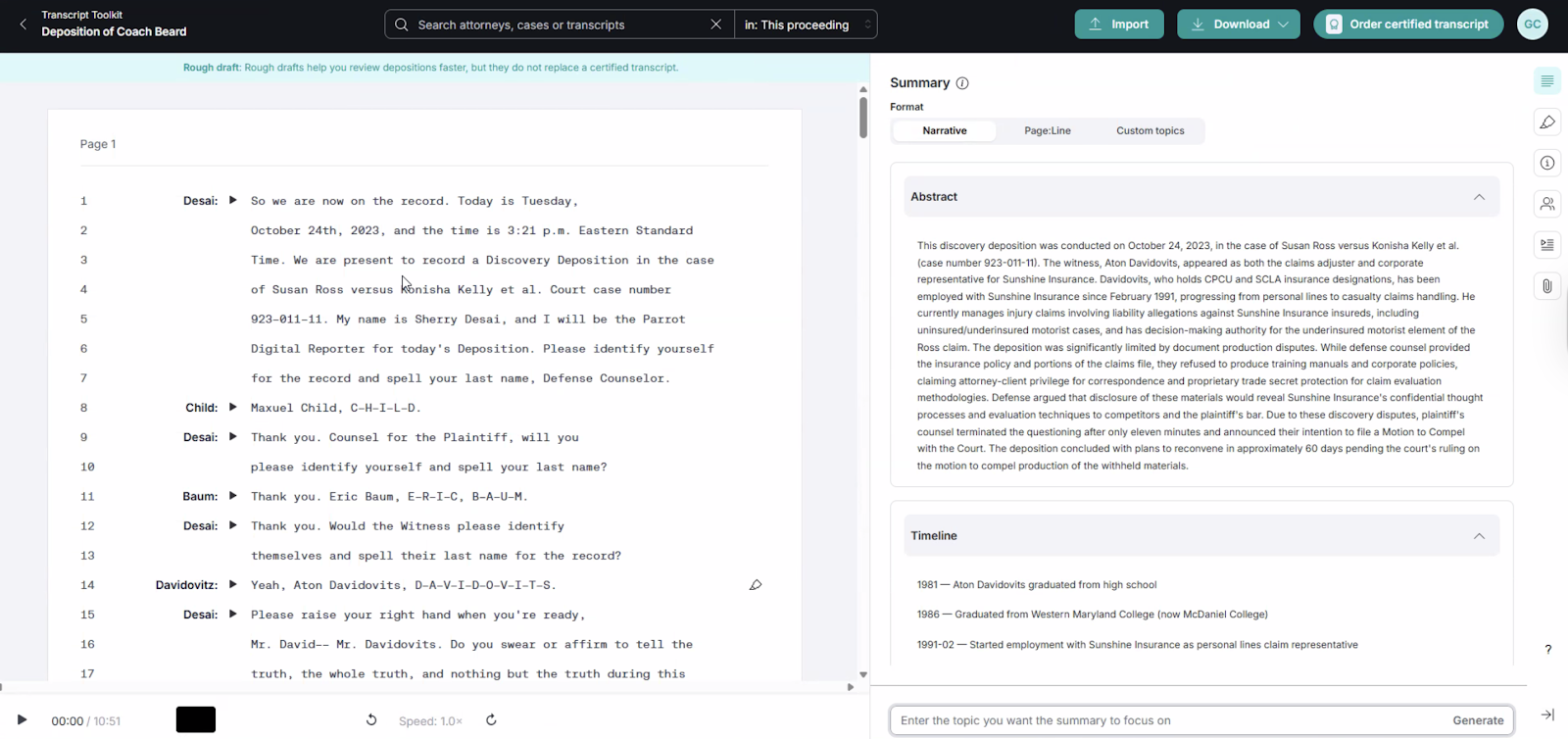
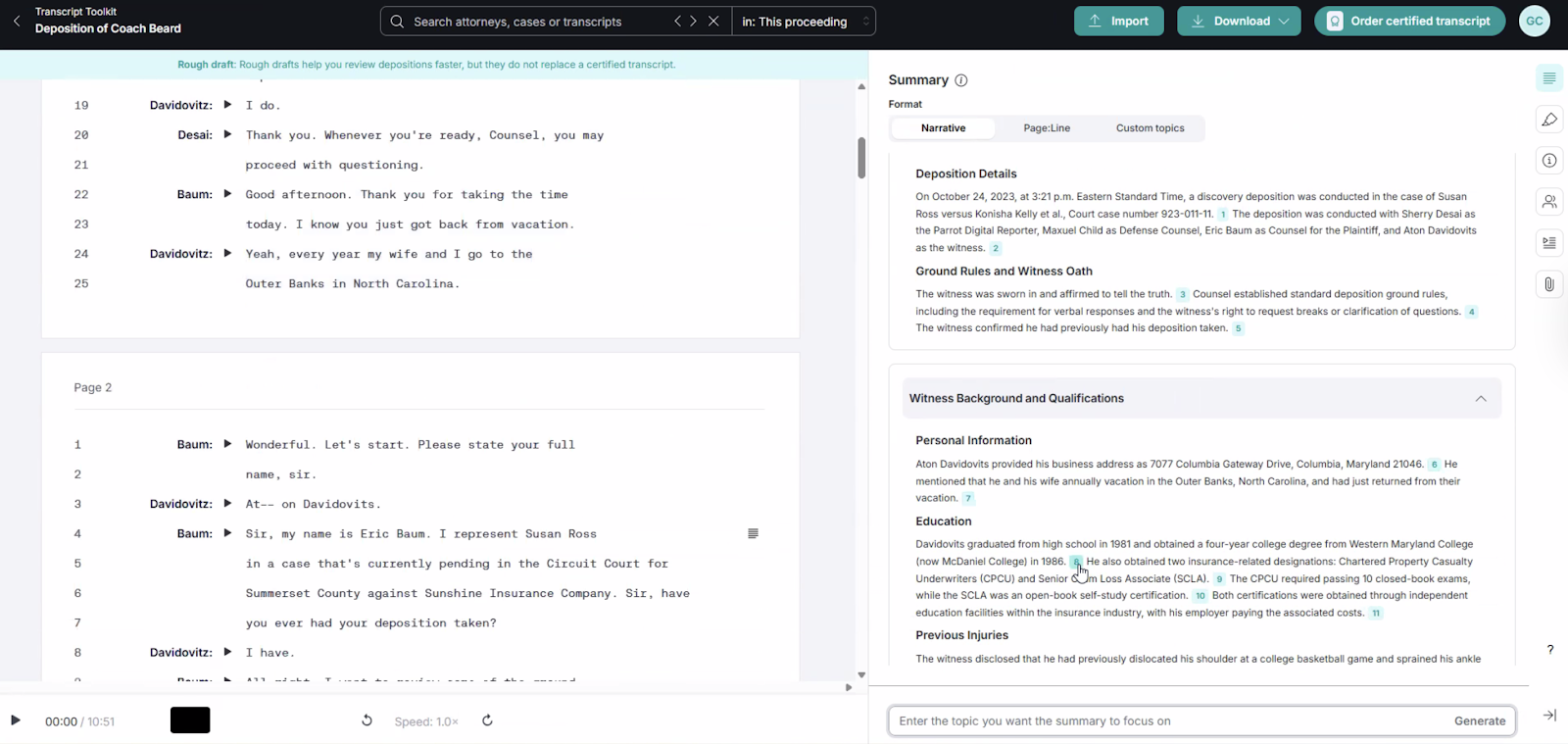
The AI also searches the transcript for events and automatically builds a timeline. If specific dates or details are not provided, the system does not guess or “hallucinate” them, Cellini said
The narrative summary is organized by topics and subtopics, and every summarized statement includes a direct link back to the transcript, allowing attorneys to quickly verify the source material.
Set Deposition Goals with Depo CoPilot
Before the deposition begins, lawyers can set the tool up like it’s an extra team member in the room — a feature called “AI Second Chair.” Depo CoPilot allows them to create goals for the proceeding and tracks them in real time.
“Let’s say I want to get this guy to admit these exact words,” Cellini said. “It’ll track that for us. Or we may say, get this expert to contradict himself.”
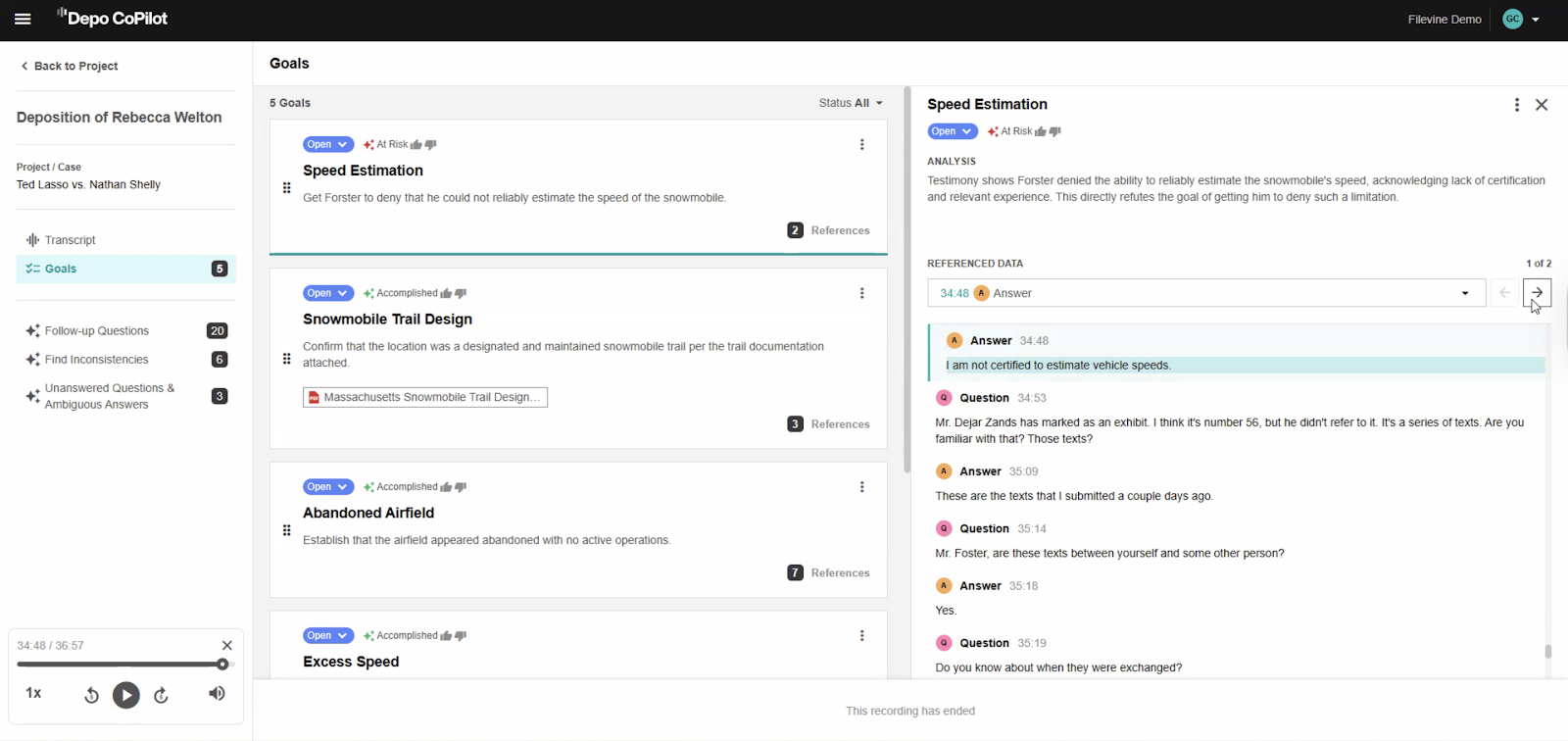
Lawyers don’t need to follow along or be distracted during the deposition.Instead, they can let the CoPilot run in the background and check it during breaks. Or if a paralegal is in the room, they can monitor the real-time transcript and goals seconds after the text appears on the screen.
With the Insights function in the left sidebar, the AI automatically updates its impression of the case. The software offers follow-up questions, singles out inconsistencies and highlights ambiguous or incomplete answers, offering backup that is linked to case materials.
“If our deponent here says something that contradicts himself, it’s going to pick that up and give us our analysis and reference the data as well,” Cellini said.
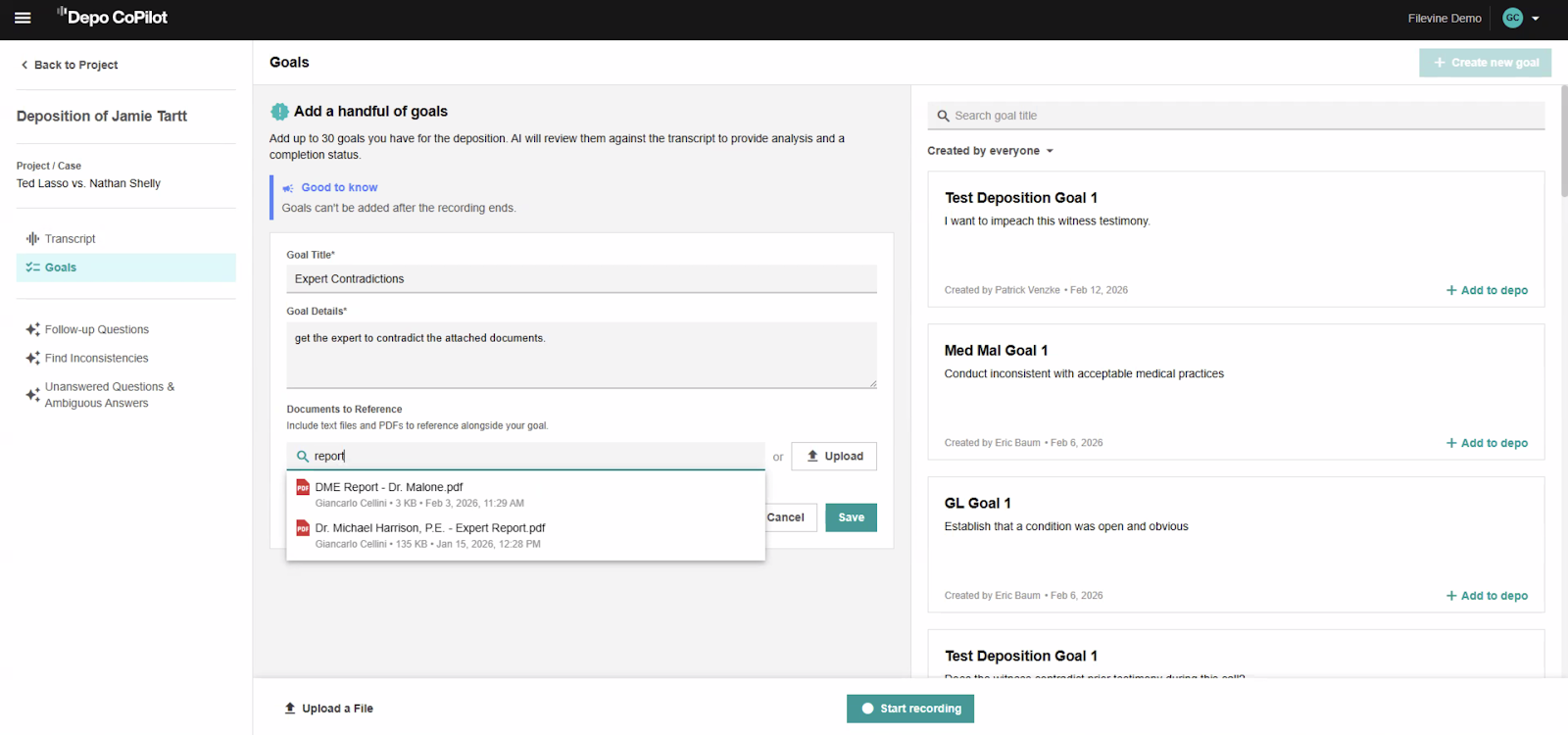
All the documents in Filevine’s system are also accessible with a click, so it’s like having the entire case on hand all at once.
Helping with Trial Prep Like a Paralegal
Before trial, lawyers can query the AI’s large language model to create custom topics. For example, if the educational history of the deponent is important, users can ask the software to review the transcript for relevant information on that topic.
The software even analyzes witness demeanor and gives an assessment of credibility, likability and sympathy. Cellini noted that all kinds of attorneys from plaintiffs’ lawyers to insurance defense counsel have to write reports after every deposition with witness impression, but this tool gives an incredibly accurate head start.
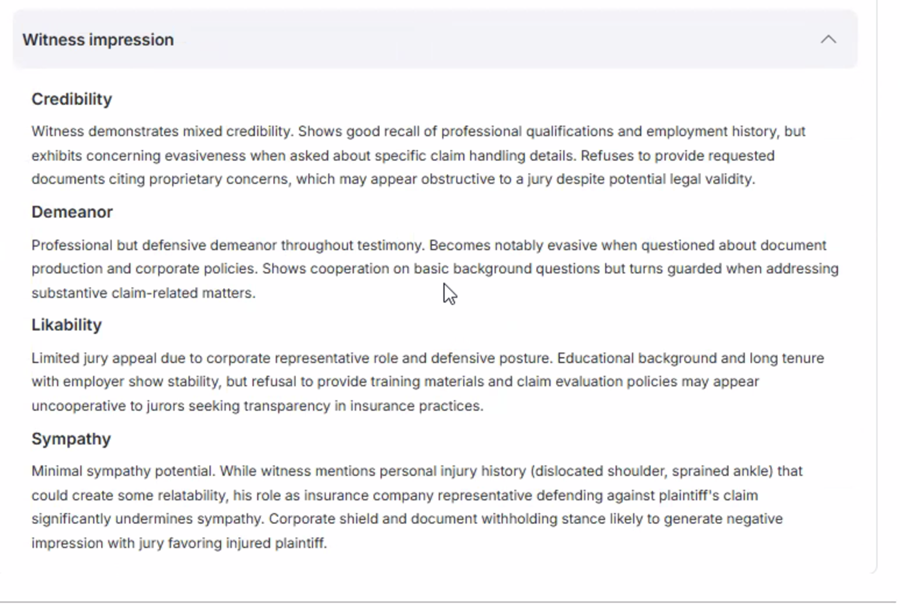
“I’ve never heard an attorney tell me it wasn’t accurate,” he said.
But lawyers don’t have to rely on the AI. Because the system syncs the audio and video with the transcript, users can look back at relevant portions to see if the deponent looks flustered, widens their eyes and looks over at their attorney, or conveys other nonverbal cues.
“I don’t get that from a text transcript, but I can get it here even at the rough draft level, so I haven’t had to pay extra for a certified transcript,” Cellini said.
Saving Money Without Cutting Corners
Immediately after a deposition is recorded, a human begins working in the background to clean up that automated transcript.
Unlike traditional court reporting services that often require attorneys to order a certified transcript just to receive a rough copy, Filevine provides the rough draft automatically, typically within one business day, often within just a few hours.
Since the vast majority of cases are settled before going to court, an expensive certified copy of the transcript is often unnecessary anyway.
Finally, the cost of using video is a fraction of what it used to be. Rather than pay a specialized firm to record and edit clips that you won’t receive until weeks later, associates can make clips in mp4 format to use in another deposition right away.
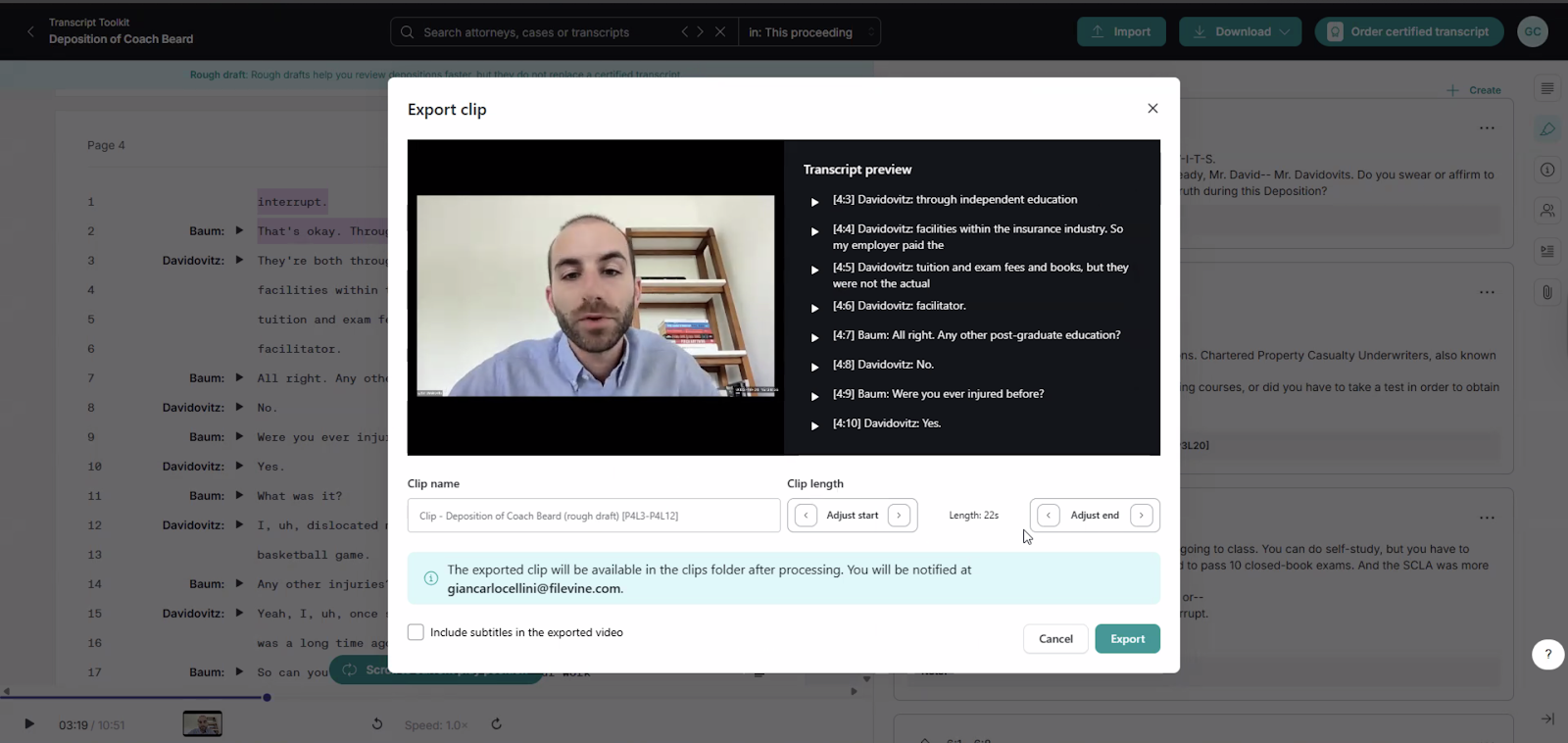
“The trend is going from using video clips exclusively for trial to using them in the middle of a mediation, or even in subsequent depositions,” Cellini said. “Rather than reading from a transcript, I can show the video of your employee and ask, ‘But now you’re saying this. Do you agree or disagree?”
The Bottom Line
The bottom line is that no other company combines document management, trial prep, deposition management and back-end office work like Filevine.
Ready to see Depositions by Filevine in action? Schedule your demo here.