 The subjects of gun violence and policing generate many headlines these days. Part of this is due to the election season, where guns and crime loom large as issues, and part of this is due to tragic shootings involving police officers — such as, for example, New York police officer Peter Liang’s killing of Akai Gurley.
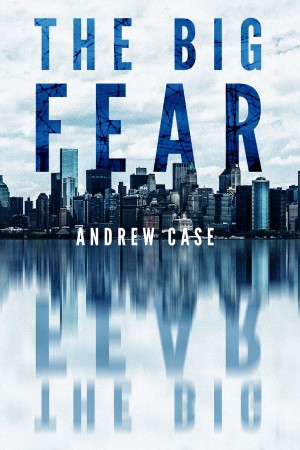
These complex and important questions provide ripe fodder for fiction — and they are the subject of lawyer Andrew Case’s novel The Big Fear, just published by Amazon’s Thomas & Mercer imprint. I recently caught up with Andrew Case to chat about his new book, his path through the legal profession, and how he balanced writing a novel with the demands of his career.
DL: Congratulations on The Big Fear! Can you tell us briefly what the book is about?

From ‘Vendor’ To ‘Partner’: How LexisNexis Is Deepening Law Firm Relationships
The company is emphasizing ‘white glove service’ in the AI era. Here’s what the initiative is delivering for clients.
AC: The book is a reverse police procedural. Instead of starting with a crime and watching the police solve it, we start with an officer-involved shooting and watch as the civilian authorities investigate whether it was justified. It’s set in contemporary New York: questions about whether aggressive policing reduces crime or sets residents on edge are major themes of the book. But it’s still a thriller–the point is still to be turning pages hoping to find out what happens next.
DL: The book draws on some of your professional experiences. Can you share with our readers your path through the legal profession?
AC: I had a roundabout route to the law. I spent eight years investigating police misconduct and writing policy recommendations (as the policy and press officer of the Civilian Complaint Review Board) before I went to law school–I was class of 2011 at Columbia. When I got to CLS, I found I knew an awful lot more about the Fourth Amendment than my classmates, but an awful lot less about just about everything else. I’ve continued to focus on police accountability–I clerked for Judge Murray Snow (D. Ariz.) during the racial profiling trial of Sheriff Joe Arpaio. I worked for a firm in Phoenix for a while, but was drawn back to New York. I’m currently a litigation associate at Manatt, Phelps, & Phillips, but I have kept up with the many changes police oversight here, particularly the changes at the CCRB and the creation of the new NYPD Inspector General’s office.

Andrew Case (author photo by Trevor Williams)

AI Built for Litigation. Verified by Design.
Grounded in authoritative content and verified at every step, Protégé is the only legal AI tool that delivers work you can trust—without exception.
DL: Tell us about the process of writing The Big Fear. Where did you find the time, either as a law student or as a lawyer, to work on such a demanding project?
AC: I wrote the first draft book when I was in law school. I was surprised that law students thought they were busy–it was more demanding than college, but I had more spare time in law school than I had when working for the city. I also was older, so I didn’t join in as many social events, or chat in the lounge between classes–I did my work for school and in any spare time I had I wrote. I have done a lot of revising since that first draft was done, but revising can be done in smaller chunks of time, either at night after work, or in the morning, or on weekends. If you are really devoted to finding the time to do something, the time is always there–if you took out all the time most people spend watching television in a year, it’s enough time to write a book.
DL: So The Big Fear, as you noted earlier, is a police procedural, focused on a police shooting and the ensuing investigation; it’s not a “legal thriller” per se. But the protagonist is an attorney, and there’s a fair amount in the book that should resonate for our audience of law students and lawyers — can you say a bit about that?
AC: While the main character of The Big Fear is a lawyer, he’s a different kind of lawyer. The law is a really broad profession, and firm practice forms a relatively small part of it. Some of the best lawyers I’ve ever met practiced in city government, working at the CCRB, other agencies, or for the city council. When you investigate a police shooting, you need to find out the facts, then apply the right law to them–it’s the same set of skills that you apply to any legal question. While the book is a thriller, and therefore everything in it is kind of dialed up to eleven, I hope that at its core it shines a life on a legal career that isn’t often in the spotlight.
DL: May you and The Big Fear enjoy the spotlight of publication. Thanks for taking the time to chat, and congrats again!
The Big Fear [Amazon (affiliate link)]
P.S. If you are a fan of legal fiction and will be in Washington, D.C. this coming Tuesday, please come to this Supreme Court book fair, featuring a panel discussion and book signings. The discussion will feature authors Irin Carmon (Notorious RBG), Anthony Franze (The Advocate’s Daughter), Kermit Roosevelt (Allegiance), Jay Wexler (Tuttle in the Balance), and yours truly (Supreme Ambitions; yes, all links are affiliate links). Fellow SCOTUS author Tony Mauro (Illustrated Great Decisions of the Supreme Court) will moderate. You can learn more and RSVP via SCOTUSblog.