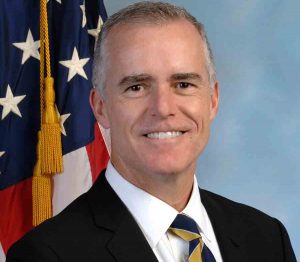
Andrew McCabe
It is a strange and terrible thing for a defense attorney to find himself defending the former Deputy Director of the FBI. But here goes.
Yesterday, the Washington Post reported that the FBI’s Office of Professional Responsibility has recommended firing former FBI Deputy Director Andrew McCabe for authorizing two FBI officials to sit down with Wall Street Journal reporter Devlin Barrett in 2016 and allegedly misleading investigators when asked about it later.

Schenck Price Competes Smarter With Lexis+ With Protégé
LexisNexis sat down with John Ursin, Managing Partner at Schenck Price, to learn how the firm is using legal AI to strengthen client service and daily legal work.
I don’t know what McCabe actually did, and I certainly haven’t seen the draft report that the Inspector General is supposed to be preparing. I’m also somewhat averse to defending law enforcement officials, as regular readers of this column know. Too many of them — and especially those, like McCabe, who have never had a human being for a client — all too often act as hammers looking for nails and tend to turn a blind eye to the human side of things.
That said, the Chinese curse has fallen, and we do indeed live in interesting times.
As just about anyone who reads the paper knows, President Trump has publicly gone after McCabe with a vengeance, accusing him with running a biased investigation of Hillary Clinton in part because of donations made by Clinton associates to his wife’s failed 2015 state political campaign.
To be sure, I am too much of a legal realist to believe that McCabe is any purer than the rest of us and can put away all of his political biases when he goes to work. I read too much Stanley Fish in the nineties to believe that anyone is really, truly objective.

AI Is Reshaping Legal Practice—But Tools Aren’t The Real Differentiator.
Explore the mindset, cultural shifts, and training strategies that define the AI‑savvy lawyer, revealing why human judgment, standardized competence, and integrated learning—not technology alone—will shape the future of the profession.
That said, this isn’t just about the man — even if it turns out that the man did err. It’s about the institution.
If McCabe is fired just three days before he was scheduled to retire with his full pension, thereby potentially losing that pension, his defenestration will unquestionably be seen as a victory for Donald Trump.
You can say all you want about the Inspector General’s investigation or what OPR has found, but we live in chyron times now. And the chyron is going to say that a career law enforcement official whom Donald Trump went after with a vengeance was fired three days before his retirement. And lost his pension, to boot.
Imagine the effect that is going to have on people in the government as we move forward during the next three or, God help us, seven years . Government officials will start to believe that if they cross Donald Trump, he really, truly can destroy them.
(Not Robert Mueller, to be clear. As a Washington Post profile recently made quite clear, that man fears nothing — which, to a defense attorney, is scary in its own right.)
To be clear, I am not rooting for law enforcement officials to be better at or more excited about putting people in jail. What I want them to do is do work honestly — even if they sometimes make honest decisions that I disagree with. And if McCabe is fired, it is hard to understate the effect that this is going to have on government officials nationwide. They may not bring cases they should, or — far worse from my perspective — bring cases they shouldn’t. All so they won’t be the next one in the Twitter crosshairs.
Institutions matter, as Jack Goldsmith made brilliantly clear in a wonderful Atlantic article last year. Knowing and truly believing that your job is to do justice, and that as long as you do it honestly, you’re going to be OK, is a foundational tenet of our criminal justice system.
I don’t know if McCabe actually did what he’s accused of doing. But I worry that firing him for it, even if he did it, will hurt our country in the long term far more than overlooking it will.
Justin Dillon is a partner at KaiserDillon PLLC in Washington, DC, where he focuses on white-collar criminal defense and campus disciplinary matters. Before joining the firm, he worked as an Assistant United States Attorney in Washington, DC, and at the Civil Rights Division of the Justice Department. His email is [email protected].