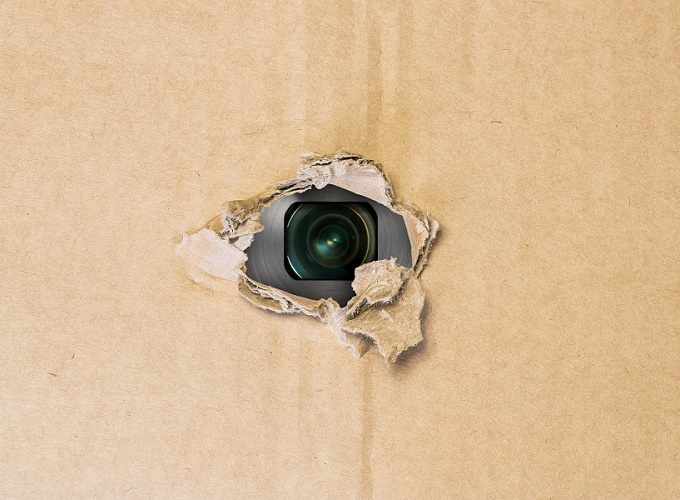
Judge Livestreamed Child Sex Abuse Case Without Telling Anyone For America’s Most Problematic Home Videos
Cameras in the courtroom are one thing. Spycams in the courtroom on the other hand...
Cameras in the courtroom are one thing. Spycams in the courtroom on the other hand...
This was quite possibly the least controversial thing to happen during today's confirmation hearings.

Legal work isn’t slowing down, and the firms that win won’t be the ones working harder — they’ll be the ones working smarter.

Chief Judge Diane Wood disputes Judge Richard Posner's claims about pro se litigants and cameras in the courtroom.

The recently retired Richard Posner has lost none of his famous candor.

This justice hopes the Supreme Court goes to the dogs.

* A harrowing tale of regret from a former juror who sentenced a man to death for his crimes. [The Marshall Project] * I guess tears and apologies weren't enough: Michael Eakin has resigned from the Pennsylvania bench for sending racy emails on the job. [Penn Live] * Disappointing news for proponents of cameras in the courtroom. The Judicial Conference of the U.S. voted against expanding the pilot program testing cameras in federal courts. [Fix the Court] * Breaking news: student debt causes stress in law students. Film at 11. [Chronicle of Higher Education] * The latest filing in the Paramount/Star Trek fan film copyright case is a treasure trove of all the Trekkie trivia anyone could possibly ask for. [Slate] * As much as liberals may dream about this, actually prosecuting a case against Donald Trump for inciting a riot would be legally difficult to prove. [Law Newz] * The struggles is real! It is hard to do things that we know are good for us, especially amid the crazy schedule most lawyers keep. [Forbes] * Jane Sanders tweeted about the horrific condition found in the jail tent city created by Maricopa County Sheriff Joe Arpaio. I guess she wasn't broken up when Sheriff Joe endorsed someone other than her husband for president. [The Slot]

Once you’ve got your law degree, how do you keep your professional skills up to date? Share your perspective in this brief survey, and you may be eligible to win a $250 gift card.
* It really isn’t okay that there are children that go hungry. Harvard Law student Thomas Tobin knows there is something that can be done to alleviate the problem. [Arkansas Online] * The Supreme Court rejected requests for expedited audio in today’s two big cases: Whole Woman’s Health v. Hellerstedt and U.S. v. Texas. When are we going to be able to force them to put cameras in there and be done with it? [Fix the Court] * Are the lawyers to blame for the giant Sharp / Foxconn deal falling through at the last second? And what can be done to salvage it? The clock is ticking and stock prices are falling. [Quartz] * Remember a few months ago when Republican governors were all butthurt about Syrian refugees? U.S. District Court Judge Tanya Walton Pratt ruled Indiana Governor Mike Pence was way outta line about the whole mess. [Wonkette] * The EEOC is going after employers that discriminate on the basis of sexuality, saying such actions are banned under Title VII of the Civil Rights Act. About time. [Buzzfeed] * Looking back at one of the worst Supreme Court decisions of all time to understand how important filling Justice Scalia’s seat really is. [Huffington Post] * A Sikh officer in the Army is suing, complaining his religious observations have subjected him to increased testing. [New York Times] * For those of you who missed last week's event at NYU Law, here's video from "Love, Law, and... Clerkships," featuring Professor Barry Friedman, Judge Alison Nathan (S.D.N.Y.), and our very own David Lat. [YouTube] https://www.youtube.com/watch?v=vjX6wLQmMIM&index=1&list=PLBC7DDA1DA3578169
A CNN intern runs into a snafu involving SCOTUS and a GoPro.
* Police claim David Messerschmitt's killer stole only $40. [Washington Post] * Lil Wayne vs. Cash Money. Which is, apparently, not an in rem action. [FactMag] * What is the difference between confidence and arrogance? Obviously, I know the answer, but let's see if you can figure it out. [Corporette] * One angle I missed from today's news that a gunman attacked a courthouse in Milan is that this is life imitating art, eerily reminiscent of a plotline on The Good Wife. [Law and More] * Immigration attorney is a no-show at her sentencing for 13 felony theft counts for accepting fees and botching her work. You'd think she skipped the country except we know she sucks at immigration law. [ABA Journal] * Former president of the World Bank's LGBT employee organization is under investigation. He thinks this seems pretty suspicious. [Buzzfeed] * The Tsarnaev trial highlights the continuing stupidity of keeping cameras out of the courtroom. [Vanity Fair] * Another installment of "Roberts at 10," looking at his 10 years as chief. What's his legacy on LGBT rights? Well, unsurprisingly, we're not going to know for sure for a couple months. [Constitutional Accountability Center] * A new study reveals that judges are less ideologically biased than law students. Again, it's not that judges are less firm in their ideology, it's that they've learned to pick their battles. [WSJ Law Blog]
* You betta work... on those C&D letters! The viral picture of Cindy Crawford's "unretouched" midsection is allegedly fake, and a lawyer for the photographer who took the original picture is threatening publishers with legal action if the supposedly doctored photos aren't taken down immediately. [CBS News] * You know that law school graduates from the Lost Generation are screwed when the first vignette from an article about the sad state of financial affairs for "recession millennials" is about a 2011 law grad who's drowning in law school debt. [FiveThirtyEight] * Folks are going crazy over King v. Burwell, so it's a great time to run the odds on which justices will give ACA the axe. FYI, Justice Alito is "more likely to be struck by lightning while committing in-person voter fraud" than uphold Obamacare. [ThinkProgress] * If you're going to be in Washington, D.C., next weekend, why not stop by the Politics & Prose Bookstore to see David Lat have a chat with Adam Liptak of the New York Times? OMG, you can even get your copy of Supreme Ambitions (affiliate link) signed. [Facebook] * With oral arguments in the King v. Burwell case slated to be heard on Wednesday, the Supreme Court is going to have a busy week -- but most Americans won't know about it. Below is a new TV ad pushing SCOTUS to allow cameras in the courtroom. [Fix the Court] http://youtu.be/jA8B80fy0OM

Explore the mindset, cultural shifts, and training strategies that define the AI‑savvy lawyer, revealing why human judgment, standardized competence, and integrated learning—not technology alone—will shape the future of the profession.
* You know that televised Supreme Court oral arguments are a technological advance that is far away from happening when even Elena Kagan, the youngest justice on the high court, is "very conflicted" about the idea. [Legal Times] * "Legal jujitsu. Lethal jujitsu." Meet William "Hale" Kelly. He's a second-year law student at Florida A&M by day, and an MMA fighter by night (i.e., he was punched in the head so many times he thought law school was a good idea). [Orlando Sentinel] * For the fourth year in a row, Skadden snagged the top spot in the Acritas Biglaw brand index. The firm's competition -- Jones Day, Baker & McKenzie, Kirkland & Ellis, and DLA Piper -- is getting closer to overthrowing the ranking's leader. [Am Law Daily] * Justice in the United States costs a pretty penny, and it's obvious from the Department of Justice's proposed 2016 budget of $28.7 billion. It's too bad the White House set the DOJ's budget at about $13.7 billion lower than that. [WSJ Law Blog] * "At none of these top law schools do Black enrollments reach 9 percent." Diversity may be lacking at some of the nation's top law schools, but minority students who are interested in law may find welcoming homes at lower-ranked schools. [U.S. News]
How do Americans react when they learn that one of the most important events in their lives is surrounded in a media blackout?
Come for the oral argument coverage, stay for the point where Justice Alito tries to hump Justice Kagan....
What can litigators learn from cameras in the courtroom?
Conservative columnist Tamara Tabo makes her case against cameras in the courtroom at SCOTUS.