
First Monday Musings By Dean Vik Amar: Evaluating Legal Education’s Vital Signs At The End Of The Academic Year
It's a tale of the (relatively) good, the (pretty) bad, and the (downright) ugly.
It's a tale of the (relatively) good, the (pretty) bad, and the (downright) ugly.

* Settlements have been reached between Berkeley Law, the school's former dean, and the dean's former assistant. If you recall, then dean Sujit Chaudry was accused of sexually harassing his assistant, and as part of the settlement, he'll have to pay $100K in fees and charitable donations, but will be considered to be on "sabbatical" until May 2018, keeping all of his benefits. Hmm, do we think this is fair? [Mercury News] * "We have not livestreamed before, but that's not to say that won't happen in this case." The Fourth Circuit is considering livestreaming oral arguments for travel ban 2.0, much like what the Ninth Circuit did with oral arguments for Trump's first travel ban. Maybe you'll be able to do some "professional development" billing... [National Law Journal] * "Arkansas does not intend to torture plaintiffs to death." Judge Kristine G. Baker (E.D. Ark.) has halted a whirlwind series of eight executions -- the state's first executions scheduled since 2005 -- citing a "threat of irreparable harm" if the drug midazolam is used as part of the lethal injection drug protocol and somehow fails. [New York Times] * More and more out-of-state Biglaw firms are flocking to Houston, Texas, to open their own offices, which has inspired many lawyers to leave their current firms for greener pastures -- in terms of both money and opportunities. But is there enough legal work to go around with all of the new competition? Only time will tell. [Houston Chronicle] * Ten Harvard Law student affinity groups are gunning for Professor David B. Wilkins to become the next dean of the school after Martha Minow steps down at the end of the year. They've written a letter to the university president, imploring him to take their advice and select their dean candidate for the position. Check it out. [Harvard Crimson]

Grounded in authoritative content and verified at every step, Protégé is the only legal AI tool that delivers work you can trust—without exception.
The law school seems to be on the brink of disaster.
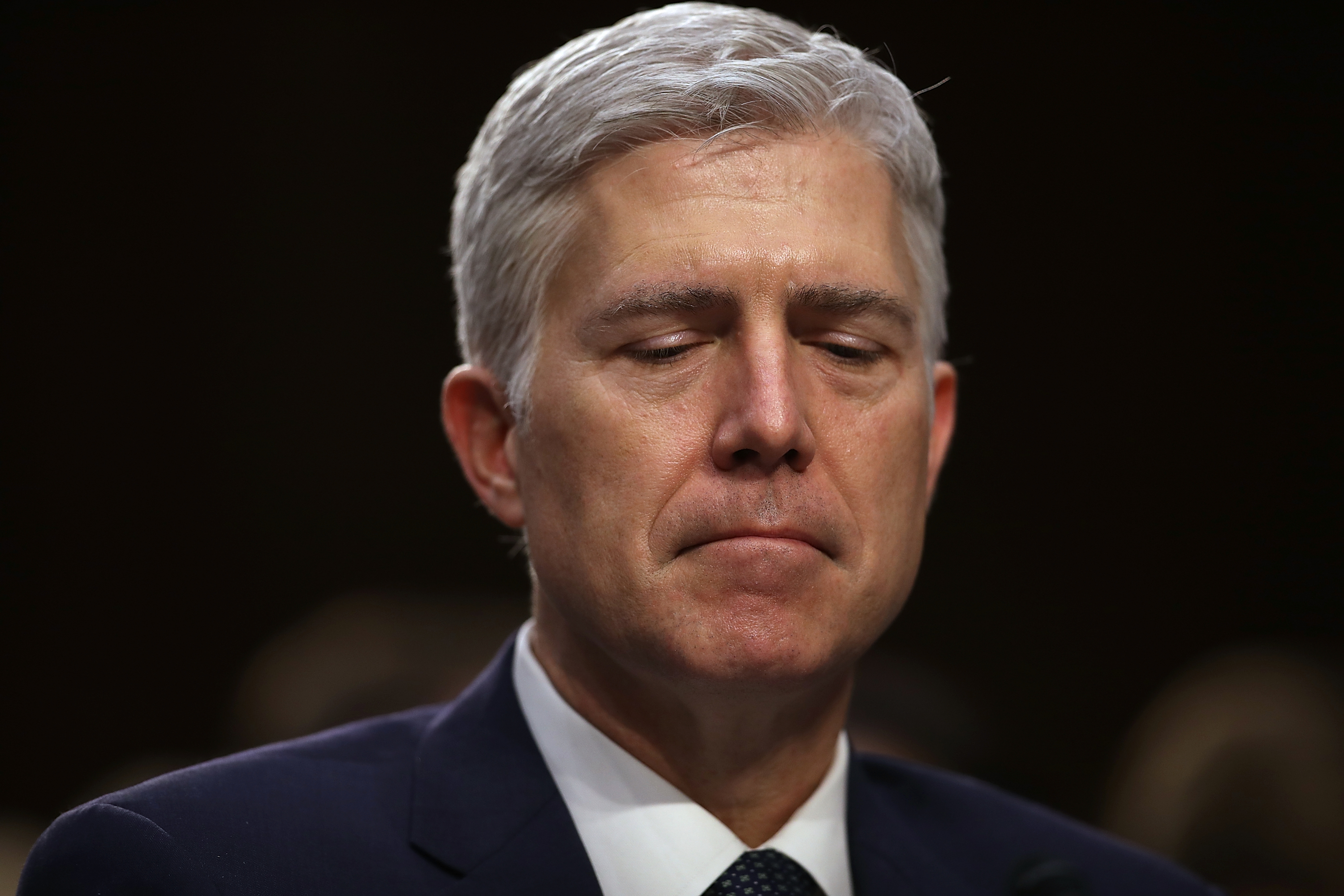
Is this Supreme Court nominee a plagiarist?
* SCOTUS nominee Judge Neil Gorsuch has been accused of plagiarizing borrowing language and sentence style from other authors and incorporating it into a book and a law journal article without proper citation. On the bright side, at least one of the authors whose language he copied doesn't seem to have a problem with it. [POLITICO]
* As it turns out, Chadbourne & Parke isn't too keen on having a partner who filed a $100 million gender discrimination suit against the firm still working there. A spokesperson for Chadbourne says that the partners will convene to vote Kerrie Campbell out of the partnership. We'll likely have more on this later today. [Am Law Daily]
* According to Citi Private Bank’s Law Firm Group, the leaders of some of America's largest law firms had the wrong idea about how 2016 would turn out. Legal demand went down, not up as hoped for; realization rates did not improve, as expected; and revenue at many firms dropped, instead of increasing. Ouch. [Big Law Business]
* Professor Verna Williams will serve as the special assistant to the provost (i.e., interim dean) of the University of Cincinnati College of Law while Dean Jennifer Bard is on administrative leave. Williams was one of the UC professors who opposed Bard's leadership, once referring to the situation as "untenable." [Cincinnati Enquirer]
* Speaking of Dean Bard, she has obtained legal representation and claims that her removal from her position was improper. Per her attorney, "[t]he interim provost placed Dean Bard on administrative leave without the slightest factual basis for doing so," and the law faculty were unwilling to put students' needs ahead of their own. [Law.com]

How can law schools be less insular with regard to teaching? Here are three ideas from Dean Amar.

* "You have been very much able to avoid any specificity like no one I have seen before. And maybe that’s a virtue, I don’t know. But for us on this side, knowing where you stand on major questions of the day is really important to a vote." Despite hours of questioning, Senate Democrats were unable to get Judge Neil Gorsuch to commit to any response beyond researched generalities. At this point, his confirmation seems inevitable. [New York Times] * Sure, Biglaw associates want their firms to be more progressive when it comes to flexible working arrangements, but that doesn't mean they feel comfortable taking advantage of the programs being offered. Per a survey conducted by the Diversity and Flexibility Alliance, only 8.8 percent of lawyers at firms with reduced hours policies actually work reduced hours. We'll have more on this later today. [Big Law Business] * Is this the end of the Swiss verein? While the legal structure has been adopted in almost every major cross-border law firm merger in recent memory, both of the last two transatlantic Biglaw tie-ups opted to use an entity called the company limited by guarantee (CLG). Apparently this legal structure is being favored for new law firm combinations because there are still questions about vereins' proper use. [Am Law Daily] * Dean Alex Acosta of Florida International University School of Law, a man who is better known these days as Trump's nominee to be the Secretary of Labor, not only says the fiduciary rule requiring retirement investment advisers to put their clients' interest first goes too far, but indicated that he may decline to defend a rule doubling the salary ceiling under which employees would be eligible for overtime pay. Ouch. [Reuters] * Now that Harvard Law has decided to accept applicants' GRE scores in lieu of their LSAT scores for admissions purposes, other law schools have decided to try the alternative exam on for size. Suffolk Law, for example, launched a study last week and offered students $100 to take the GRE. Suffolk's dean says that "the mad dash for the GRE is not being driven by declines in applications." Bless your heart. [Boston Globe]
How a former insurance agent built a Houston injury practice around systems, empathy, and disciplined advocacy.

These complaints are a problem for Colorado, much more so than Gorsuch.
Congratulations to a great scholar and teacher!
How have Professor Goldstein's colleagues reacted to his occasionally harsh satire?

How did this law school manage to almost double its number of applications?

Explore the mindset, cultural shifts, and training strategies that define the AI‑savvy lawyer, revealing why human judgment, standardized competence, and integrated learning—not technology alone—will shape the future of the profession.
Legal academia is ripe for satire, as this Stanford law professor's latest novel makes clear.

This may surprise you, but the administration thinks it's everyone's fault but theirs.

A harsh rebuke from the school's alumni.

Dean Amar comments on the big news out of the ABA Midyear Meeting today.
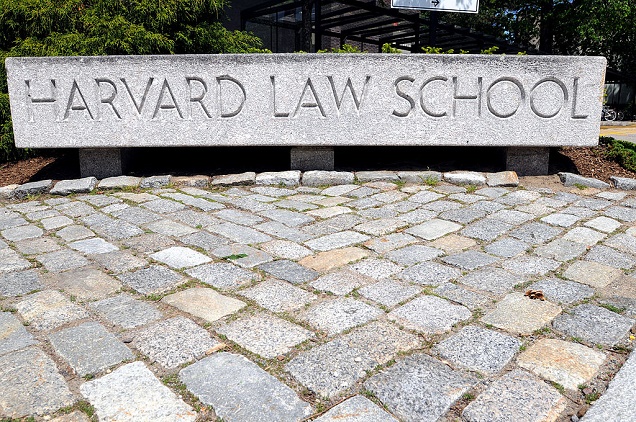
If they were to ask me (and I'll note, they're not), I'd go with Kenneth Mack for HLS Dean.