
Chief Judge Merrick Garland: Harvard’s next president? (by Brendan Smialowski/AFP/Getty Images)
Dear Chief Judge Merrick Garland,
We have not had the pleasure of meeting, but I am a longtime admirer of yours. My admiration has only grown over the past year and a half, when as a legal journalist I covered President Barack Obama’s decision to nominate you to the Supreme Court, followed by the Senate’s refusal to vote on your nomination or even hold confirmation hearings.

Filevine’s New Legal AI Platform LOIS Turns AI Into A True Legal Coworker
Legal work isn’t slowing down, and the firms that win won’t be the ones working harder — they’ll be the ones working smarter.
Partisans can argue over whether or not that refusal was justified. But nobody can question that it was based on political considerations, not on your (obvious and ample) qualifications to sit on the high court.
Nor can anyone dispute how, during the entire ordeal, you handled yourself with dignity and grace. You cried at the White House press conference when President Obama announced your nomination, so I can only assume that your failure to make it onto the Court, a lifelong dream, left you devastated. But if you cried tears of self-pity, you did so privately or not at all. (In leak-prone D.C., had you vented about your fate at a Georgetown cocktail party, it would have shown up on Twitter in half an hour — with video.)
Now you are back on the bench, diligently discharging your duties as Chief Judge of the D.C. Circuit. But I can’t help wondering whether your heart is still in it — and thinking that maybe it’s time for you to make a change.
While the D.C. Circuit is not judicial chopped liver — it’s actually the nation’s second most prestigious and powerful court — it is also not the Supreme Court of the United States. But its physical proximity to SCOTUS, just half a mile away, must make it especially painful for you to return — so close, and yet so far, from the marble palace at One First Street.

Schenck Price Competes Smarter With Lexis+ With Protégé
LexisNexis sat down with John Ursin, Managing Partner at Schenck Price, to learn how the firm is using legal AI to strengthen client service and daily legal work.
In February 1988, a few short months after the defeat of his own Supreme Court nomination in October 1987, Robert Bork resigned from the D.C. Circuit — to avoid resigning himself to a lifetime of anticlimax. And Bork had been on the D.C. Circuit for just six years. You have served on the D.C. Circuit for more than 20 years, so nobody would judge you for seeking a new challenge.[1]
What should you do next? Here’s my proposal: you should serve as the 29th president of Harvard University, one of the finest institutions of higher learning in the United States and therefore the world.
Harvard’s current president, Drew Faust, recently announced her intention to step down next year. The Harvard Corporation launched the search for her successor earlier this month. You probably received the same email that I did, sent by the presidential search committee to all Harvard alumni, seeking the names of possible successors. (This open letter to you constitutes my input to the committee.)
As a judge, you pay close attention to precedent. Ample precedent exists for prominent public servants to become university presidents after their time in government. After leading the Allied forces in Europe during World War II, Dwight D. Eisenhower served as president of Columbia University. After serving as Secretary of Health and Human Services for the entirety of President Bill Clinton’s term, Donna Shalala became president of the University of Miami. After working in the Obama Administration as Secretary of Homeland Security, Janet Napolitano became president of the University of California system. After serving as director of the CIA, Robert Gates served as president of Texas A&M University, and after serving as Secretary of Defense, he served as chancellor of the College of William & Mary — succeeding Sandra Day O’Connor, interestingly enough.
[UPDATE (7/22/2017, 11:10 a.m.): The preceding sentence was revised to reflect that Gates served as president of A&M after serving as CIA director and before becoming Secretary of Defense, not after his service as SecDef.]
Of course, almost all of the figures mentioned above have had to confront controversy as presidents — it comes with the territory — and not all government officials turned university presidents have succeeded in their new roles. For example, Eisenhower did not excel as president of Columbia; he was widely viewed as using the role for self-aggrandizement. Kenneth Starr, who served on your court before his star turn as special prosecutor in the Whitewater/Monica Lewinsky investigation, left the presidency of Baylor University amid controversy, dogged by allegations that he mishandled reports of sexual assaults by Baylor athletes.
It could be argued that Eisenhower and Starr did not know their institutions well enough to lead them effectively. Neither had any connection to the university prior to assuming its presidency. This is not the case with you and Harvard; to the contrary, there is ample reason to believe that you would excel as its president.
Your ties to Harvard go back decades. You graduated summa cum laude from Harvard College, arguably the heart of the university, and magna cum laude from Harvard Law School, arguably the university’s top professional school.
Since graduating, you have maintained and even deepened your ties with Harvard. In 2003, you were elected to the Harvard Board of Overseers, one of the university’s two governing boards, and from 2009 to 2010, you served as its president. This service and participation in Harvard’s decision-making processes, at the highest level, gives you special insight into the university’s history, culture, challenges, and opportunities.
Some university presidents fail because they do not care enough about the job, instead taking the position for prestige and perks. This would not be the case with you, given your demonstrated passion about and devotion to education. Throughout your long and distinguished career, the law has been your primary focus, but if one were to pick your next most-important interest — a second major, if you will — it would be education.
Your former law clerks, many of whom have gone on to clerk for the Supreme Court and lead distinguished academic careers themselves, have spoken about your commitment to teaching and mentorship. On the other end of the privilege spectrum, for almost two decades you have tutored schoolchildren at the J.O. Wilson Elementary School in Northeast D.C. — which you have described as among “the most personally rewarding experiences” in your career, ahead of the cases you’ve litigated as a lawyer or decided as a judge.
If you were to express interest in trading in your judicial robes for an academic gown, how would Harvard respond? I have every confidence that the university would welcome you with enthusiasm.[2]
Over its history, Harvard has prioritized two considerations when picking presidents: ties to the university (think alumni or faculty members), and prestige (whether in the academic world or beyond). As a distinguished graduate, active alumnus, and now a household name, you fit the bill perfectly. If “everything happens for a reason,” then your Supreme Court nomination, although it didn’t get you onto SCOTUS, served the purpose of giving you the national profile Harvard seeks in its presidents.
Your appreciation of Taylor Swift and familiarity with the oeuvre of Beyoncé are matters of public record, so with your indulgence, I will close with lyrics from the late, great Whitney Houston:
Where do broken hearts go?
Can they find their way home?
Back to the open arms
Of a love that’s waiting there
Your heart might be broken over your dashed Supreme Court hopes, but you can find your way home — back to the open arms of Mother Harvard. I urge you to consider and pursue this opportunity, so the Supreme Court’s loss can be our alma mater’s gain.
Sincerely yours,
David Lat
Harvard ’96
[1] Okay, that’s not quite right — given the importance of the D.C. Circuit, some on the left would judge you for leaving the court, giving President Donald Trump another opening to fill (in addition to the one created by the retirement of Judge Janice Rogers Brown). This was the main point that my colleague Joe Patrice made when I floated the idea in the Above the Law newsroom.
But I’m not sure you share these concerns. You are Merrick Garland, not Nina Pillard; you are a moderate devoted to the law, not a liberal devoted to an agenda. (This is a big reason why President Obama picked you as his SCOTUS nominee, hoping you would win bipartisan support — and also why some liberals weren’t thrilled about your nomination.)
So I’m guessing you will be less troubled than your progressive supporters by the notion of President Trump filling your seat. You can’t stay on the court forever, and there’s a reasonable chance that your successor will be appointed by a Republican president, whether this one or a future one. In his judicial picks, Trump has been more predictable than in other areas of his presidency, selecting nominees you’d see out of any Republican administration. He’d probably nominate an establishment conservative — someone like Judge Laurence H. Silberman, your friend and colleague who threw a “welcome back” party for you at the D.C. Circuit — and not do anything crazy.
Finally, you are 64, turning 65 in November (which, by the way, makes you eligible under the “Rule of 80” to resign from the bench completely, as opposed to retire; take a private-sector job, like the Harvard presidency; and continue to receive your judicial salary for life). You still have time for another chapter — but you need to act now. If you try to wait out the Trump presidency, which might last longer than you think, opportunity will slip you by.
A D.C. Circuit judgeship is a job — a great and important job, to be sure — but it’s not a prison. You’re allowed to leave.
[2] Yes, you are a white male, and some might want to see a more diverse pick for Harvard president (just as some wanted to see a more diverse pick for Harvard Law School dean). But as my colleague Elie Mystal quipped, “Merrick, because of the way you were mistreated by the Republicans, you might be the only straight white male left that liberals will tolerate. It’s almost like you’re an honorary minority (just don’t say that out loud or else you’ll lose your status).”
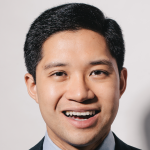 David Lat is the founder and managing editor of Above the Law and the author of Supreme Ambitions: A Novel. He previously worked as a federal prosecutor in Newark, New Jersey; a litigation associate at Wachtell, Lipton, Rosen & Katz; and a law clerk to Judge Diarmuid F. O’Scannlain of the U.S. Court of Appeals for the Ninth Circuit. You can connect with David on Twitter (@DavidLat), LinkedIn, and Facebook, and you can reach him by email at [email protected].