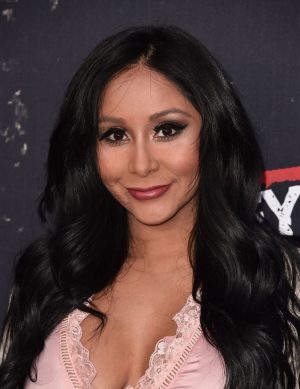
(Photo by Alberto E. Rodriguez/Getty Images)
Lawyers are often accused of being greedy. Yet, with the exception of a Jussie Smollett witness statement, nothing could be further from the truth. In fact, our ethical canon specifically prohibits such greed by imposing limits on attorney’s fees. In particularly, ABA Model Rule 1.5(a) states that “[a] lawyer shall not make an agreement for, charge or collect an unreasonable fee….”
And because reasonable is one of these amorphous terms not subject to clear delineation like “love,” “beauty” and “monogamy in a long-distance relationship,” Rule 1.5(a) goes further and lays out eight specific factors to consider in determining whether a lawyer’s fee is reasonable; such as the time and labor required, local market prices, the amount involved, the experience and ability of the lawyer, etc. And while it is true that the drafters of this rule were not clear in setting forth how many of the eight factors must be met for a lawyer’s fee to be deemed “reasonable,” at least they attempted to put some constraints on our rapacity.

Filevine’s New Legal AI Platform LOIS Turns AI Into A True Legal Coworker
Legal work isn’t slowing down, and the firms that win won’t be the ones working harder — they’ll be the ones working smarter.
This stands in stark contrast to the general rule of a free market economy, which generally presumes that any fee is reasonable so long as you can get some fool to pay it. In fact, I believe that Adam Smith said precisely those words when negotiating his publishing contract for The Wealth of Nations. Or perhaps, it was P.T. Barnum who first said it. Or it might have even been me.
While trained as a lawyer, I make my living as a professional speaker. And as you might have guessed, public speakers don’t have a code of ethics, particularly when it comes to pricing. In fact, I wouldn’t be surprised if the motto of the National Speakers Association is “Whatever you can get some fool to pay you.” And for this, I am exceedingly grateful. I certainly wouldn’t want my speaking fee to be predicated on the value or worth of my presentations. After all, I’d like for my kids to be able to attend college as well.
That being said, it should be clear that I am on one of the lowest rungs of the speaking ladder. There are highly-skilled professional speakers who earns tens (if not hundreds) of thousands of dollars per hour. But these people have honed their craft and speak with such wisdom and power that their words can literally change the world. I’m talking about people Barack Obama, Oprah Winfrey and Snooki.
Now, if you are an actual adult, you may need to be reminded that Nicole “Snooki” Polizzi was one of the stars (and I use that term loosely) of the MTV reality show The Jersey Shore. And during the height of her fame, she was hired by Rutgers University, an institution of higher learning (once again, using the term loosely) to speak on campus for the whopping sum of $32,000. This was more than the university paid that year’s commencement speaker, Nobel and Pulitzer Prize winning author Toni Morrison. And it was likely more than the average salary of a Rutgers graduate their first year out of college (or in their 10th year, if they majored in Art History).

AI Is Reshaping Legal Practice—But Tools Aren’t The Real Differentiator.
Explore the mindset, cultural shifts, and training strategies that define the AI‑savvy lawyer, revealing why human judgment, standardized competence, and integrated learning—not technology alone—will shape the future of the profession.
So was Snooki’s fee “reasonable”? That question can be answered with another question: Did her check clear? Because if it did, then under the long-established economic principle of quidam stultus non solvit (i.e., some fool paid it), Snooki’s fee was imminently reasonable. In fact, on a personal note, I wish she had charged them $10,000 more. That way, when I speak in New Jersey later this year, I could increase my fee by a few thousand dollars, just to stay “competitive.” But I digress …
Needless to say, the propriety of a lawyer’s fee is not judged on the reasonable Snooki standard. As a result, a Snooki-like lawyer is going to have some ‘splaining to do if he attempts to charge the same hourly rate to file an appeal as a venerated Supreme Court practitioner like Ted Olson or Paul Clement. Likewise, even if the client is as rich as Jeff Bezos, a lawyer can only charge a reasonable amount to keep his nudes off of the Internet. On second thought, I think we all agree that particular piece of legal work would be priceless. But I think you get the point.
Despite the common (mis)perception of lawyer greed, we are one of the very few professions that puts rather stringent limits on how much we can charge our clients. For that alone, we should take some pride in our much-maligned profession. And we should do everything in our power to make sure that we never abuse this sacred trust; or open any e-mail with the subject line, “Jeff Bezos wants to show you something.”