 Bela Fritz took a guilty plea and was sentenced to serve a five-year sentence for gun and drug offenses. Bela Fritz is innocent of all these charges. Utah prosecutors want to vacate Bela Fritz’s conviction, but Bela Fritz is contesting those efforts. The trial judge doesn’t think the rules of civil procedure allow her to do anything about it.
The Supreme Court of Utah is on the case.
Let’s just break down the statement of facts as presented because there’s no easier way to untangle this Civil Procedure hypo from hell.

PI Firms Don’t Need More Tools. They Need Fewer.
Every new tool a PI firm buys solves one problem and connects nothing. The real fix isn't another purchase — it's keeping the whole case in one place, from accident to resolution. Here's how.
In this somewhat unconventional proceeding, the State seeks to overturn a conviction it recently obtained. The State appears convinced of the defendant’s guilt but nevertheless claims it has convicted the wrong person and wants to correct that error. The person the State convicted—that is, the person who was sent to prison for the crime—opposes the State’s efforts.
“Somewhat unconventional” sounds like “somewhat of an understatement” Justice Pearce.
The defendant was driving a vehicle that appeared to be unregistered and uninsured when Salt Lake City police pulled him over. During the traffic stop, police searched the vehicle and discovered drugs, drug paraphernalia, and a firearm.
The defendant allegedly identified himself as Bela Fritz. It is unclear what measures the State undertook to confirm the defendant’s identity, but the State apparently followed his lead and believed he was Bela Fritz. The State charged and prosecuted the defendant under the name Bela Fritz. The defendant moved through the criminal justice proceedings as Bela Fritz, at all times representing himself to be that person.
As you might imagine at this point, there’s some reason to believe that “Bela Fritz” may not be “Bela Fritz.” One person along the way seemed to get that something was wrong in the pretrial report:

Managing Partners are Navigating the AI Inflection Point.
New executive research from Ari Kaplan explores how law firm leaders are responding to changing client expectations, evolving economics, talent transformation, and AI governance.
A pretrial screening report prepared by Criminal Justice Services, however, referred to the defendant as Stephen Larry Fritz.
Spoiler alert: that’s not his name either. This all sets up this footnote for the ages:
[T]he State now believes that the person tried and sentenced in district court was Bela’s brother, Aaron. The defendant apparently still claims to be Bela Fritz (but his briefing is, understandably, a little cagey on the topic of his identity). We stick with the moniker defendant to mean the corporeal entity who sat through trial and was sent to prison to serve the sentence.
If corporations are people, why does Bela Fritz have to be a corporeal entity? Personally, I think of Bela Fritz as more of a spiritual ideal.
When the defendant arrived at the Prison, a Department of Corrections officer allegedly discovered that the defendant was not who he claimed to be. The problem, according to the officer, was that the two men did not look enough alike. During the intake process, the officer viewed a photo of Bela Fritz that the Department had on file and observed that it “did not resemble the person standing in [his] office.” The officer then asked the defendant to confirm personal information regarding his identity, and the defendant allegedly confessed that he had used Bela Fritz’s identity rather than his own. The officer ran the issue up the chain of command, and eventually the State was notified that the Prison believed the defendant was not, in fact, Bela Fritz.
Apparently, AARON Fritz was on probation when arrested, making it advantageous if another of the Fritz clan was convicted of these offenses.
This is where CivPro professors across the country are itching to ruin your next exam. The State argued that the Utah Rules of Civil Procedure “govern in any aspect of criminal proceedings where there is no other applicable statute or rule” and argued that Rule 60(b) allows the district court to vacate the judgment.
But old Bela Fritzes die hard.
The district court denied the motion. The court reasoned that following imposition of a valid sentence, a district court loses subject matter jurisdiction over the case. Accordingly, the court concluded it had no authority to “consider and decide the issues presented.”…. In the court’s view, the PCRA “establishe[d] the sole remedy” for the State to challenge the conviction and sentence…. In addition, the court’s “authority to rescind acceptance of a guilty plea [was] specifically limited to the window before sentencing and judgment” and “that window [had] closed.”
Except, the State argued, the PCRA only gave a right of action to the wrongfully convicted and, of course, Bela Fritz aka Stephen Larry Fritz aka Aaron Fritz aka Dr. Nguyen Van Thoc wasn’t going to bring that claim. After multiple motions to reconsider, where the State argued that “’the Defendant’s fraudulent act of obtaining a conviction in the name of another, real person’ had resulted in an ‘innocent person now ha[ving] a record of conviction for enhanceable crimes, including a violent felony.'” As the Supreme Court summarized the result of the most recent motion to reconsider:
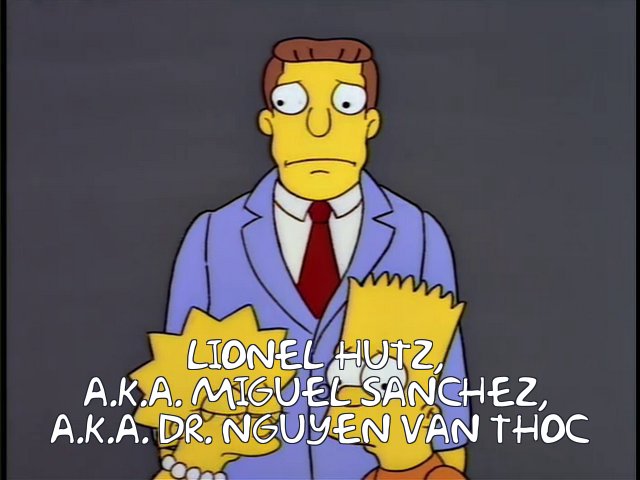
The third time was not a charm.
So the State filed a motion under Rule of Civil Procedure 65B asking the Supreme Court to direct the district court to apply Rule 60(b).
The Supreme Court agreed over 9 pages of additional legal analysis.
Enjoy your next exam, 1Ls!
(Check out the whole opinion on the next page…)
 Joe Patrice is a senior editor at Above the Law and co-host of Thinking Like A Lawyer. Feel free to email any tips, questions, or comments. Follow him on Twitter if you’re interested in law, politics, and a healthy dose of college sports news. Joe also serves as a Managing Director at RPN Executive Search.