
Some practice areas easily lend themselves to pro bono work. Criminal defense lawyers can step up for indigent defendants and commercial real estate attorneys can help a non-profit organization find a new headquarters. It’s a bit tougher to figure out what a 40 Act lawyer is going to do. While the biggest barrier to pro bono service will always be professional apathy, don’t overlook the problem of willing lawyers who feel lost and unqualified about the particulars of pro bono work.
That feeling is even more pronounced among law students who don’t really know how to do anything yet.
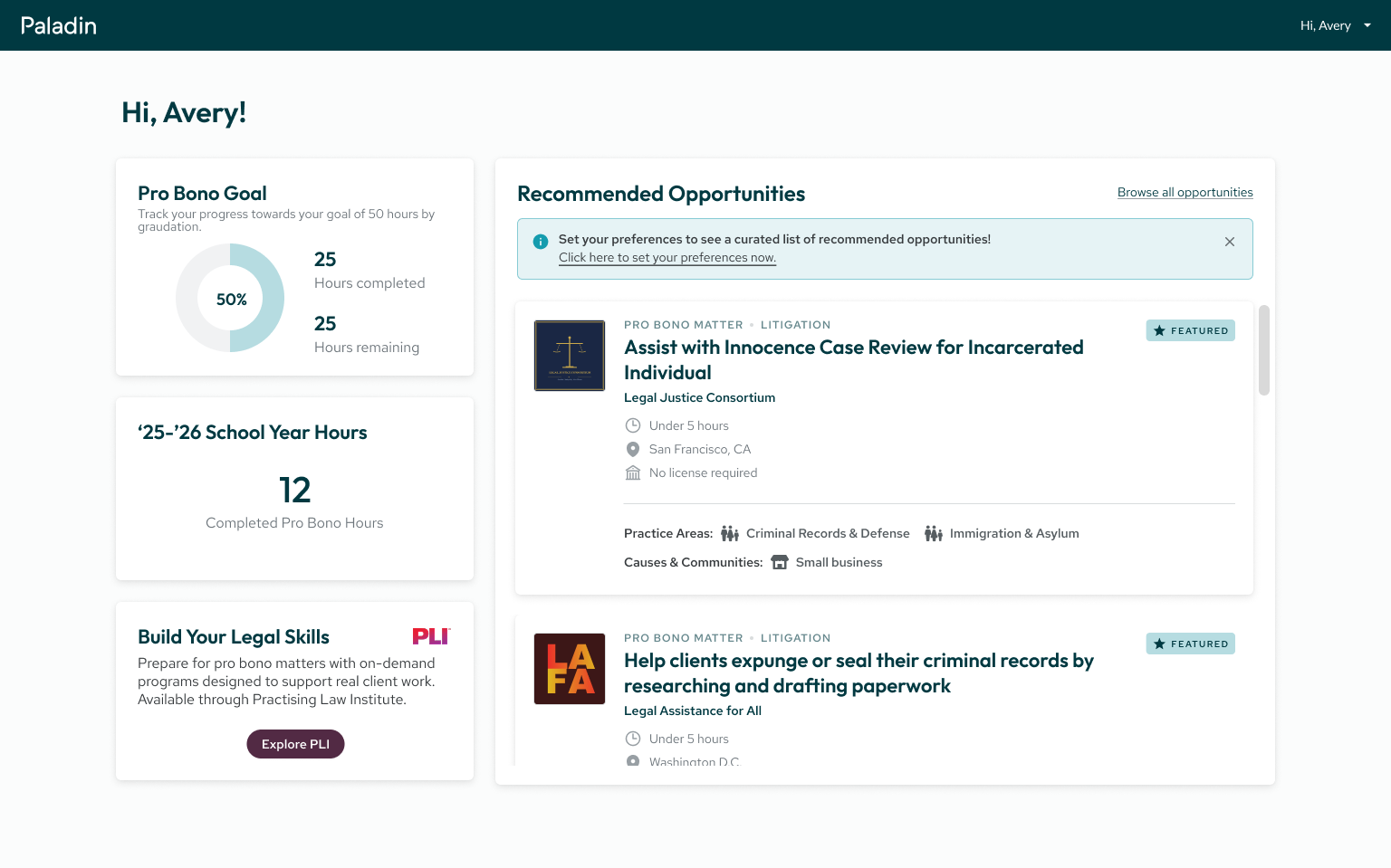
But a new partnership aims to help law students get the specific training they need to help the community. Pro bono management platform Paladin and the Practising Law Institute just announced an initiative designed to integrate PLI’s training programs directly into Paladin’s law school pro bono platform. The idea is straightforward: when a law student signs up for a pro bono matter through Paladin, they’ll also get access to targeted, skills-based PLI training tailored to that specific type of work.
We talk a lot about the gap between what law school teaches and what practice demands. It’s practically a genre of legal commentary at this point. But pro bono work presents a uniquely thorny version of this problem. When a first-year associate shows up at a Biglaw firm not knowing how to draft a motion, the firm should have every financial incentive to train them. For all the rosy talk about pro bono commitments, they aren’t as eager to burn time on training.
Unless they’re still trying to cover the pro bono payola they gave the Trump administration.
Law students, meanwhile, are doing a staggering amount of pro bono work. The class of 2025 contributed more than 5.1 million hours of legal services, amounting to over $178 million worth of work. With their souls still somewhat intact, law students are a motivated population and could do even more if we cut down the millions of opportunities for undertrained students to find themselves worried that they’re in over their heads.
Opportunities to assist asylum intake clinics, perform guardianship casework for children, engage in innocence-related research, or simply help the elderly navigate benefits claims are all available. The skills gap between “I just finished Civ Pro” and “I need to interview a detained asylum seeker” is vast but not insurmountable. Like a lot of pro bono challenges, it’s a matter of bringing the resources to bear.
Paladin CEO Kristen Sonday framed the partnership in terms that should resonate with anyone watching AI reshape associate work:
Integrating legal training with hands-on pro bono experience is the future of legal education. Especially with the advancement of AI and associates’ work changing so rapidly, there is no substitute for real-world pro bono experience.
Artificial intelligence isn’t going to replace lawyers, but it’s going to reduce the number of lawyers it takes to get things done. It’s a distinction that won’t matter to the person left unemployed, but it should inform how law students approach their future careers. When firms don’t need as many bodies to perform bottom rung tasks, the people who keep their jobs will be the ones already ahead on developing the higher level reasoning and client-facing tasks. And pro bono work offers a time-honored avenue to developing those skills early.
Paladin launched its law school platform last summer in collaboration with 30 schools, and since then law students have signed up for over 5,600 pro bono cases through the platform. Adding PLI’s training resources to that pipeline delivers practical, on-demand training led by expert faculty at no cost to students.
PLI’s Kirsten Talmage pitched the partnership as building a pipeline:
This initiative will help schools deliver trusted, experiential training that’s practical and meaningful, while building a stronger pipeline of law students who will carry pro bono forward into firms, in-house teams, and every corner of practice.
Even though this is directed at law students, the impact promises to carry over. Giving eager, service-minded law students real learning and genuine experience can give them the confidence to keep doing good work when they graduate and start drafting purchase agreements to acquire orphanages to work the client’s coal mines. Lawyers who develop pro bono habits in law school are far more likely to continue that work in practice. But lawyers who had a bad pro bono experience — either because they felt unprepared, unsupported, overwhelmed, or all three — tend to quietly opt out once they have the option.
If the current generation of Biglaw partners won’t stand up, maybe training the next generation to actually know what they’re doing when they volunteer will produce lawyers with both the skills and the spine to do the work that needs doing.
 Joe Patrice is a senior editor at Above the Law and co-host of Thinking Like A Lawyer. Feel free to email any tips, questions, or comments. Follow him on Twitter or Bluesky if you’re interested in law, politics, and a healthy dose of college sports news. Joe also serves as a Managing Director at RPN Executive Search.