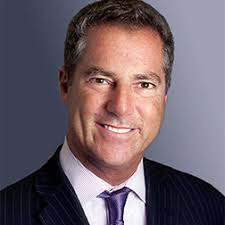
Since the day it became the first Biglaw firm to cut a deal with Donald Trump, Paul, Weiss has leaned on one talking point above all others: the deal changed nothing. Brad Karp assured the firm that the deal would have “no effect on our work.” Paul, Weiss has spent every month since insisting that everything is fine. And asked directly by the New York Times whether the firm’s independence had been jeopardized, a spokeswoman said any such assertion was “completely false.”
Great. Then somebody’s going to need to explain some things.
The New York Times published a sprawling report on the Biglaw firm this weekend, which has a ton of unknown-until-now details, including an internal exchange among Paul, Weiss partners that’s raising eyebrows. The emails are over the firm’s website for its Center to Combat Hate, the page cataloguing Paul, Weiss’s work against the organizers of the 2017 Charlottesville rally and against the Proud Boys, some of whose leaders were convicted of seditious conspiracy over Jan. 6. Around the time of the Trump deal, the site quietly disappeared. Then leadership had to decide how to put it back up. And one of the options on the table was apparently checking with the White House first. Yikes.

Managing Partners are Navigating the AI Inflection Point.
New executive research from Ari Kaplan explores how law firm leaders are responding to changing client expectations, evolving economics, talent transformation, and AI governance.
According to the Times, litigator Karen Dunn, who’d helped win a $26 million judgment against the Charlottesville organizers, wanted the site put back exactly as it was, but suggested running it past Bill Burck, the Washington lawyer the firm had hired for the executive-order fight, to make sure it wouldn’t provoke the administration. Partner Angelo Bonvino thought that was naive. What was Burck going to do, he wrote, except “ask Boris or Miller to read it.” Better, Bonvino argued, to quietly gut the page themselves and eat a grumpy news article than to route it to the White House for notes. (On the grumpy-news-article front, he had a point — cataloguing the firms that spent Trump 2.0 quietly purging diversity language, stripping pronouns from email signatures, and nuking diversity billing codes off their websites has become a bit of a cottage industry around here.)
Scott Barshay (the M&A rainmaker Karp imported from Cravath who now runs the entire firm) characteristically wanted the thing changed and didn’t much care who objected. “I don’t care about the internal audience or the press,” he wrote, noting that having survived the executive order once, he had no appetite for a sequel. Karp landed in the mushy middle, favoring restoration with minimal changes. The site went back up… minus any mention of the firm having sued the Proud Boys and Oath Keepers over Jan. 6.
If the website fight were an isolated wobble, it might read differently, but alas, it was not isolated. The Times reports that Paul, Weiss’s retreat from anything that might irritate Trumpworld started before the executive order, before the inauguration, before there was any deal to hide behind. In October 2024, the firm sued the Defense Department on behalf of Chinese drone-maker DJI, challenging the Pentagon’s designation of the company. After the election, Barshay argued the firm shouldn’t be adversarial to the incoming government. In December, weeks before Trump took office, Paul, Weiss withdrew from the case. The firm’s spokeswoman told the Times that call “would have been made regardless of which political party was in office.” Which is obviously bullshit because they had already filed suit under a Democratic administration — they only withdrew because they’re cowards who don’t want to stand up to Trump. Around the same time, after Elon Musk mused on X about which firms were pushing “anti-democratic” cases, Paul, Weiss began quietly scrubbing its site of references to its family-reunification work and its LGBTQ work.
(In fairness, the firm had company. When Above the Law tracked what every Am Law 200 firm was doing in the face of Trump’s assault on the profession, quietly stripping DEI and civil-rights content off the website turned out to be one of Biglaw’s more popular responses. Which is an indictment of the entire industry.)

Why Bigger Legal Budgets Buy Less Relief Than Ever
Introducing Axiom’s 2027 In-House Legal Budget Report. Read on to see the details.
And then there’s the case the firm chose not to bring. In the days after the deal, Dunn pushed leadership to sue the administration over something — anything — as a public signal that Paul, Weiss remained its own master. She went looking for a client, including talking to a reproductive-rights group. Karp was lukewarm. Barshay was strongly opposed, unwilling to stick the firm’s neck out for the sake of independence. The suit never happened. Not long after, Dunn and a cadre of the firm’s best litigators left to start their own shop, where they could sue whomever they pleased.
So the firm dropped a client to steer clear of the incoming administration, talked itself out of the one lawsuit that might have proven it still had a backbone, and sat around debating whether Stephen Miller should get a look at its own anti-hate website. Paul, Weiss of 2025 is a far cry from one that defended the rule of law at all costs.
Earlier: Paul Weiss Press Release Captures Everything Broken About Biglaw In One Image
Paul, Weiss Grovels To Trump, Gets Out From Under Executive Order
Brad Karp’s Paul, Weiss Reign Ends With An Epstein-File Plot Twist
Scott Barshay’s Paul, Weiss Makeover: More Money, Less Soul?
Kathryn Rubino is a Senior Editor at Above the Law, host of The Jabot podcast, and co-host of Thinking Like A Lawyer. AtL tipsters are the best, so please connect with her. Feel free to email her with any tips, questions, or comments and follow her on Twitter @Kathryn1 or Bluesky @Kathryn1