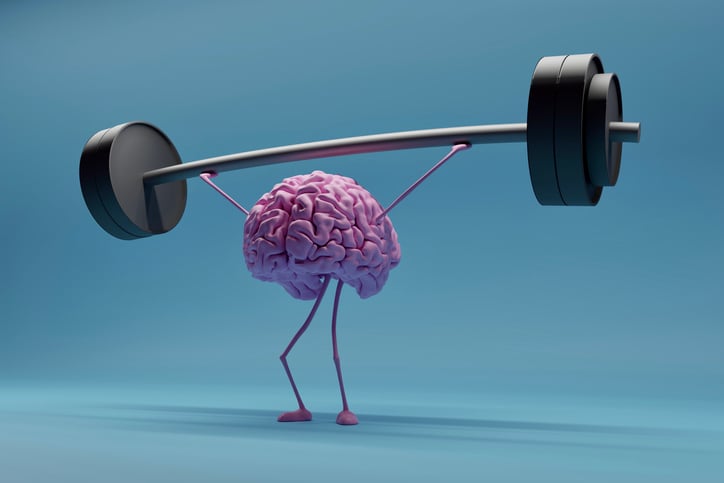
Consider President Donald Trump’s “brain trust” — the small group of people he consults before making major decisions. Even mediocre people can make good decisions if they’re surrounded by competent help. (Some would say Joe Biden, a genial mediocrity, did that.) How does Trump’s brain trust measure up?
Then I realized that you can’t write about this subject.

Beyond Recall And Precision: Strategic Oversight Of AI Managed Review
AI can accelerate document review, but metrics alone aren't enough. Learn how Managing Attorney oversight turns AI-driven review into a more adaptive, strategic and defensible process.
Excuse a brief digression: I worked primarily for two large institutions before I retired. At the first institution, a huge international law firm, the managing partner (who had attended a good college and law school, graduated at the top of his class, served as a U.S. Supreme Court clerk, and then had a spectacular legal career) sought advice from others with similar pedigrees.
At my second employer, the CEO had graduated at the top of his class from a leading business school, worked at one of the “big three” consulting firms, and moved from the management committee of the consulting firm to CEO of a big international company. He was surrounded by folks with similar pedigrees and relied on them for advice.
I felt relatively comfortable knowing the identities of the brain trusts.
Compare this with Donald Trump and his brain trust.

Managing Partners are Navigating the AI Inflection Point.
New executive research from Ari Kaplan explores how law firm leaders are responding to changing client expectations, evolving economics, talent transformation, and AI governance.
First, Trump himself.
Trump cares about credentials. When bragging about himself, Trump boasts that The Wharton School of the University of Pennsylvania is “the hardest school to get into, the best school in the world.” And Wharton is in fact a relatively tough school to get into — today. Currently, the Wharton School admits about 7.4% of applicants. In the 1960s, not so much. When Trump was admitted into Wharton, the acceptance rate was over 50%. The then-admissions officer at the Wharton School has explained that Trump’s older brother, Fred, was one of the admissions officer’s best friends. Fred set up an interview for Donald. “[T]he young Donald Trump [w]as an average, forgettable Fordham University transfer student,” but since more than half of all applicants were accepted into Wharton in the middle 1960s, that average, forgettable guy made the grade.
Trump similarly claims to have graduated at the top of his Wharton class. The graduation program, however, does not list Trump as having graduated with any honors.
Trump likes credentials; he just doesn’t have ’em.
After graduation, Trump ran a private company — so no outsider ever passed judgment on Trump’s skills — that was supported in part by gifts from his father. Six of Trump’s hotel and casino businesses filed for bankruptcy along the way. Trump later became rich as a result of his presidency, but his pre-presidential life doesn’t suggest that Trump had any particular brains or talent (except perhaps for showmanship).
During his first term, Trump’s Cabinet consisted largely of folks who were either well-credentialed or rich.
His second term is different. Trump now surrounds himself with the obsequious. If you doubt the fawning, watch even a minute or two of the Cabinet meetings where Trump goes around the room having each Cabinet member lavish praise on him. Trump’s not exactly receiving honest opinions or hearing from viewpoints that differ from his own.
Even those lavishing praise on Trump do not appear to be especially gifted. Trump’s Chief of Staff Susie Wiles was the daughter of NFL quarterback Pat Summerall. After graduating from The University of Maryland, she went to work for Summerall’s former teammate, Jack Kemp, who was then a member of Congress. In the years since, Wiles worked her way up through the political ranks.
JD Vance, a graduate of Yale Law School, author of a best-selling book, and one-time vicious critic of Trump, seemed to be an intelligent young man. He then left his senses behind in a quest for political glory. I doubt that Vance is an idiot. Other than the “leaving his senses behind” bit — undoubtedly caused by his unrestrained opportunism — he belongs in a brain trust.
Marco Rubio? University of Florida, University of Miami Law School (cum laude), and a political career.
Pete Hegseth? Valedictorian of his high school class, played basketball at Princeton, and graduated with no apparent honors. Military service and television commentator.
Here’s where I run into trouble. If I were to say something disparaging about a school, or a failure to graduate with distinction, or the admissions standards for basketball players, people would rightly criticize me.
I hate you elitists! There’re a lot of late bloomers in the world! Why do you look only at someone’s early academic pedigree and decide that marks them for life? Even folks without fancy degrees can be very smart! And smart people are hardly infallible: Read “The Best and the Brightest“! What’s wrong with you?
If the president’s brain trust consisted of Beavis and Butthead, I couldn’t criticize the pair: People would say that I’m a pointy-headed intellectual with no sense of the real America.
So I’m leaving it to you: Wiles, Vance, Rubio, Hegseth, Russell Vought, Stephen Miller, Tom Homan, and the rest. How are we doing?
Is Trump receiving advice he should rely on? How would his brain trust perform on a civics exam?
I do have one closing question, just for my own edification: The left says that I shouldn’t judge people based on credentials — such as grades, quality of schools attended, and the like — because those criteria unfairly favor rich white people. The right says that I shouldn’t trust people with fancy credentials — such as doctorates in economics and climate science — because then I’m relying on condescending hypocrites. I surely don’t know enough about every subject on earth to independently decide who’s competent and who isn’t. Is there any basis on which to judge, in advance, who would actually be good at a task?
Mark Herrmann spent 17 years as a partner at a leading international law firm and later oversaw litigation, compliance and employment matters at a large international company. He is the author of The Curmudgeon’s Guide to Practicing Law and Drug and Device Product Liability Litigation Strategy (affiliate links). You can reach him by email at [email protected].