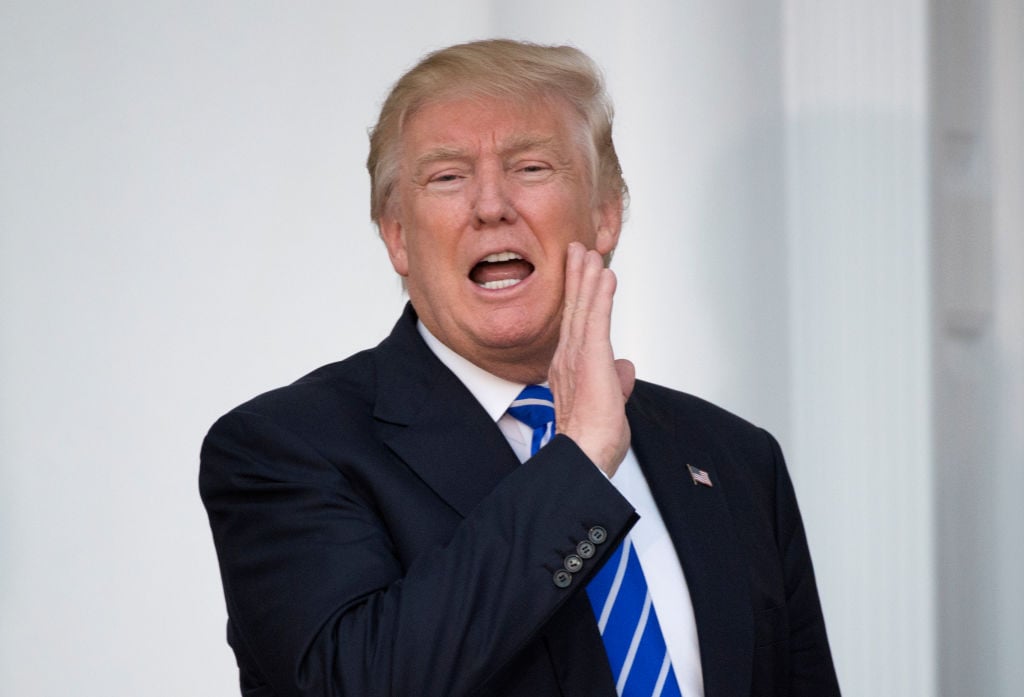
A number of people are wondering whether to hold off on any major purchases until Trump leaves office. While most will accept a tariff on a cheap good, they may contemplate delaying big-ticket items such as a computer, a smartphone, or a car. If they wait until Trump’s tariffs are later removed, buyers could save a significant amount of money.
After the Supreme Court struck down Trump’s signature “Liberation Day” tariffs imposed under the International Emergency Economic Powers Act (IEEPA), the administration turned to other statutes to restore the tariffs. Trump initiated investigations and imposed duties under Section 301 of the Trade Act of 1974, including measures framed around forced-labor concerns. He has also relied heavily on Section 232 of the Trade Expansion Act of 1962 to impose and expand tariffs on national security grounds covering steel, aluminum, automobiles, and other products. Additional tools, such as temporary surcharges under Section 122, have been used to fill gaps left by the Supreme Court’s ruling.

Beyond Recall And Precision: Strategic Oversight Of AI Managed Review
AI can accelerate document review, but metrics alone aren't enough. Learn how Managing Attorney oversight turns AI-driven review into a more adaptive, strategic and defensible process.
The major arguments for reversing these tariffs center on the manner of their imposition. Critics contend they were applied broadly and, in some cases, arbitrarily. The president did not seek new legislation from Congress, the branch that holds the constitutional power to lay and collect taxes and regulate foreign commerce. Recent Section 301 actions targeting forced labor have included countries such as Japan and New Zealand that are not widely regarded as relying on or condoning forced labor; such inclusions raise questions about the rigor and consistency of the underlying investigations. These sweeping tariffs on numerous trading partners can appear less like carefully calibrated remedies for unfair practices and more like a revenue-raising device and a display of American economic leverage. Over the longer term, they risk straining diplomatic relations with traditional allies.
Despite these faults, reversing the tariffs after Trump leaves office may prove easier said than done.
First, the outcome depends heavily on who succeeds him. A Republican president might retain most or all of the measures, particularly those framed around national security or strategic competition with China. At the same time, many traditional Republicans have historically disliked taxes and heavy government intervention in free trade; the relative lack of earlier congressional enthusiasm for blanket tariffs helps explain why the administration initially leaned so heavily on IEEPA.
A Democratic successor would be more likely to roll back large portions of the regime. Many Democrats view the tariffs as inflationary, effectively functioning as a national sales tax that falls more heavily on lower- and middle-income households. Some simply oppose any policy associated with Trump. Yet even Democrats might hesitate to abandon a reliable revenue stream that could help fund social programs.

AI Built for Litigation. Verified by Design.
Grounded in authoritative content and verified at every step, Protégé is the only legal AI tool that delivers work you can trust—without exception.
Another reason for continuity is the web of investment commitments foreign companies have made in exchange for tariff relief or more favorable treatment. Many of these agreements span several years. If tariffs were abruptly reversed, some firms might scale back or abandon U.S. expansion plans and return to lower-cost foreign production, undermining the very reshoring the policy was intended to encourage.
Lastly, geopolitics must be considered. Since the escalation of tensions with Iran, Trump has issued or threatened tariffs against countries that continue to trade with it. If Iran chooses to wait out the remainder of Trump’s term, his successor would face a choice: offer tariff relief as part of a broader diplomatic reset, or maintain the pressure to constrain Iran and its commercial partners.
In the end, a complete and rapid reversal of Trump’s tariffs is unlikely. Elements grounded in durable statutory authorities such as Section 232 national-security measures and targeted Section 301 actions against China do not have a time limit. Political incentives, revenue considerations, investment commitments, and strategic concerns all create inertia. While a future president and Congress could certainly lower or eliminate many of the broadest duties, the more probable path is selective moderation rather than wholesale dismantling. Consumers hoping for a swift return to pre-2025 tariff levels may therefore find themselves waiting longer than a single change of administration.
So if someone wants to buy a car, maybe they should do it now. If they are waiting for tariff reform, they may end up waiting for a very long time.
Steven Chung is a tax attorney in Los Angeles, California. He helps people with basic tax planning and resolve tax disputes. He is also sympathetic to people with large student loans. He can be reached via email at [email protected]. Or you can connect with him on Twitter (@stevenchung) and connect with him on LinkedIn.