Associate Bonus Watch: Cravath Announces Its 2016 Associate Bonuses!
Hooray! The 2016 Biglaw bonus season is now underway!
Hooray! The 2016 Biglaw bonus season is now underway!

This elite firm's announcement shows there's no trade-off between equality and excellence.

Law firms and legal departments are writing the future of the profession in separate rooms. What happens when they actually work together?

Cravath is the top firm (again), joined by some new arrivals in the top 10.
* From prosecutor to prisoner: former Pennsylvania attorney general Kathleen Kane gets sentenced to 10 to 23 months. [CNN] * Oh, the irony: the ABA won’t publish a report calling Donald Trump a “libel bully” because of “the risk of the ABA being sued by Mr. Trump.” [New York Times] * How the AT&T/Time Warner […]

* "Every woman lied when they came forward to hurt my campaign." Republican presidential nominee Donald Trump plans to sue all of the "liars" who have accused him of sexual assault within the last two weeks when the election is over. As an attorney representing one of Trump's accusers noted, a lawsuit would provide a "field day" to depose him under oath. [CNN] * The American Bar Association's Council of the Section of Legal Education and Admissions to the Bar has approved a tougher bar-passage rate standard that would require 75 percent of of a law school’s graduates who sit for the bar exam to pass it within two years. It's up to the ABA House of Delegates to decide if the stricter standard will ever be implemented. We'll have more on this later today. [ABA Journal] * "I don’t know why he would wait around for 200 days and then pull out at the very moment that it seemed likely that he was going to get confirmed." Will Judge Merrick Garland be confirmed to SCOTUS? With senators calling for lame-duck hearings if Hillary Clinton is elected and a bare-bones oral arguments calendar scheduled, it seems like even the justices are holding out hope for a full house in 2017. [Washington Post] * In a deal likely to invoke government scrutiny, AT&T has agreed to purchase Time Warner for $84.5 billion. Teams from Sullivan & Cromwell (transaction work) and Arnold & Porter (regulatory work) will be representing AT&T, while Cravath will be representing Time Warner. Faiza Saeed, Cravath's deputy presiding partner, will lead the team working on the deal from her firm. [DealBook / New York Times; Am Law Daily] * According to testimony from Bridget Kelly, New Jersey Governor Chris Christie's former deputy chief of staff, Christie allegedly knew about the Bridgegate lane closures a month before they occurred, not afterwards, as he's repeatedly claimed. Kelly, who says she thought the lane closures were for a traffic study, not a politically motivated scheme, is currently being tried in federal court over her role in the 2013 scandal. [Reuters]

How are we going to afford all those raises?

LexisNexis sat down with John Ursin, Managing Partner at Schenck Price, to learn how the firm is using legal AI to strengthen client service and daily legal work.

Which schools open the most Biglaw doors?
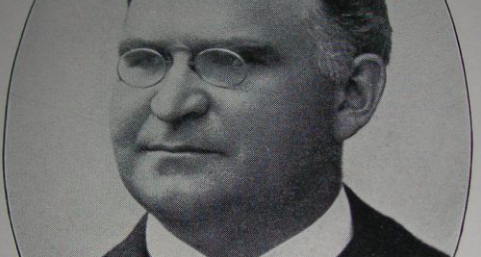
This excellent new novel depicts how Paul Cravath becomes embroiled in an epic patent battle.

Attorneys all know the firm Cravath, but not the lawyer behind the name.
The ATL Power 100 law firm rankings are our attempt to capture the strength and relevance of major law firms in today’s market.

Legal work isn’t slowing down, and the firms that win won’t be the ones working harder — they’ll be the ones working smarter.
Tune in NOW for this lively and enlightening discussion!
Please join us for what should be a lively and interesting discussion.
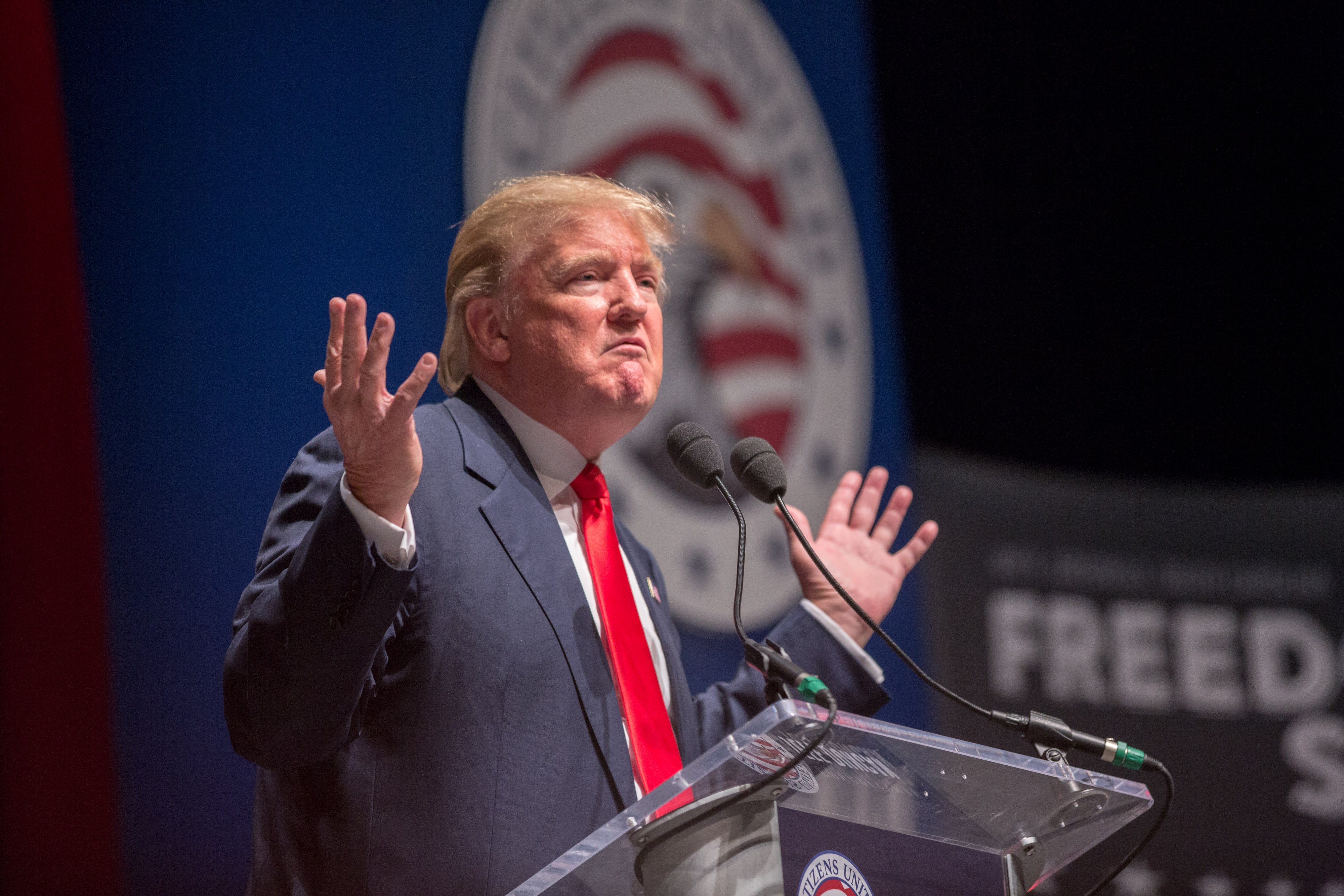
* If Republican presidential nominee Donald Trump wins the election, he may be the first president-elect to be standing trial for fraud prior to taking the oath of office. Judge Gonzalo Curiel has tentatively refused to dismiss one of the two pending Trump University cases, saying plaintiffs had met requirements for the case to move forward for a jury to decide whether Trump "participated in a scheme to defraud" students. [San Diego Union-Tribune] * After being served with a class-action suit alleging she rigged the Democratic primaries and the release of emails in the latest Guccifer hack showing her favoritism for Hillary Clinton over Bernie Sanders, Rep. Debbie Wasserman Schultz is resigning as the Democratic National Committee's chair after this week's convention. [CNN; Observer] * Five senators, including Bob Menendez (D-NJ), Elizabeth Warren (D-MA), Ron Wyden (D-OR), Debbie Stabenow (D-MI), and Cory Booker (D-NJ), have introduced the Student Loan Tax Relief Act, which would exempt forgiven loans from being taxed as income. Law school grads on IBR, ICR, or PAYE should pray this bill is passed. [Forbes] * In an announcement made before markets opened, Verizon said it would be purchasing Yahoo for $4.83B. It's rumored that Faiza Saeed, Cravath's incoming presiding partner -- who was appointed to a committee to explore Yahoo's sale -- was the driving force behind the deal, which is expected to close in early 2017. [Reuters; Big Law Business] * Law firms are apparently in a "weak spot" when it comes to the detection of money laundering operations. That may be how Shearman & Sterling got mixed up with an alleged Malaysian plot to siphon funds from its trust account to purchase luxury items in a scheme that's turned into an attempted $1B DOJ asset forfeiture. [WSJ Law Blog]

* "No one I know likes law school. It was a bad experience. I wouldn't wish it on a dog I didn't like." Indiana Governor Mike Pence, Donald Trump's likely vice-presidential running mate, is an attorney whose law license is listed as "inactive in good standing," and though he had a B average, he apparently hated law school -- just like the vast majority of law students. [WSJ Law Blog] * Faiza Saeed, who on January 1, 2017, will not only become Cravath Swaine & Moore's first female presiding partner, but the first female to manage any Wall Street firm, will be joining a "sorority" of about 25 women who lead or serve as co-heads of some of the nation's largest law firms. Congratulations on this historic appointment! [Law.com] * Justice Ruth Bader Ginsburg may have issued a "mea culpa" with regard to her remarks about presumptive Republican presidential candidate Donald Trump, but legal scholars say her non-apology "does not unring the bell." At the very least, she may be forced to recuse if Election 2016 turns into a Bush v. Gore situation. [WSJ Law Blog] * The American Civil Liberties Union has pledged to file constitutional challenges to many of Donald Trump's would-be political policies should be be elected president and try to enact them. Specifically, the ACLU finds Trump's stances on immigration, American Muslims, torture, and freedom of speech to be problematic. [ABA Journal] * The University of Houston Law Center and the Houston College of Law (formerly the South Texas College of Law) will face off in court today to resolve an emergency motion. The original Houston Law seeks to ban the new Houston Law from using its name or logo on merchandise, brochures, and promotional materials. [Houston Chronicle]

Congrats to the first female leader in the legendary law firm's history.