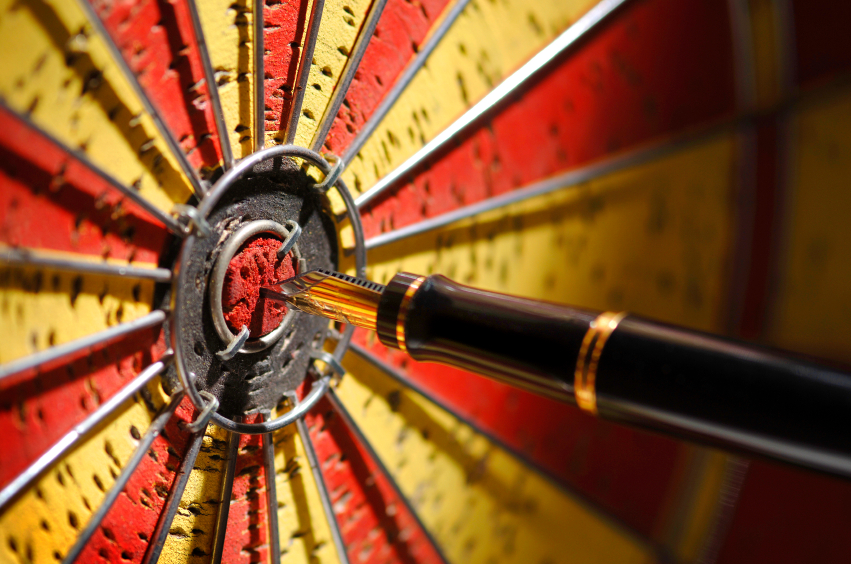
The 5 Edits I Make Most Frequently
In-house columnist Mark Herrmann identifies the lingering problems he still encounters even in generally solid briefs.
In-house columnist Mark Herrmann identifies the lingering problems he still encounters even in generally solid briefs.
Where do YOU come down on this hot topic in legal writing?
As federal borrowing caps tighten financing options for law students, one organization is stepping in to negotiate the terms they can't secure alone.

Could this become a trend in the federal appellate courts?
When does precision matter? Insights from columnist Mark Herrmann.

Protip: when in the Ninth Circuit, avoid filing an overlength brief at all costs.

* Ultimately, voters will decide how big a deal Hillary's emails really are. [Huffington Post] * If you still have your panties in a bunch over Justice Ginsburg's comments about Donald Trump, maybe you aren't paying enough attention to history. [Washington Post] * Guess what? Your paralegals hate you. [The Lawyer] * Ironman, err, Robert Downey Jr., is serving as an alternate on a jury. [Law and More] * When in time are judicial opinions, as a matter of grammar? [LawProse] * The RNC just ended #NeverTrump. [Slate] * A look at Janelle Eveland Belling, the managing director of ediscovery services and strategy at Perkins Coie. [CodeX]

How a former insurance agent built a Houston injury practice around systems, empathy, and disciplined advocacy.

* In case you haven't been keeping score like we have, these are the firms that recently raised salaries: Duval & Stachenfeld; Seyfarth Shaw; and Foley & Lardner. If you’re worried you’ve missed any of our coverage on pay raises, check out our omnibus 2016 salary chart where we collect these stories. [2016 Salary Increase / Above the Law] * Lawyers are "the best-paid writers in the world," so grammar god Bryan Garner suggests they emulate one of the greatest language snoots of them all: the late Justice Antonin Scalia. Garner identifies with Scalia's textualism because "[he] believe[s] that words have meaning, and that we should take them seriously." [Wall Street Journal] * According to constitutional law scholar Dean Erwin Chemerinsky of UC Irvine Law, SCOTUS may be at a turning point since the next president will likely be able nominate up to four justices. "Whether you see yourself as conservative or liberal ... this affects all of us, our most intimate and important aspects of our lives." [Los Angeles Times] * Lawyers for Led Zeppelin are seeking about $800K in costs and legal fees for their defense of the seminal rock band in the "Stairway to Heaven" copyright infringement suit. Peter Anderson, the band's lead counsel in the case, claims that his $330 per hour rate is "actually below" the going rate for this caliber of high-profile work. [Ars Technica] * Venezuelan authorities have arrested a woman connected to Mossack Fonseca, the firm at the center of the Panama Papers scandal, for allegedly being "in charge of seeking customers to invest illicit funds in outsourcing-type business arrangements." She's been charged with illegally obtaining funds in violation of banking regulations. [Reuters]

Legalese: everyone hates it, but no one is brave enough to entirely excise it from their writing.

The noted legal writing expert offers insights for litigators who have already mastered the basics.

The best trial lawyers must learn to become excellent writers. Here are four principles for legal writing.

Leveraging agentic AI to triage, prioritize, and automate the law department inbox.

With all due respect to Judge Posner, there's nothing wrong with judges delegating drafting to their clerks.
Helpful hints from technology columnist Jeff Bennion on how to better use Microsoft Word.
* Everyone was under the impression that Dickstein Shapiro and Bryan Cave would be tying the knot by the year's end, but instead, it looks like their brief love affair has turned into a bad romance. Oh no! Will Dickstein Shapiro be left at the altar? [Big Law Business / Bloomberg BNA] * “The idea they own the name ‘blue’ for a manual for legal citations is ridiculous." A rival citation guide to The Bluebook will be released in 2016, using the name "BabyBlue." Since a Biglaw IP attorney is involved in the copyright clash, this is already more exciting than techciting. [WSJ Law Blog] * Ethan Couch, the Texas teen who was too rich to realize his actions had consequences, was apparently also too rich to realize he shouldn't hide out in a ritzy vacation locale in Mexico while on the run from police with his mother. Damn you, affluenza! [CNN] * If you're looking for a law firm where you can take time off whenever you want and still earn a healthy paycheck, then look no further than Ashton KCJ Lawyers in England. That's a perk we're sure attorneys in the U.S. would love their firms to adopt. [Mirror] * Annie, get your gun: Gun-toting Texans are going to have a very happy new year, because come January 1, 2016, the state's new open carry law will go into effect. The open carrying of handguns had previously been banned in the state since 1865. [RT] * Jeffrey Feulner, founder of the Men's Divorce Law Firm, was charged with domestic violence battery after he allegedly attacked his wife. She filed for divorce three days later -- and presumably used a more woman-friendly lawyer as counsel. [Orlando Sentinel]
There's a link between Legal Research and Writing (LRW) and other law school classes and the MPT on the bar exam.
Lawyers who work in all environments should strive to write simply and comprehensibly, but this is particularly important for folks who are in-house.