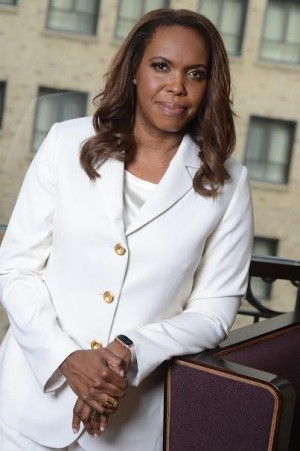
Rhonda Mims
“I’m about to change the focus from the richest to the brokest /
I wrote this opus, to reverse the hypnosis.” – Lauryn Hill
This week, Rhonda R. Mims, managing director for corporate social responsibility at Paul Hastings, was named chair of the Executive Leadership Council (ELC). The ELC is a national organization comprised of current global thought leaders and board members of Fortune 1000 and comparable companies. The focus of the organization is the development of a pipeline of global black executives for C-Suites, corporate boards, and global enterprises.

Beyond Recall And Precision: Strategic Oversight Of AI Managed Review
AI can accelerate document review, but metrics alone aren't enough. Learn how Managing Attorney oversight turns AI-driven review into a more adaptive, strategic and defensible process.
Yesterday, I had the opportunity to catch up with Rhonda Mims, and she was gracious enough to share insights from her career as well as provide advice for ATL’s law school audience. Here are some key excerpts from our conversation:
Renwei Chung (RC): What does being a lawyer mean to you?
Rhonda Mims (RM): I like the flexibility a law degree provides. A legal training prepares you to tackle a host of situations. Being a lawyer also allows you to be able to drive systemic change.
RC: What attracted you to the legal profession, and how did you choose University of South Carolina School of law?

Why Experience Still Matters In An AI-Driven Legal Industry
A conversation with Trustpoint.One CEO Christopher Gallagher.
RM: Interestingly enough, I was attracted to the legal profession by my undergraduate major of Criminal Justice. I am from South Carolina originally and thought I would work in the state the majority of my life. At the time, there was only one law school in the state, the University of South Carolina “USC”. I attended USC for undergraduate and worked as a University Presidential Intern. We essentially served as University Ambassadors. I loved the school and that role. Many of the interns at the time went on to law school. It seemed like a natural progression for us.
RC: I noticed that in addition to being named the chair of the Executive Leadership Council (ELC), you currently serve as the managing director for corporate social responsibility at Paul Hastings. Prior to these roles, you served as President of the ING U.S. Foundation, as an environmental civil litigation attorney with the U.S. Department of Justice, and as a senior attorney with the National District Attorney Association’s American Prosecutor’s Research Institute. I would love to hear more about your career and learning experiences along the way.
RM: My career has certainly taken an interesting path. I started out as a prosecutor in Charleston, South Carolina, and quickly found my way heading up the prosecution division of the S.C. Attorney General’s Office. I believe I was 27 years old at the time and was given a great deal of responsibility by the then Attorney General. I loved managing staff and other prosecutors, but I also liked developing alternative community programs… Hence, my interest in foundation and community work.
After leaving the Department of Justice, I struggled with whether to leave the practice of law to enter corporate America. I accepted a position with ING, the global financial services company, and was provided with incredible opportunities as a litigator, external affairs counsel, diversity advocate, manager in sales in marketing, and Foundation leader. There I found wonderful mentors and sponsors, who guided my career along the way. One of my greatest champions was a fellow lawyer, Kathy Murphy, who now serves as President of Fidelity Investments. She showed me that a lawyer could add incredible business value to the company.
RC: What advice do you have for those candidates who are about to embark on the law school journey and/or for those students who are about to graduate law school?
RM: My biggest piece of advice is to take things slowly and try not to stress over small matters. I went directly from undergraduate to law school. I wish perhaps that I would have gained a few years of work experience under my belt before embarking on law school. Then most likely I wouldn’t have taken things so seriously.
RC: Outside of the legal universe, what are you passionate about?
RM: I love spending time with my 10-year-old daughter. I enjoy international travel and spending time with close friends. My favorite thing to do is to enjoy an incredible dinner with friends.
RC: If you didn’t become a lawyer, what profession/occupation do you think you would have pursued?
RM: I would probably pursue something in the design space. I love interior design. Fashion merchandising has also always been an interest of mine.
RC: How can young lawyers and millennials help shape our profession and society in general?
RM: We are at an incredible stage and can perhaps truly change the face of the profession. I think young lawyers have an opportunity to demonstrate that it is okay to be yourself at work. It’s time the legal profession allowed individuals to bring their entire self to the profession. We have all heard the saying “diversity drives innovation.” People from various backgrounds and experiences bring different perspectives to the table. We must allow diversity in order for the profession to evolve and for us to be able to provide the most innovative solutions for our clients.
RC: What does diversity mean to you?
RM: Everyone is diverse. Traditionally, when we speak of diversity we refer to ethnicity, gender, sexual orientation, disability, etc. However, diversity for me means an inclusive society where everyone is welcomed and included in societal conversations.
RC: It was great chatting with you — is there anything else you would like to share with our audience?
RM: I absolutely love my role as a corporate social responsibility executive. It allows me to utilize my legal training while having a real impact globally.
RC: On behalf of everyone here at Above the Law, I would like to thank Rhonda Mims for sharing her experience and wisdom with our audience and wish her continued success in her career.
Renwei Chung attends SMU Dedman School of Law. He has an undergraduate degree from Michigan State University and a MBA from the University of Chicago. He is passionate about writing, technology, psychology, and economics. You can contact Renwei by email at [email protected], follow him on Twitter (@renweichung), or connect with him on LinkedIn.