
Is law school worth it as a part-timer?
If you’re a professional who’s interested in going to law school, but you’re not interested in quitting your full-time job and racking up hundreds of thousands of dollars worth of debt in the process, then a part-time J.D. program may be right up your alley. You’ll have to juggle your career with your homework, but at least you’ll be able to make contributions to your tuition payments along the way. Plus, you’ve already got a job, so your worries about finding a job after graduation won’t be quite as harrowing as those of your classmates.
Like your full-time classmates, if you’re in a position to do so (if your place of employment is nearby or if it’s a reasonable commute), you’ll probably want to apply to the law school with a part-time program that’s the most highly ranked. But which of these law schools with part-time programs are the most popular?

From ‘Vendor’ To ‘Partner’: How LexisNexis Is Deepening Law Firm Relationships
The company is emphasizing ‘white glove service’ in the AI era. Here’s what the initiative is delivering for clients.
Luckily for you, U.S. News has a ranking for that. The magazine’s Short List blog has compiled a list of the 10 law schools with the most applicants for their part-time programs for Fall 2016. Here they are — and whoa, check out Georgetown:
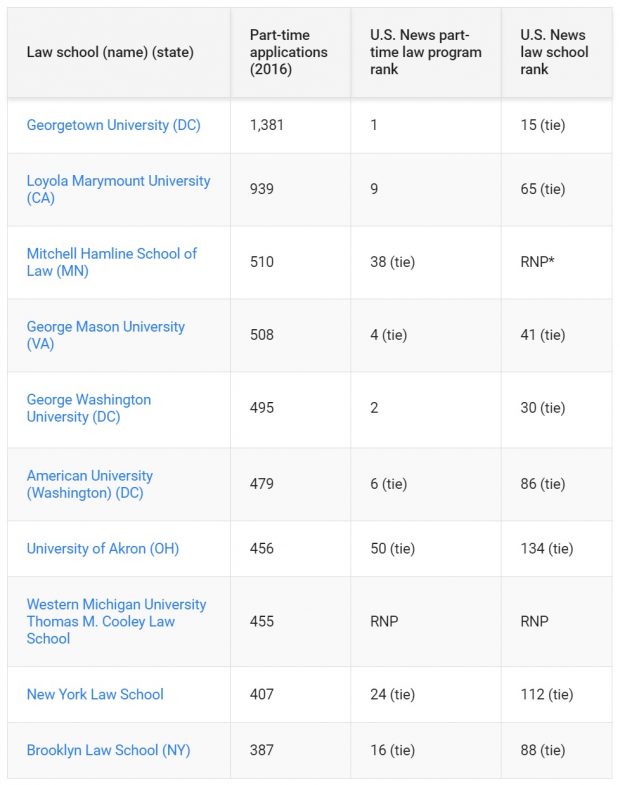
If you’re a current or former part-time student at any of these law schools, we’d love to know what your experience was like. Was your workload manageable given the fact that you were working full-time as a professional? Please let us know via email or text us (646-820-8477). Thanks!
10 Law Schools That Draw Part-Time Applicants [The Short List / U.S. News]

Why Experience Still Matters In An AI-Driven Legal Industry
A conversation with Trustpoint.One CEO Christopher Gallagher.
 Staci Zaretsky has been an editor at Above the Law since 2011. She’d love to hear from you, so please feel free to email her with any tips, questions, or comments. You can follow her on Twitter or connect with her on LinkedIn.