
At the end of another week and another big legal tech conference has wrapped up. The big headline: CLOC and legal ops folks take their conference very seriously. They ask hard questions, they attend the session religiously, and are by and large more mature than most conference goers. They are there for the conference, not the parties. There is much less a bro party spirit. That’s not to say that they didn’t have fun but the fun was incidental to the purpose they were there. It’s definitely for the adults in the room.
Let’s break it down.
The Keynotes

AI Built for Litigation. Verified by Design.
Grounded in authoritative content and verified at every step, Protégé is the only legal AI tool that delivers work you can trust—without exception.
I think a conference lives and dies by its keynotes. They set the tone for the conference and define what the organizers are really interested in.
CLOC offered three “general sessions” which I would call keynotes over the three days. The first, which I already reported on, featured Zack Kass, a former OpenAI executive. He introduced the question of what the legal profession would and should offer as value beyond what AI can and will do. It’s a question I and many others have tried to address. His hook: what will you do when everything can be automated? His thesis was there are some things that might be automated but which we as individuals and a society for a whole host of reasons don’t choose to do so. Kass is not part of the legal community, so he wisely didn’t offer any answers. But defining and facing this hard question is key.
The final keynote was offered by Judd Kessler, a professor at the Wharton School and an economist. He talked about what he called “hidden markets”: those markets which, because of the scarcity of supply-side resources, don’t necessarily follow standard supply and demand rules. You remember these rules: prices will rise until supply is greater than demand.
As a result, says Kessler, by choice, we determine the winners in these markets based on something other than who is willing to pay the highest price. He talked a lot about how we instead value and determine winners in these markets based on things like equity, efficiency, and ease. I immediately thought of how firms determine origination credits and how some of these principles might apply.
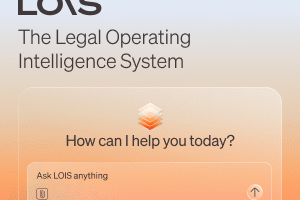
Filevine’s New Legal AI Platform LOIS Turns AI Into A True Legal Coworker
Legal work isn’t slowing down, and the firms that win won’t be the ones working harder — they’ll be the ones working smarter.
My only criticism of Kessler’s talk was that it felt like a lecture to a bunch of college economics students. A little long, lots of reliance on lots of complicated graphs, and lots of economic jargon. At 9:00 a.m. on the last day of a long conference, it was a little hard to follow.
But the key thing about Kessler’s talk is that he got me thinking about this and other issues in law firms and legal departments. On that ground, I have to say he was a success.
And then there was the session by Second City. I decided to bring this up last even though it occurred on the second day of the conference because, well, it was just out of kilter with the other two serious presentations. The idea was to introduce improvisational comedy techniques to a bunch of legal professionals and then let them play (Second City’s term, not mine) in pairs at the tables. I will admit up front, when a speaker starts talking about interactive exercises, I usually leave the room. But while I said the legal ops audience was more serious than most, that doesn’t mean they had didn’t have a good time playing with this exercise. Of course, the fact that there were lots of good comic relief certainly helped.
All in all, though, it was three keynotes that at least started conversations and got people thinking. On that note, CLOC pulled off some winners. Good grade on this one.
The Educational Sessions
There were lots of them. The ones I went to were well attended. The panelists were well prepared. The audience asked good questions. Compared to many legal conferences, the content was pretty detailed and technical. Not a lot of “is AI a thing” or “how to write a prompt” and much more content directed at how legal ops professionals can better do their job in managing the business end of the practice of law. I was impressed by the breadth and sophistication of the topics. And the diversity of the panels.
Again, good grade.
The Exhibit Floor
I bring this up because the exhibit floor at CLOC was different. First, the vendors were spread out. There was room to breathe and walk. There were spaces to sit and talk. It was open and airy. That, in turn, enabled CLOC to offer a good number of the educational sessions on the multiple stages on the exhibit floor without worrying so much about the background noise. I attended several of these and unlike many conferences, the noise was not a problem. CLOC courteously also offered headphones for the audience but other than one session which was styled as an audience conversation, I didn’t need or use them.
Of course, the fear is that by spreading the floor out, it may look to the vendors like there’s not that much traffic. I didn’t hear anyone complaining though and I think most vendors liked the space as well.
The Venue
Here’s where I thought CLOC might get some push back since this is the first year they held the conference someplace other than Las Vegas. I didn’t do a survey and can’t vouch for the overall statistical accuracy of what I heard. But I didn’t hear one person complain. In fact, most of the people I talked to liked the convenience of having an event in Chicago since it was easier to get to. Others just don’t like Vegas in general which perhaps again reflects the more mature and serious nature of the audience.
Yes, McCormick is a distance and feels separate from downtown Chicago. Again, I didn’t hear any complaints about this. CLOC and the vendors were good about providing transportation to off-campus events.
Networking
Don’t get me wrong, there were ample opportunities to network. CLOC offered a reception and two happy hours in the exhibit hall. And as is tradition, CLOC offered a really big event on the final night of the show called CGI After Dark. Last year it was a rooftop concert by Flo Rida. This year it was dinner, music, and dancing in the ballroom at the end of Navy Pier. It’s a showcase venue and was everything it was cracked up to be.
The Vibe
It all comes down in the end to the vibe. Here’s my take. The Global Institute is for serious legal ops professionals who want to learn and talk about issues. The content was serious, the discussions outside were serious. Yes, they want to have fun but they don’t let the tail wag the dog. That’s what I like about this conference. And in many ways, having it at a site away from glitz and glamour may have actually been more conducive to that vibe.
One other thing I noticed: as I have discussed at the close of the recent Evolve conference, often at legal tech conferences there is an us versus them attitude when attendees and presenters talk about the lawyers for whom they work. There was much less of that attitude at CLOC. Certainly, there were criticisms, particularly of outside counsel, but as for internal legal, it was more of a team attitude.
And One Final Note
On the first day of the conference came the announcement by Anthropic that it would be offering Claude for legal which, by the way, I predicted some time ago. It’s a monumental announcement. But I didn’t hear a peep about it at the conference. Why? I think legal ops people are like the Sniff and Scurry mice in the book Who Moved My Cheese by Spencer Johnson. Sniff and Scurry see change, shrug their shoulders, accept reality, and move on. Others don’t.
The Global Institute: it’s for and about legal ops. And what legal ops professionals bring is much like what the adults in the room bring: clarity, wisdom, focus.
Stephen Embry is a lawyer, speaker, blogger, and writer. He publishes TechLaw Crossroads, a blog devoted to the examination of the tension between technology, the law, and the practice of law.