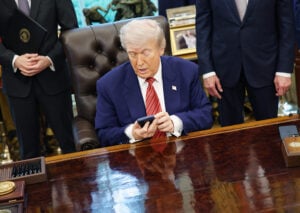
You’d think that if you’re pursuing a defamation case for a comically absurd $10 billion that the least you could do is hit the court’s deadline to respond to the other side’s motion to dismiss.
And yet!
Within the last week, Trump’s lawyers have managed to botch easy deadlines in multiple cases. And it doesn’t matter if it’s Trump’s personal lawyers in law firms pursuing his borderline frivolous defamation claims against personal enemies or his personal lawyers acting under the banner of the Department of Justice.

AI Built for Litigation. Verified by Design.
Grounded in authoritative content and verified at every step, Protégé is the only legal AI tool that delivers work you can trust—without exception.
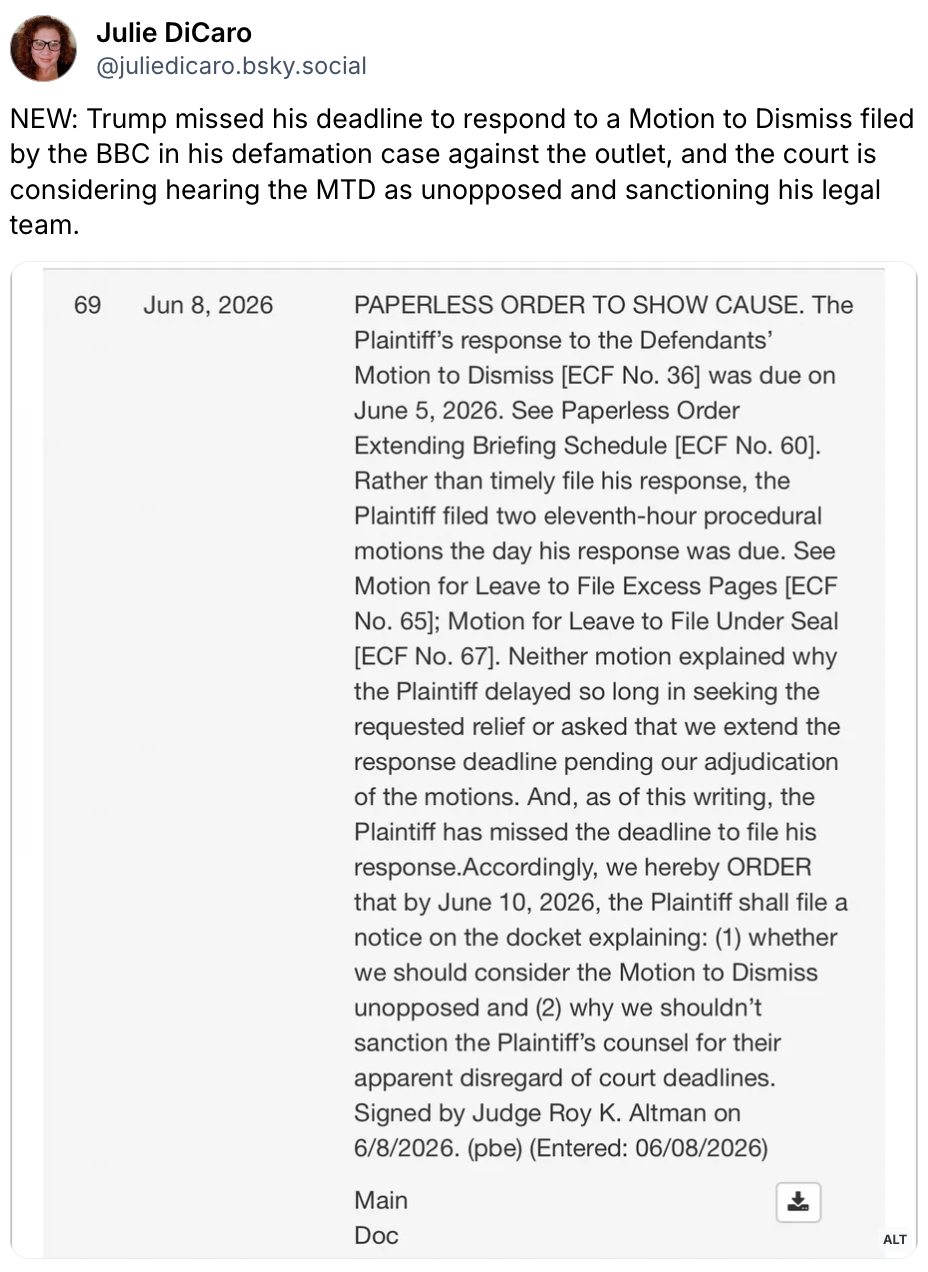
Donald Trump, who argues that he’s too busy as president to participate in civil litigation as a defendant, continues to pursue claims as a plaintiff willy-nilly against media companies for Dr. Evil-levels of money. One such suit targets the BBC for a documentary that edited clips of Trump’s January 6 activity to make him appear to slightly more directly incite the attack on the Capitol. Specifically, they cut two different clips of Trump riling up the crowd next to each other even though they were spoken 50 minutes apart. The BBC apologized because British people like to say “frightfully sorry” even if they aren’t. But they’re still moving to dismiss the suit because the actual malice standard still exists and this complaint cannot survive a motion to dismiss alleging “the news took things I actually said and cut them in a way that conveyed… well, pretty much the precise thing I meant, but way more clearly.”
Journalist Julie DiCaro flagged this whiff by Trump’s attorneys in his personal suit against the BBC.
Chris Geidner posted the next development in the BBC matter, flagging the new filing where Trump’s lawyers told the court that they missed the motion to dismiss deadline because they couldn’t figure out how to deal with a protective order and decided the best course of action was… simply to not file at all? Specifically, Trump’s lawyers planned to include exhibits in its response that the BBC identified as confidential and could seek to seal.

AI Is Reshaping Legal Practice—But Tools Aren’t The Real Differentiator.
Explore the mindset, cultural shifts, and training strategies that define the AI‑savvy lawyer, revealing why human judgment, standardized competence, and integrated learning—not technology alone—will shape the future of the profession.
Moreover, because the confidentiality designations belong to Defendants as the producing party, Plaintiff’s counsel could not unilaterally determine which exhibits, or portions thereof, Defendants would ultimately seek to seal. The opposition memorandum contains numerous references to, and incorporates the confidential exhibits and deposition testimony, and Plaintiff did not want to risk either obscuring substantive argument or disclosing protected material.
So Trump’s lawyers filed a “provisional motion to seal,” but never sought an extension of its motion to dismiss based on this. Or, you know, just filed the motion to dismiss under this provisional motion to seal. Instead, they just served it on the defendants and didn’t bother to send anything to the court.
On the one hand, they weren’t trying to prejudice the other side and the error is relatively easy to correct. On the other hand, the baseline assumption of litigating in federal court is to respect the deadlines or proactively tell the judge why you can’t. By failing to approach the litigation with this basic understanding, they not only disrespected the judge, but now they’ve put the judge on the spot. Judge Altman has had to publicly call out the attorneys on the docket — in a case generating widespread coverage — and in response Trump’s lawyers are asking him to just be cool about litigants ignoring his deadlines. You don’t want to treat famous litigants differently, but this is very different from letting a pro se slide for not understanding the rules, and if Judge Altman gives in after having to issue this order, the court is going to hear about it from every future delinquent party.
This casual relationship to time seems to have spilled over to Trump’s other set of personal lawyers at the Department of Justice.
A little over a week ago, the DOJ informed the court that it would file an amended complaint against Harvard “on or before June 8, 2026.” Having laid out the schedule themselves, the government managed to fail to meet it, posting its amended complaint nearly two hours after the deadline.
There’s no adversary to blame… they picked the date.
The complaint arrived on June 8 at almost 8 p.m., which would be fine except the Local Rules of the District of Massachusetts are explicit that: “All electronic transmissions of documents must be completed prior to 6:00 p.m. to be considered timely filed that day.” For reasons that boggle the mind, some lawyers complain about deadlines before midnight, but courts impose them to impose a little humanity upon the profession and the least lawyers can do is follow them.
There’s an infamous account about Van Halen putting a “no brown M&Ms” demand in their concert agreements. The story isn’t that the band cared about M&Ms, but if they showed up and found all the brown candies carefully picked out of the bowl, they could trust that the whole concert setup was handled with an attention to detail. It conveyed a sense of professionalism and all-around seriousness.
Filing deadlines are the same thing. In the grand scheme of things, it doesn’t really matter if the deadline gets missed by two hours, but it does tell the judge that you’re not taking the case seriously enough to even read the rules. And it’s astounding to see the DOJ whiffing on basic rules like this.
Whether they intend it or not, these deadline failures really send the signal of lawyers using federal courts as a prop. This is how lawyers litigate when they don’t care about winning the case at trial and view the whole affair as a prelude to settlement. That’s how it goes sometimes, but that doesn’t mean lawyers can treat the court this way. When it comes to the court, lawyers have to act like it’s going to the jury until the second the settlement is locked in.
Trump’s lawyers might not care enough about avoiding the brown M&Ms to care.
 Joe Patrice is a senior editor at Above the Law and co-host of Thinking Like A Lawyer. Feel free to email any tips, questions, or comments. Follow him on Twitter or Bluesky if you’re interested in law, politics, and a healthy dose of college sports news.