
Most lawyers who step into leadership roles do so for good reasons. They want to help. They want to support a bar association, a firm committee, a nonprofit board, a civic group, or a professional organization that helped them along the way. They want to give back. But leadership can change people if they are not careful. A title can become a mirror. A meeting can become a stage. A project can become proof of importance. The role can slowly move from service to self. When that happens, the organization suffers, and members feel it.
The best leaders remember a simple rule. The organization is not about them. Members did not join to applaud the president, chair, board, or committee head. They joined because the organization offers value, community, opportunity, education, friendship, purpose, and a sense of belonging. Leadership exists to protect and grow those things. It exists to make the organization stronger after the leader leaves. That is the heart of servant leadership. It is less about being followed and more about helping others move forward.
The Title Is Temporary

AI Built for Litigation. Verified by Design.
Grounded in authoritative content and verified at every step, Protégé is the only legal AI tool that delivers work you can trust—without exception.
Every leadership title has an expiration date. The president, chair, director, trustee, partner, section head, and committee leader all pass to someone else. The title ends. The photos fade. The event programs get filed away. What remains is whether the leader built something useful. Did the leader open doors for new people? Did the leader strengthen systems? Did the leader make the organization easier to join, serve, and trust? Those are the questions that matter.
A title should make a leader more responsible, not more important. The platform belongs to the organization. Good leaders use it to highlight members, elevate volunteers, thank sponsors, develop younger lawyers, support staff, and give credit where it’s due. Members can tell when the leader serves the room instead of working the room.
Listen Before You Lead
Servant leadership starts with listening. Not performative listening. Not listening while waiting to respond. Real listening. Leaders should ask members what they need, what frustrates them, what would make membership worthwhile, which events matter, which programs miss the mark, and why people have stopped participating. The quiet member at the back of the room often knows something the board does not. The young lawyer who never speaks may have the best idea for making the organization relevant.

Managing Partners are Navigating the AI Inflection Point.
New executive research from Ari Kaplan explores how law firm leaders are responding to changing client expectations, evolving economics, talent transformation, and AI governance.
Listening also requires humility. Sometimes members will say the organization feels stale, closed, political, or hard to access. A defensive leader hears criticism as an attack. A servant leader hears it as data. The goal is not to win the conversation. The goal is to learn enough to make better decisions.
Make the Work About the Members
Organizations thrive when members see themselves in the work. Programming should respond to real needs, not only leadership preferences. Networking events should welcome new people, not only reunite old friends. Panels should include new voices, not the same names every year. Committees should have clear assignments, not vague promises. Members should know how to get involved without needing a private invitation from someone already inside the circle.
A leader should ask one question before every initiative. How does this help the members? If the answer is unclear, the initiative needs work. If the answer is only that it gives the organization something to post online, that is not enough. Visibility matters, but value matters more. Members do not stay engaged because an organization looks busy. They stay engaged because the organization helps them grow, connect, serve, learn, and belong. A leader’s job is to keep dragging every conversation back to that point.
Build Systems, Not Shrines
Some leaders build programs around themselves. They know every detail. They control every decision. They keep the contacts, passwords, templates, sponsor lists, speaker lists, timelines, and lessons learned in their own heads. For a season, that may feel efficient. It may even look impressive. But it is not leadership. It is a dependency. When that leader leaves, the next person starts over. The organization loses momentum because nothing is repeatable.
Servant leaders build systems. They document what works. They create checklists. They share contacts. They train successors. They make budgets understandable. They write down timelines. They ask what happens when they are not in the room. This is not glamorous work, but it is the work that lets organizations last. A leader who builds systems says, in effect, I care more about the organization surviving than about being indispensable. That is the right instinct.
Share Credit and Take Responsibility
Leadership tests ego most clearly when something succeeds. The event sells out. The program gets praise. The sponsor renews. The committee delivers. At that moment, the leader has a choice. The leader can absorb the credit or distribute it. Servant leaders distribute it. They name the volunteers. They thank the staff. They recognize the planning team. They praise the speakers. They make others feel a sense of ownership over the win. When leaders give credit away, people want to serve again.
The opposite rule applies when something fails. Leaders should not scatter blame. They should not hide behind volunteers. They should not blame staff, past leadership, the venue, the weather, or the membership. Good leaders take responsibility first. They then fix what can be fixed. They learn out loud without humiliating anyone. Volunteers are watching during failure. If they see a leader take responsibility, they trust the leader. If they see a leader look for a scapegoat, they remember it.
Invite New People In
Every organization has an inside circle. Sometimes it forms naturally. People who work hard together become friends. They trust each other. They call each other first. That can be healthy. But it can also become a wall. New members may not know where to stand at events, who to ask about committees, how to get speaking opportunities, or whether leadership really wants them involved. A servant leader notices who is missing, who is standing alone, and who has talent but no invitation.
The best leaders act as bridge builders. They introduce members to each other. They invite younger lawyers to help with meaningful work, not just name tags and check-in tables. They create pathways for first-time speakers, writers, chairs, and committee leaders. They do not treat opportunity as a reward for proximity. They treat it as a resource to be shared. Organizations grow when members believe there is room for them. They shrink when members believe all the rooms are already full.
Protect the Mission
Organizations drift when leaders chase noise. They try to be everything to everyone. They add programs because someone asked loudly. They repeat events because they have always done them. They pursue prestige without asking whether it serves the members. Servant leadership requires discipline. Leaders must know the mission and measure decisions against it. A good idea that does not fit the mission may still be the wrong idea.
Protecting the mission also means protecting the culture. Meetings should have a purpose. Volunteers should know what is expected. Staff should be treated as partners. Sponsors should receive real value. Culture is built in small moments. Leaders either guard those moments or let them slide.
Lead for the Next Leader
A leader should begin with the end in mind. From the first day, the leader should ask who comes next and what that person will inherit. Will the next leader inherit a stronger membership, better records, engaged committees, a clear calendar, a healthier budget, and better communication? Or loose ends and bruised relationships? Leadership is stewardship. You hold the organization for a season. Then you hand it to someone else.
Succession is not an afterthought. It is part of the job. Bring future leaders into conversations early. Let them lead real projects. Explain decisions. Share mistakes. Ask for their views. Do not treat succession as a threat to your relevance. Treat it as proof that the organization is healthy. The strongest leaders do not leave a vacuum. They leave a bench. They leave people ready to serve because someone once made room for them.
The Measure of Leadership
At the end of a leadership term, there will always be a list of visible things. Programs held. Money raised. Members added. Awards given. Photos taken. Those things matter. But they are not the full measure. The better questions are quieter. Did members feel the organization belonged to them? Did volunteers feel respected? Did young lawyers see a path? Did staff feel supported? Did sponsors feel valued? Did the organization become more open, more useful, and more durable? Did the leader make it easier for others to lead?
Servant leadership is not soft. It requires patience, discipline, self-control, planning, courage, and humility. It requires saying no when a request does not serve the mission. It requires apologizing when the organization falls short. It requires showing up when the work is boring, unseen, and unglamorous. Most of all, it requires remembering that leadership is not a spotlight. It is a responsibility.
The leader is not the point. The work is the point. The members are the point. The mission is the point. When leaders keep that order straight, organizations grow stronger. They become places where people want to belong and want to serve. They become places that outlast a single personality or term. They become what they were meant to be: communities built by many hands, for many people, with a purpose larger than any one person holding the title.
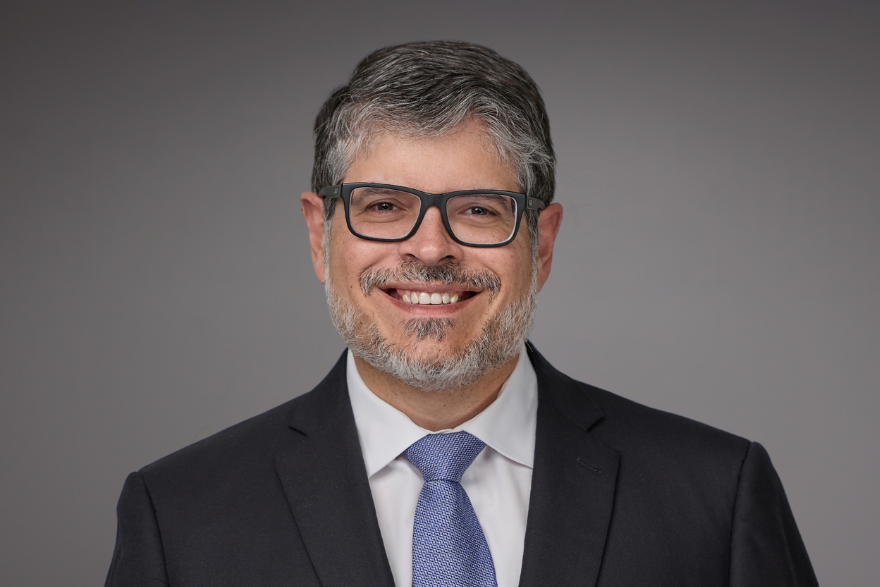
Frank Ramos is a partner at Goldberg Segalla in Miami, where he practices commercial litigation, products, and catastrophic personal injury. You can follow him on LinkedIn, where he has about 80,000 followers.