
(Image via Getty)
Mental health issues in the legal profession generally, and in law schools specifically, have been a hot button issue of late — and with good reason. A recent study by Hazelden Betty Ford Foundation and the American Bar Association Commission on Lawyer Assistance Programs found between 21 and 36 percent of licensed, employed attorneys qualify as problem drinkers, about 28 percent struggle with some level of depression, 19 percent demonstrate symptoms of anxiety, and 23 percent have difficulties with stress. Figuring out just how to deal with these troubling numbers has been an ongoing conversation in the field.
Now we have additional data on how recent law school graduates think their schools are addressing these issues. A new survey of more than 300 recent law school graduates by Kaplan Bar Review reveals a stunning 40 percent of recent alums do not think their law schools do enough to help students deal with mental health issues. Twenty-nine percent think their school does enough, and 31 percent responded that they don’t know.

Why Experience Still Matters In An AI-Driven Legal Industry
A conversation with Trustpoint.One CEO Christopher Gallagher.
As Tammi Rice, vice president of Kaplan Bar Review, noted, law schools need to step up and also communicate what services are available to students:
“What students are telling us is that law schools need to do a better job of providing the kinds of services that they need for self-care, and also communicating how those services can help them. This is an important conversation to have. We have to conquer the stigma traditionally associated with mental health, particularly in the legal community” said Tammi Rice, vice president, Kaplan Bar Review. “May in particular can be an emotionally taxing month in the life of law school graduates, as it is when they begin preparing to take the July bar exam. We strongly encourage law students who need help during this time to reach out to their law school. Law schools want to make sure that as many of their students as possible pass the bar, so they have a vested interest in ensuring their students are ready in every way for Test Day.”
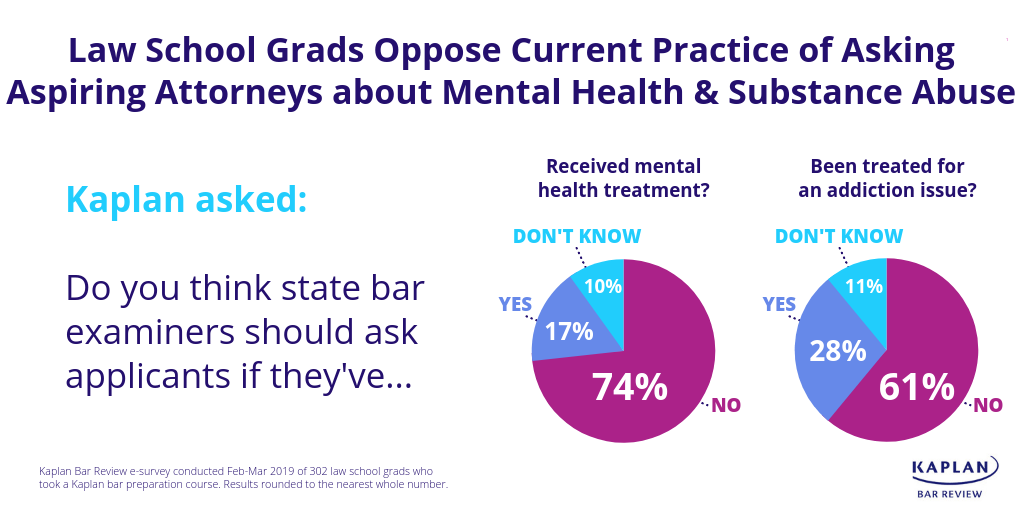
Survey respondents also weighed in on another controversial issue: whether state bar examiners should ask applicants if they’ve received mental health treatment or addiction treatments. The answers to both questions was a resounding no.

From ‘Vendor’ To ‘Partner’: How LexisNexis Is Deepening Law Firm Relationships
The company is emphasizing ‘white glove service’ in the AI era. Here’s what the initiative is delivering for clients.
As we begin Mental Health Awareness month, it’s especially important to have these difficult conversations and start breaking down the stigma associated with these issues. Hopefully this data will encourage more law schools to increase services for their students.
 Kathryn Rubino is a Senior Editor at Above the Law, and host of The Jabot podcast. AtL tipsters are the best, so please connect with her. Feel free to email her with any tips, questions, or comments and follow her on Twitter (@Kathryn1).