“Buyer’s remorse is not an exception to the securities laws.”
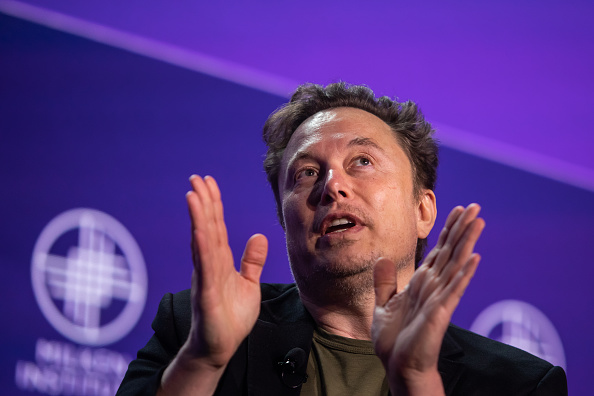
So begins Judge Charles Breyer’s order denying pretty much all of Elon Musk’s post-trial motions seeking to side step the jury verdict that found the no-longer-quite-a-trillionaire liable for fraud. It more or less tells you how the following 38 pages are going to go. Back in March, a jury found that Musk defrauded Twitter shareholders when he spent May 2022 throwing water on his own $44 billion plan to acquire Twitter. Musk publicly posted that the acquisition plan was “temporarily on hold” pending a look at the platform’s bot numbers. Even though the bot numbers were one of his original justifications for the deal. A slam dunk lawsuit by Twitter later, and Musk went through with the deal and turned the microblogging platform into America’s home for hoods off racism.

From ‘Vendor’ To ‘Partner’: How LexisNexis Is Deepening Law Firm Relationships
The company is emphasizing ‘white glove service’ in the AI era. Here’s what the initiative is delivering for clients.
Musk faces damages upward of $2.6 billion, which is — on paper — chump change for him. When the jury found against him, his Quinn Emanuel lawyers called the verdict a “a bump in the road” and promised that Musk would be vindicated.
The vindication is running behind schedule.
Musk moved for judgment as a matter of law, for a new trial, to decertify the class, and to force a second phase of the case in which a special master would comb through individual investors’ reliance one by one. Breyer granted exactly one thing — a matter of law judgment on the May 17 tweet because the plaintiffs’ own damages expert, Dr. Tabak, had declined to offer a price-maintenance opinion, leaving that one tweet without expert support. So Musk secured a solitary victory from an economist being cautious, more than any lawyer proving persuasive.
Everything else got the back of the hand.

What You Didn’t Learn In Law School
How do you keep up with the competition? Share your perspective in this brief survey to help us benchmark your lifelong training in professional skills. As a thank you, qualified respondents receive a chance to win a $250 gift card.
Musk insisted he sincerely believed Twitter was lying about bots. Musk knew Twitter measured bots against its monetizable daily active users and kept insisting the true number was higher anyway, because bots were the thing he personally noticed scrolling around:
Q. You’re using the wrong denominator, though, aren’t you? A. It’s — I’m using the number that people can experience.
Musk’s vibe-based defense did not sway the jury. The fact that Musk kept bleating that he would fix Twitter’s bot problem if he bought the company never made his 11th hour whoa, whoa, whoa, what’s with all these bots? defense very convincing. The jury was free to conclude the bot panic was a pretext for a case of cold feet after Tesla stock tanked… and it did.
Judge Breyer laid out the three doors in front of Musk on May 13, 2022. Musk could have chosen to “say nothing, comment on the true state of affairs that the deal was proceeding as usual, or make a misrepresentation.” The jury determined that Elon picked door number 3. Much of Musk’s motion contended that the gap between the true state of affairs and a misrepresentation was too subtle to support the verdict. Judge Breyer disagreed.
But the most fascinating argument was the Grand Blue Ink Conspiracy. The jury wrote 97 of 98 damages figures in black and one number in blue: $4.20. Alex Spiro argued that because the panel had flagged the same weed slang that Elon Musk thinks is super funny, the jury intended to “send a message,” proving that the jurors never intended to give Musk a fair trial.
Breyer had several answers, but the cleanest is that “The jury used different pens at different times when filling out the verdict form, not only when writing the number 4.20.” Elon Musk lost up and down the case and the thing that broke the billionaire was the idea that common folk might have more than one Bic around.
Though Breyer also threw in that if it were a joke, it’s one that Musk invited since the $54.20 offer price Musk himself put on the table was a 420 joke. His own banker said so on the stand, testifying that the team “knew Mr. Musk had joked about 420 quite a bit, and so we threw it out there as 54.20.”
So Musk baked the weed gag into the deal, and then asked a federal judge to blow off a nine-figure verdict because jurors in San Francisco understood the reference.
But the load-bearing flaw in the whole “the jury hated me” theory is one Breyer keeps returning to: the jury cleared Musk on half the case.
It defies common sense that the jury could be so prejudiced against Musk yet absolve him of liability when they had the chance to send a message.
A runaway jury bent on nuking Musk does not stop to acquit him on two of four questions.
Beyond that, a hefty chunk of the motion reasserts arguments Breyer already rejected. The judge noticed that a litigant “cannot just reassert arguments that have already been rejected in hope of a different result,” and, borrowing a line from another court, that litigants “play with fire if they raise the same arguments over and over and fail to acknowledge prior adverse rulings.”
Across every page of the damages fight, Musk attacked Dr. Tabak’s methodology, his event study, his disaggregation, his window, his everything. While the weed joke conspiracy draws more attention, the expert fight is Musk’s strongest argument. It’s just also his dumbest because, as Breyer notes — with exasperation dripping off the page — “Musk did not call a rebuttal expert — or any expert for that matter.”
All the money in the world, and skimping on hiring an expert. Maybe he was worried he’d have buyer’s remorse.
(Order on the next page…)
 Joe Patrice is a senior editor at Above the Law and co-host of Thinking Like A Lawyer. Feel free to email any tips, questions, or comments. Follow him on Twitter or Bluesky if you’re interested in law, politics, and a healthy dose of college sports news.