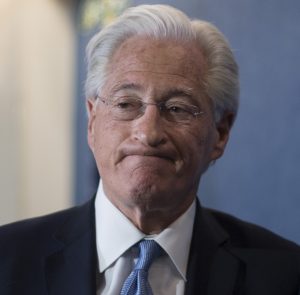
Marc Kasowitz made himself the face of the campus antisemitism fight, filing splashy Title VI suits against Columbia, Harvard, Penn, and NYU on behalf of Jewish students. When his firm settled with Columbia earlier this year on behalf of 43 Jewish and Israeli students, the announcement bragged about major concessions, including a Title VI coordinator, a nod toward the IHRA definition. The amount of the settlement remained confidential, but seems to be somewhere north of $10 million… and we know this because many of those Jewish students are now suing Kasowitz claiming he pocketed more than half the settlement as part of his $6.4M fee.
Normally, these stories about lawyers making too much money are dumb handwringing. Phony populism from publications like the New York Post, riling up their audience to hate the egghead lawyers collecting a couple million for elite legal services while cheerleading the president who just happens to be making hundreds of millions on a crypto rug pull. Bad mouthing legal fees is also a shameless tactic of corporate grifters trying to cast attorneys as greedy for taking on the financial risk of a class action.
That said, those lawyers speaking truth in the face of corporate injustice generally take — at most — a third of the settlement and often much less. By contrast, according to Law.com, Kasowitz’s payout came out to “an amount that one student described in an email with [Kasowitz partner Jillian] Roffer as ‘around 60% of the settlement.’” The rest of the funds, according to the complaint, were “allegedly distributed … through a secretive non-appealable process and threatened that students who refused to sign the deal would have to proceed without his firm’s representation.” Individual awards ranged, per the suit, from $34,000 to $300,000. There was allegedly no explanation why one student was getting nearly ten times more than another.

What You Didn’t Learn In Law School
How do you keep up with the competition? Share your perspective in this brief survey to help us benchmark your lifelong training in professional skills. As a thank you, qualified respondents receive a chance to win a $250 gift card.
Kasowitz’s firm calls the suit a heap of “gross misrepresentations and false claims,” and points out that the plaintiffs “signed releases and fully accepted all the benefits” of a historic settlement. Yeah, but about those releases… the complaint alleges that students were handed sweeping releases from Kasowitz that “demanded signatures in five days, by December 26, during the Christmas holiday.” Which seems like awkward phrasing for a complaint on behalf of Jewish students. I mean… “the winter holiday” is perfectly acceptable phrasing. Is this a meta commentary on how deeply ingrained antisemitism is?
When the clients asked to see the bills, the firm allegedly declined, and then kept declining, before eventually producing a “summary” — which is the bitchiest of lawyerly moves. That summary claimed more than 7,700 hours of work, with Kasowitz’s own time billed at $2,500 an hour. The total fees aren’t necessarily unreasonable for a case requiring 7,700 hours — it works out to under a $900/hour average per timekeeper. Except the Columbia case, the plaintiffs note, settled before a single deposition or any formal discovery.
The lawsuit says the retainer told these students that a third party would cover the legal fees, but that didn’t work out in practice. Miles Rubin, a Columbia grad and former IDF reservist who lost friends on October 7, describes Kasowitz treating the case as “his own personal piggy bank.” Noah Miller, who finished at Columbia’s architecture school in 2025, said he realized he was “a pawn to Kasowitz rather than an actual plaintiff.” The complaint’s own framing is that students who had already endured harassment on campus never expected to be “taken advantage of by the very lawyers they trusted to protect them.”
Unfortunately, this is all unsurprising. The fight against genuine campus antisemitism seemed to quickly escalate to opportunistic ax grinding. The Trump administration used it to seek a federal curriculum takeover and control over faculty hiring. They used it as a predicate to slash federal grants. At Penn, the administration used it to demand a list of Jewish employees — and historically “government demands a list of Jewish people” isn’t an encouraging development. Biglaw mostly used it as an excuse to preen for the administration. At every turn, what happened on these campuses meant more to powerful people as a means to other ends. It wasn’t inevitable that a group of students and their own lawyer would end up aligned against each other amid allegations of bad faith dealing, but when you look at everything else that’s going on, the odds were always pretty good.

AI Is Reshaping Legal Practice—But Tools Aren’t The Real Differentiator.
Explore the mindset, cultural shifts, and training strategies that define the AI‑savvy lawyer, revealing why human judgment, standardized competence, and integrated learning—not technology alone—will shape the future of the profession.
Marc Kasowitz Faces Malpractice Suit Over Columbia Antisemitism Settlement [Law.com]
Lawyer for Columbia University’s Jewish students netted $6.4M payday while preying on own clients: lawsuit [NY Post]
 Joe Patrice is a senior editor at Above the Law and co-host of Thinking Like A Lawyer. Feel free to email any tips, questions, or comments. Follow him on Twitter or Bluesky if you’re interested in law, politics, and a healthy dose of college sports news.